Have you ever looked in the mirror and thought, Why do I look so much older than I feel? It’s not just wrinkles or gray hair. Sometimes, the real culprit is what you’re wearing. The clothes you choose don’t just reflect your style-they can silently add years to your appearance. And it’s not about being trendy or following every fashion rule. It’s about avoiding the subtle, common mistakes that make women look older than they are.
Too Loose or Too Baggy
Loose clothes might feel comfortable, but they erase your shape. When everything hangs off your body, it creates a shapeless silhouette that reads as tired, not relaxed. This is especially true with oversized sweaters, wide-leg pants, or dresses that swallow your frame. The body naturally loses muscle tone and definition as we age. Baggy clothes don’t hide that-they draw attention to it by making you look like you’re drowning in fabric.
Instead of hiding, try defining. A slightly tailored blazer, a belt at the natural waist, or A-line skirts that skim your hips give structure. You don’t need to be skin-tight. You just need to show where your body ends and the fabric begins. Think of it like framing a painting: the right fit highlights your best features without screaming for attention.
Wearing Only Black (or Only Neutrals)
Black is slimming. Black is classic. Black is safe. But wearing nothing but black, gray, navy, or beige for years? That’s not elegance-it’s visual monotony. Our faces lose color and contrast as we age. When your clothes do too, your whole look flattens out. You start to blend into the background instead of standing out with energy.
Try adding one pop of color each day. Not neon. Not loud. Just something that lifts your complexion: a soft coral scarf, a muted teal cardigan, a rust-colored boot. Colors like rose, lavender, and olive green complement mature skin tones better than cold grays. They reflect light on your face, giving you a healthier, more vibrant glow. You don’t need to wear rainbow stripes. You just need to break the grayscale.
Outdated Silhouettes
Some styles were flattering in your 20s or 30s but don’t work anymore. High-waisted jeans with a super tight waistband? They dig into your midsection and create unflattering bulges. Flared pants from the ’70s? They can make your legs look shorter if your hips are wider now. Tube tops, crop tops, or micro-minis? They don’t age gracefully-and neither do the people wearing them.
Modern cuts are about balance. A midi skirt with a slight A-line, a tunic top that hits mid-thigh, or wide-leg pants with a slight taper at the ankle? Those work. They’re comfortable, timeless, and designed for real bodies-not runway models. If you’re unsure whether a silhouette still suits you, try it on and walk around. Does it move with you? Or does it fight you? If it’s fighting, it’s time to let it go.
Wrong Footwear Choices
Shoes are the foundation of your look-and they age you faster than you think. Flat sandals with no arch support? They make your feet look swollen and tired. Clunky, overly chunky boots? They add bulk and drag your posture down. Slip-on loafers with no heel? They make your legs look shorter and your stance less confident.
Even a small heel-1 to 1.5 inches-can make a difference. It lifts your posture, elongates your calves, and gives your whole frame a more upright, alert appearance. You don’t need stilettos. You need shoes that support your body and match your movement. Look for styles with cushioned soles, a slight lift, and clean lines. Brown or tan leather boots with a low block heel? That’s a game-changer. White sneakers? Fine, but only if they’re crisp and not scuffed or stretched out.

Ignoring Texture and Fabric Quality
Wearing cheap, thin, or wrinkly fabrics is like wearing a faded photo. It looks dull, tired, and low-effort. Polyester blends that shine under lights, flimsy cotton that clings in all the wrong places, or acrylic sweaters that pill after two washes? They don’t just look cheap-they make you look older.
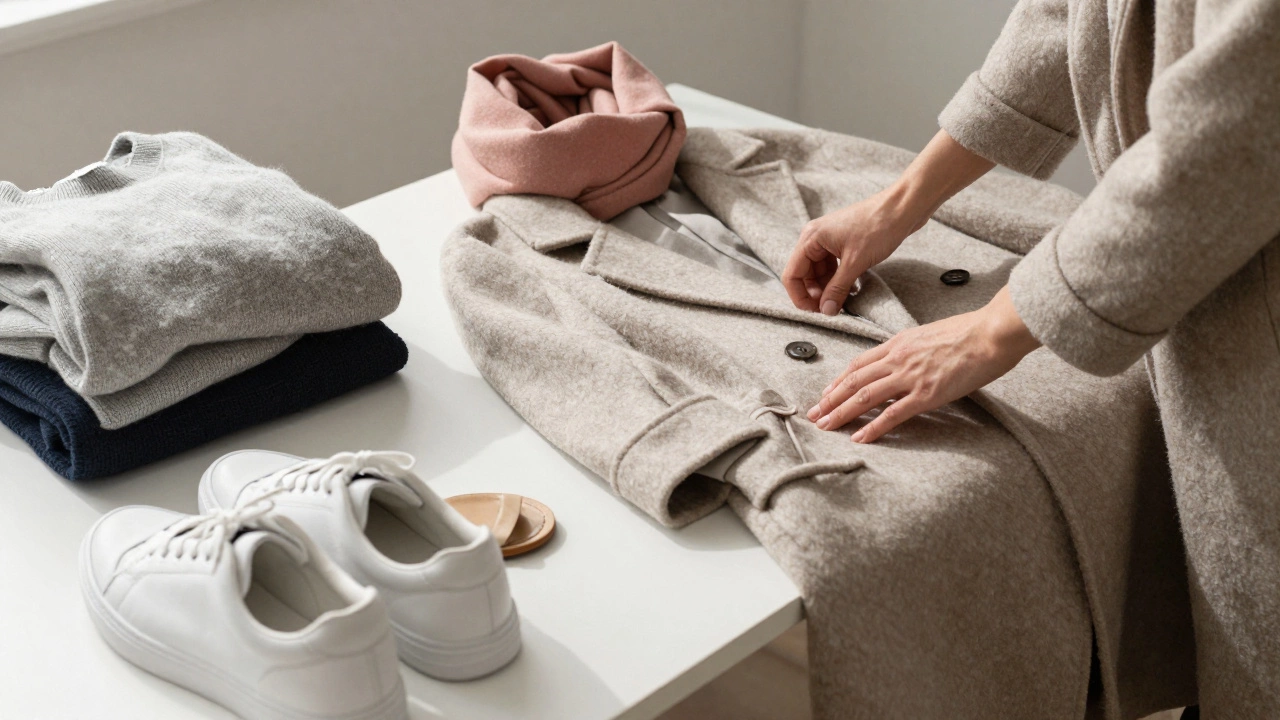
Invest in natural fibers: cotton, linen, wool, silk, and TENCEL™. They drape better, breathe better, and hold their shape longer. A well-made wool coat doesn’t need to cost $500. Look for sales at outlets, consignment stores, or even rental services. The goal isn’t luxury-it’s longevity. A single quality piece you wear for five years is better than five cheap ones you replace every season.
Too Many Patterns or Too Little Contrast
Wearing three different prints on one outfit? That’s not style-it’s visual noise. It distracts from your face and makes you look disorganized. But wearing all solid colors with no texture or pattern? That’s boring. It lacks energy.
The trick is contrast with harmony. Pair a subtle stripe top with solid pants. Wear a floral blouse with a solid blazer. Choose one pattern and let the rest be quiet. If you’re unsure, use the 60-30-10 rule: 60% neutral, 30% secondary color or texture, 10% pattern. And always make sure your pattern scale matches your frame. Small, delicate florals work better than giant, loud blooms on most women over 40.
Not Updating Your Basics
Everyone has those go-to items: white tee, black leggings, denim jacket. But if those basics are stretched, faded, or have holes, they drag your whole look down. A thin, stretched-out tank top doesn’t look casual-it looks worn out. Faded jeans with frayed hems? They look like you gave up.
Update your basics every 1-2 years. Buy new white tees in a slightly longer cut that covers your midsection. Get black leggings with a high waist and opaque fabric. Swap out your old denim jacket for one with a modern fit-maybe cropped or slightly oversized, but not shapeless. These aren’t trends. These are essentials that keep your foundation strong.
Skipping Accessories That Lift Your Look
Accessories aren’t just for decoration. They’re tools to draw attention where you want it. A long pendant necklace pulls the eye upward toward your face. A structured handbag adds polish. Even a simple pair of stud earrings can frame your features and make your skin look brighter.
What kills the look? Over-accessorizing. Too many bracelets jangling, rings on every finger, or chunky necklaces that compete with your collarbone. Less is more. Pick one focal point: your neck, your wrists, your ears. Let the rest stay quiet. A single gold chain with a small pendant? That’s elegance. A tangled mess of beads and charms? That’s clutter.
Not Matching Your Style to Your Life
Wearing clothes that don’t fit your daily rhythm feels like pretending. If you’re walking the dog, running errands, and picking up kids, you don’t need a tailored suit every day. But you also don’t need sweatpants that look like they’ve been on the floor for a week. Your clothes should match your energy, not fight it.
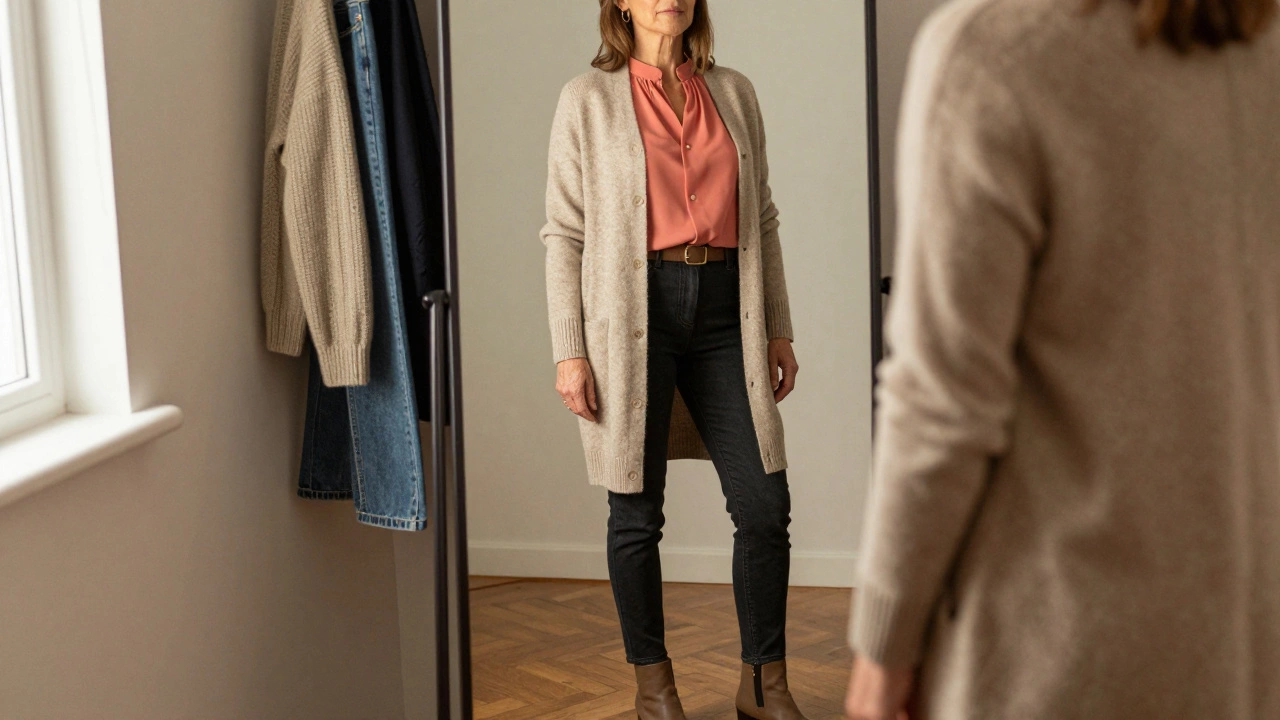
Build a wardrobe that works for your real life. Think: easy layers, machine-washable fabrics, and pieces that transition from morning to evening. A cozy knit cardigan over a turtleneck, paired with dark jeans and ankle boots? That’s practical, stylish, and ageless. It says you care without trying too hard.
It’s Not About Looking Younger. It’s About Looking Like You.
The goal isn’t to reverse aging. It’s to stop accidentally signaling tiredness, neglect, or confusion through your clothes. When your outfit aligns with your energy, your posture, and your confidence, you don’t just look younger-you look like yourself. The version of yourself that’s strong, thoughtful, and alive.
Start small. Pick one thing this week: swap out your baggy sweater for a fitted cardigan. Replace one pair of old flats with a low-heeled shoe. Add one color you’ve avoided. Notice how you stand, how people respond, how you feel in the mirror. That’s the real change. Not in your face. In your presence.
Do certain colors make you look older?
Yes. Very cool tones like icy grays, pale blues, and stark whites can wash out mature skin, making you look tired. Warmer tones-soft coral, olive green, mustard, and rose-complement skin that’s lost some natural pigment. You don’t need to avoid cool colors entirely, but balance them with warmer accents near your face.
Is it too late to change my style after 50?
Never. Style isn’t age-restricted. Many women in their 60s and 70s report feeling more confident and energized after updating their wardrobe. It’s not about following trends-it’s about finding what fits your body, your lifestyle, and your mood. Start with one item. See how it feels. Build from there.
What should I do with clothes I no longer wear?
Donate them to organizations that support women rebuilding their lives, like Dress for Success or local shelters. Or try a consignment app like Poshmark or ThredUp. Keeping clothes you don’t wear just fills space and clutters your mindset. Letting go makes room for pieces that actually serve you.
Should I avoid jeans altogether after 40?
No. But the style matters. Avoid super tight, high-waisted jeans with stretchy fabric that rolls at the waist. Look for medium-rise, straight-leg, or slightly flared cuts in dark washes with a bit of structure. Denim with 2-5% elastane is fine if it doesn’t bag out. The right pair can be one of the most flattering things you own.
How often should I update my wardrobe?
You don’t need a full overhaul every year. Focus on replacing worn-out basics every 1-2 years and adding 2-3 intentional new pieces annually. Quality over quantity. One well-chosen coat can last a decade. Five cheap ones won’t.
When you stop dressing for who you were and start dressing for who you are, you don’t just look better. You feel stronger. And that’s the most powerful thing you can wear.