Want to change your life but don’t know where to start? The right book can do more than distract you-it can rewire how you think, act, and respond to challenges. Self-development isn’t about quick fixes. It’s about building habits, shifting mindset, and learning from people who’ve walked the path before you. These aren’t just popular titles. These are the books that actually stick with you long after you close the cover.
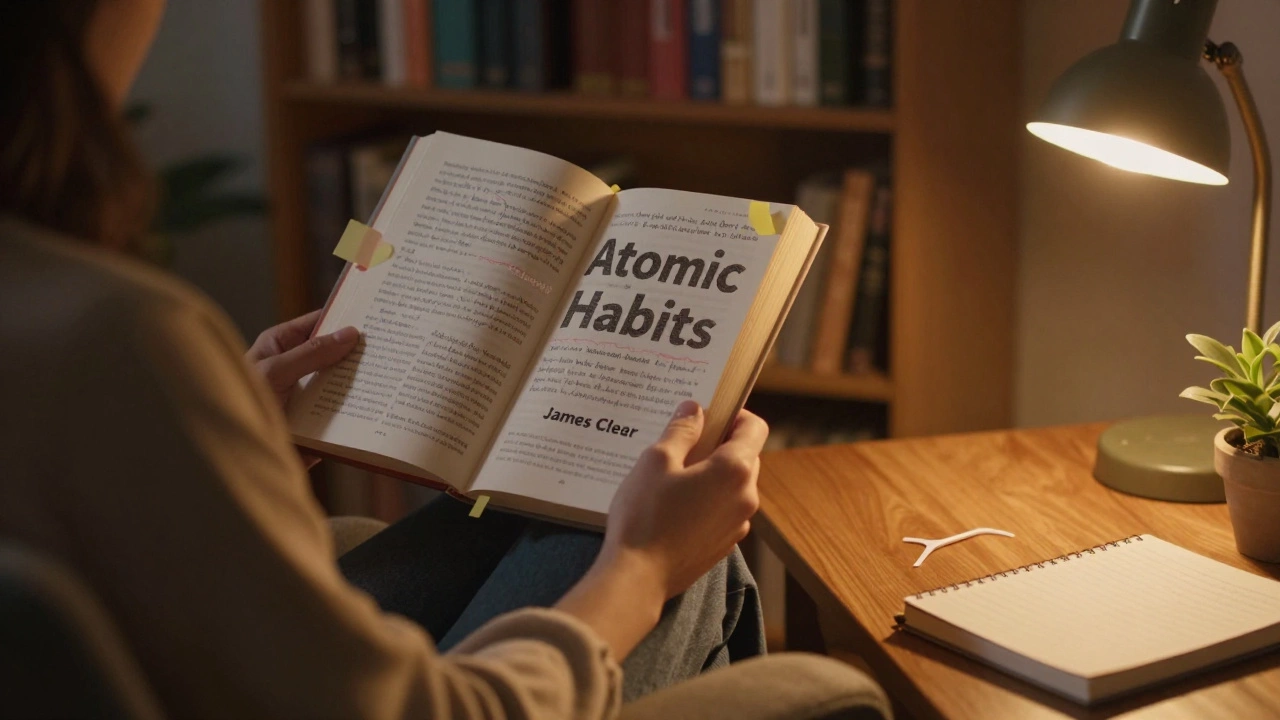
Atomic Habits by James Clear
If you’ve ever tried to quit smoking, start exercising, or get organized-and failed-this book explains why. James Clear doesn’t just tell you to "be consistent." He shows you how tiny changes, repeated daily, create massive results. The idea of "1% better every day" isn’t motivational fluff. It’s backed by neuroscience and real-world examples. Clear breaks down how habits form, why willpower fails, and how to design your environment so good habits are easy and bad ones are hard. One reader started by flossing just one tooth a night. A year later, they flossed every day without thinking. That’s the power of atomic habits.
The 7 Habits of Highly Effective People by Stephen R. Covey
This isn’t another productivity hack. It’s a framework for living. Covey’s seven habits aren’t about doing more. They’re about becoming more. The book starts with the idea that you must first understand yourself before you can influence others. Habit 1: Be Proactive. Habit 2: Begin with the End in Mind. Habit 3: Put First Things First. These sound simple, but they’re radical when practiced. People who apply this book stop reacting to emergencies and start designing their lives. One manager used Habit 5: Seek First to Understand, Then to Be Understood. Instead of jumping in to fix her team’s problems, she started asking questions. Within six months, her team’s turnover dropped by 40%.
Man’s Search for Meaning by Viktor E. Frankl
Viktor Frankl survived Auschwitz. Then he wrote one of the most powerful books ever published on human resilience. He wasn’t just a victim-he was a psychiatrist who studied how people find meaning even in suffering. His core idea? Life doesn’t ask what we want. It asks what we can give. This book changed how therapists treat depression, addiction, and trauma. You don’t need to survive a concentration camp to feel its impact. If you’ve ever felt stuck, hopeless, or purposeless, this book gives you a compass. It’s not about happiness. It’s about meaning. And that’s what keeps people going when everything else falls apart.
Dare to Lead by Brené Brown
Brené Brown’s work on vulnerability used to be seen as soft. Now it’s the foundation of leadership training at Fortune 500 companies. Why? Because courage isn’t about being fearless. It’s about showing up when you’re scared. This book teaches you how to lead with integrity, even when it’s messy. Brown’s research shows that teams with leaders who admit mistakes, apologize, and listen perform better than those with "perfect" leaders. One tech startup used her "rumble skills"-the ability to have tough conversations without blame-and saw employee engagement jump 37% in one year. You don’t have to be in charge to use these tools. They work in relationships, friendships, and even family dinners.

Thinking, Fast and Slow by Daniel Kahneman
This book explains why you make bad decisions-even when you think you’re being smart. Daniel Kahneman, a Nobel Prize-winning psychologist, breaks down how your brain has two systems: one fast and emotional, the other slow and logical. Most of your choices? They’re made by the fast system. That’s why you buy junk food when you’re stressed, or stay in a bad job because it feels "safe." This book doesn’t just explain your mistakes. It gives you tools to catch them. One reader started asking: "Am I thinking this because it’s true-or because it’s easy?" That single question changed how they made financial, career, and relationship decisions.
The Subtle Art of Not Giving a F*ck by Mark Manson
If you’re tired of toxic positivity, this book is your antidote. Mark Manson flips self-help on its head. Instead of telling you to "be positive," he says: "Choose what you care about." You can’t care about everything. So pick wisely. He argues that suffering isn’t a flaw-it’s a feature of a meaningful life. Want a better relationship? You have to accept the pain that comes with honesty. Want a better career? You have to accept the failure that comes with growth. This book doesn’t sugarcoat. It gives you permission to stop trying to be perfect. And that’s where real freedom begins.
How to Stop Worrying and Start Living by Dale Carnegie
First published in 1948, this book still works. Why? Because human nature hasn’t changed. Carnegie’s advice is simple, practical, and brutally effective. He gives you 30 techniques to stop worrying-like writing down your fears, accepting the worst-case scenario, and asking yourself: "What’s the next step?" One woman used his "worry period" trick: she scheduled 15 minutes a day to worry. Outside that time, she didn’t allow herself to think about problems. Within two weeks, her anxiety dropped by 70%. This book doesn’t promise transformation. It gives you tools to take back control, one small step at a time.

Deep Work by Cal Newport
Most of us think we’re busy. We’re not. We’re distracted. Cal Newport argues that real value comes from deep, uninterrupted focus. In a world of emails, notifications, and endless meetings, the ability to concentrate for hours is rare-and valuable. He doesn’t just say "turn off your phone." He gives you a system: schedule deep work blocks, eliminate shallow tasks, and train your brain like a muscle. A freelance designer started doing 90-minute deep work sessions every morning. Within three months, her income doubled because she delivered higher-quality work faster. You don’t need to work harder. You need to work smarter.
Essentialism by Greg McKeown
Do you say yes too often? Do you feel overwhelmed by commitments? Essentialism is about doing less, but better. Greg McKeown says: "The difference between successful people and really successful people is that really successful people say no to almost everything." This book teaches you how to identify what truly matters and cut everything else. One parent used the "90% rule": if something scores below 90% on importance, they say no. Their stress levels dropped. Their relationships improved. Their kids noticed they were more present. It’s not about being lazy. It’s about being intentional.
Start with Why by Simon Sinek
Why do some leaders inspire action while others just talk? Sinek’s "Golden Circle" explains it: People don’t buy what you do. They buy why you do it. This isn’t just for businesses. It’s for your career, your relationships, your personal goals. If you’re trying to change your life, ask: What’s your "why"? Why do you want to be healthier? Why do you want to change jobs? Why do you want to read more? When your "why" is clear, your actions become easier. One student started studying not to get good grades, but to honor her mother’s sacrifice. Her grades jumped. Her motivation stuck.
Books That Change You
Self-development isn’t about collecting books. It’s about letting them change you. You don’t need to read all of these. Start with one. Read it slowly. Highlight what matters. Try one idea. Wait a week. See what shifts. The best book is the one you actually use.
What’s the best self-help book for beginners?
Start with Atomic Habits by James Clear. It’s practical, easy to read, and gives you immediate tools you can apply. No theory. No fluff. Just clear steps to build better habits, one small change at a time.
Are self-help books really effective?
Yes-if you read them differently. Most people read self-help books like novels: cover to cover, then forget. The ones who change their lives read slowly, take notes, and try one idea before moving on. It’s not about the book. It’s about the action you take after reading it.
Should I read self-help books in order?
No. There’s no required order. Start with the book that speaks to your biggest struggle right now. If you’re overwhelmed, try Essentialism. If you’re stuck in negative thinking, try Man’s Search for Meaning. Let your current situation guide you, not a list.
How many self-help books should I read at once?
One. Focus on mastering one idea before moving to the next. Reading five books at once creates confusion, not clarity. Pick one, finish it, apply it, then choose the next.
What if I don’t like a self-help book?
That’s normal. Not every book works for every person. If a book feels forced or doesn’t resonate, put it down. It doesn’t mean you’re failing. It means you’re learning what doesn’t work for you. That’s part of the process.