Home Gym ROI Calculator
Stop wondering if you're wasting money on that unused gym card. Enter your local gym fees and estimated equipment costs to see exactly when your home setup pays for itself.
Click cards to add to your shopping list.
Versatile strength training
Power & cardio
Mobility & endurance
Upper body pulling
Enter your details and click Calculate to see your savings potential.
Break-Even Point:
You will recoup your initial investment in 0 months.
Projected 3-Year Outlook
Progress towards breaking even within 36 months.
You’re staring at your living room floor. It’s raining outside in Melbourne, the traffic on the M1 is a nightmare, and you just paid $80 for a gym membership you haven’t used in three weeks. The question nags at you: can you get as good of a workout at home? The short answer is yes, but with a massive caveat. You can’t replicate the exact experience of a commercial gym with its 20 squat racks and climate-controlled air. But if your goal is strength, endurance, or fat loss? Your living room is perfectly capable. The difference isn’t potential; it’s execution.
Most people fail at home workouts because they treat them like casual hobbies rather than structured training sessions. They do ten push-ups while checking emails, call it a day, and wonder why they aren’t seeing changes. To match gym results, you need to understand progressive overload, minimize distractions, and invest in the right tools. Let’s break down exactly how to turn your spare room into a performance hub that rivals any local health club.
The Myth of "Gym Quality" vs. "Result Quality"
We often confuse the environment with the outcome. A gym provides social pressure, variety, and heavy iron. But physiological adaptation-building muscle or burning calories-doesn’t care where you are. It cares about stimulus. If you lift a weight heavy enough to challenge your muscles, or run fast enough to spike your heart rate, your body adapts. Period.
However, there is a limit. If your goal is to become an elite powerlifter lifting 500kg deadlifts, you probably need a specialized facility with calibrated plates and safety bars. For the other 99% of us wanting to look fit, feel strong, and improve cardiovascular health, home setups are more than sufficient. The key is shifting your mindset from "working out" to "training." Training requires intent, structure, and consistency.
Essential Home Workout Equipment for Maximum Results
You don’t need a Peloton or a Technogym rig to start. In fact, over-investing early often leads to cluttered spaces and unused gear. Start with the essentials that offer the highest return on investment (ROI) for space and money. Here is what actually works:
- Dumbbells are the backbone of home strength training. Unlike barbells, they allow unilateral movement, fixing imbalances. Adjustable dumbbells save space and let you scale weight from 2kg to 40kg+. This single tool covers chest presses, rows, squats, and shoulder work.
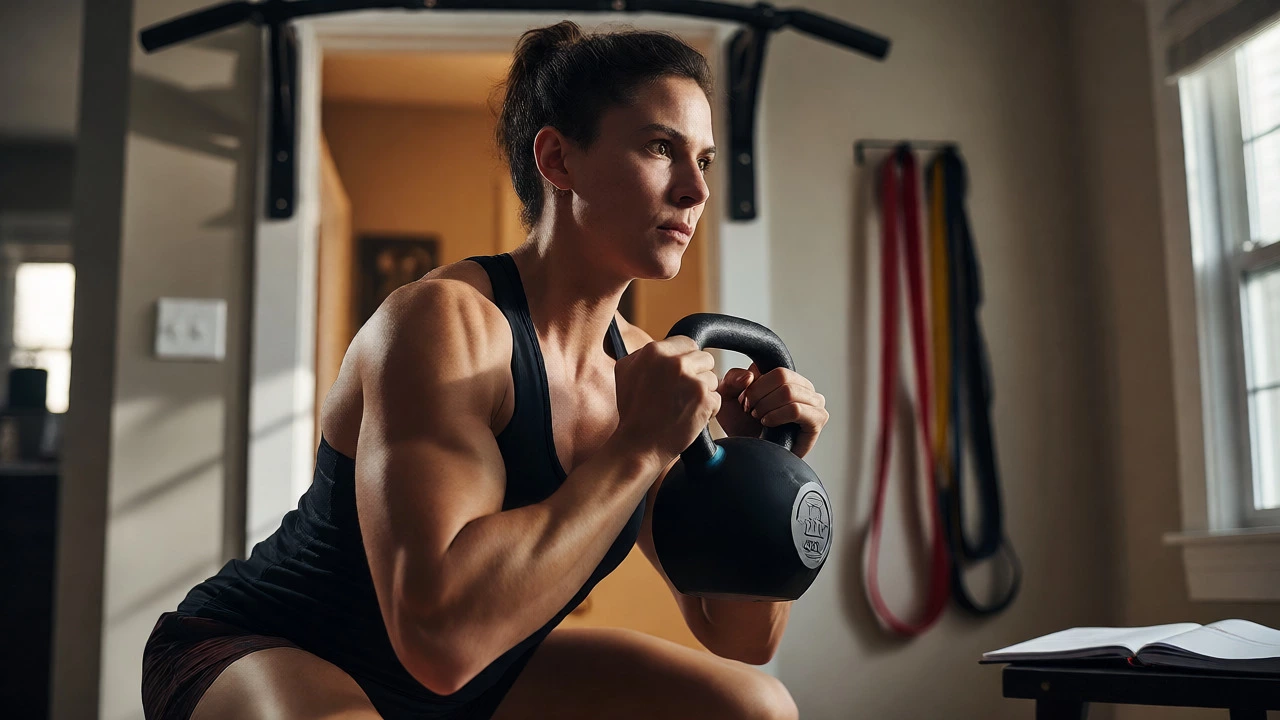
- Kettlebells bridge the gap between strength and cardio. Swings, goblet squats, and cleans elevate heart rate while building posterior chain strength. One 16kg bell is surprisingly versatile for most adults.
- Resistance Bands are cheap, portable, and brutal on stabilizer muscles. They provide variable resistance, meaning the exercise gets harder as you stretch the band. Great for warm-ups, mobility, and adding intensity to bodyweight moves.
- A Pull-Up Bar is non-negotiable for back development. Without pulling movements, you’ll develop rounded shoulders. Doorway frames work, but wall-mounted bars are safer and sturdier for heavier loads.
| Equipment | Primary Benefit | Space Required | Approx. Cost (AUD) | Skill Level |
|---|---|---|---|---|
| Adjustable Dumbbells | Versatile Strength & Hypertrophy | Low (Floor stand) | $300 - $800 | Beginner to Advanced |
| Kettlebell (16kg) | Power, Cardio & Grip Strength | Very Low | $80 - $120 | Intermediate |
| Resistance Bands Set | Mobility, Rehab & Endurance | Negligible | $30 - $60 | All Levels |
| Pull-Up Bar | Upper Body Pulling Strength | Medium (Door/Wall) | $50 - $150 | Intermediate |
How to Structure a Home Session Like a Pro
At the gym, you have machines that guide your form. At home, you are responsible for your own technique. This means your session structure must be tighter. You cannot afford to wander around looking for the next machine. Follow this simple framework to ensure every minute counts.
First, dedicate five minutes to dynamic warming up. Arm circles, leg swings, and cat-cow stretches prepare your joints. Never skip this. Cold muscles injure easily, especially when you’re alone without a spotter.
Next, focus on compound movements. These exercises use multiple joints and muscle groups, giving you the most bang for your buck. Squats, deadlifts (with kettlebells or dumbbells), push-ups, and overhead presses should form the core of your routine. Isolation exercises like bicep curls are fine, but they shouldn’t take up 50% of your time.
Finally, manage rest periods strictly. In a gym, you might scroll through Instagram for two minutes between sets. At home, temptation is everywhere. Use a timer. Rest 60-90 seconds for hypertrophy (muscle growth) or 2-3 minutes for strength. Keeping rest short increases metabolic demand, turning your strength session into a calorie-burning engine.
Overcoming the Distraction Factor
This is the biggest killer of home workouts. Your laundry is sitting in the corner. Your dog wants attention. The dishwasher needs unloading. In a gym, you are in a dedicated space. At home, boundaries blur.
Treat your workout like a medical appointment. Put your phone in another room-not just face down on the table, but physically away from you. Tell your housemates you are unavailable for 45 minutes. Wear shoes. Yes, really. Wearing running shoes signals to your brain that you are "on the clock." Changing out of pajamas creates a psychological shift from leisure mode to performance mode.
If you live in a shared household, communicate your schedule. Consistency beats intensity. It is better to do four 30-minute sessions a week than one heroic 90-minute session followed by three days of excuses. Schedule your workouts in your calendar just like work meetings.
When You Actually Need a Gym
Let’s be honest. There are scenarios where home setups fall short. If you thrive on community energy, the silent solitude of a living room might drain your motivation. Some people need the sight of others working hard to push themselves. That’s valid.
Also, specific athletic goals may require specialized equipment. If you want to practice Olympic weightlifting, you need bumper plates and a platform. If you miss classes like Spin, Pilates, or CrossFit, replicating that group dynamic at home via Zoom can feel hollow after a few months. Hybrid models work well here: train strength at home for convenience, and go to the gym once a week for classes or social interaction.
Tracking Progress Without Machines
Gyms have screens showing calories burned and heart rate zones. At home, you need to track manually. Use a notebook or an app like Strong or Hevy. Log your reps, sets, and weights. If you lifted 10kg for 10 reps last week, try for 11 reps this week. That is progress.
Take monthly photos. Mirror perception is tricky; you see yourself every day so you don’t notice subtle changes. Photos reveal posture improvements and muscle definition shifts. Also, monitor how you feel. Are stairs easier? Do you sleep better? These qualitative metrics matter as much as quantitative ones.
Frequently Asked Questions
Is home workout equipment cheaper than a gym membership?
Initially, yes, home equipment has a higher upfront cost. However, over a 2-3 year period, quality adjustable dumbbells and bands often pay for themselves compared to paying $60-$100 per month for a gym. Plus, you save on travel costs and time.
Can I build muscle with just bodyweight exercises?
Yes, especially in the first year. Push-ups, pull-ups, dips, and pistol squats can build significant strength and mass. Eventually, you will need external resistance (dumbbells or bands) to continue progressing beyond advanced levels.
What if my neighbors complain about noise?
Use rubber flooring mats to dampen impact sounds. Avoid jumping exercises during early morning or late night hours. Kettlebell swings and dumbbell lifts are generally quiet compared to burpees or jump rope.
Do I need a mirror for home workouts?
Not strictly necessary, but helpful. Mirrors allow you to check form in real-time, which is crucial when you don't have a trainer watching you. If space is tight, record a video of your set and review it immediately.
How many days a week should I train at home?
For general health, 3-4 days is optimal. Since home workouts often lack the extreme volume of gym sessions, recovery is faster. Listen to your body; consistency over months matters more than frequency over weeks.