Work-Life Balance Assessment Tool
How much does work encroach on your personal time? Answer these questions to see your personal stress level.
Your assessment result will appear here
Work-life balance stress isn’t just feeling tired after a long day. It’s the slow, quiet erosion of your energy, your joy, and your sense of self - all because work refuses to stay at work. You check emails at midnight. You skip lunch because there’s too much to do. You say yes to one more meeting, one more deadline, one more favor - even when your body screams no. And then, one morning, you realize you don’t remember the last time you laughed without thinking about your inbox.
What Exactly Is Work-Life Balance Stress?
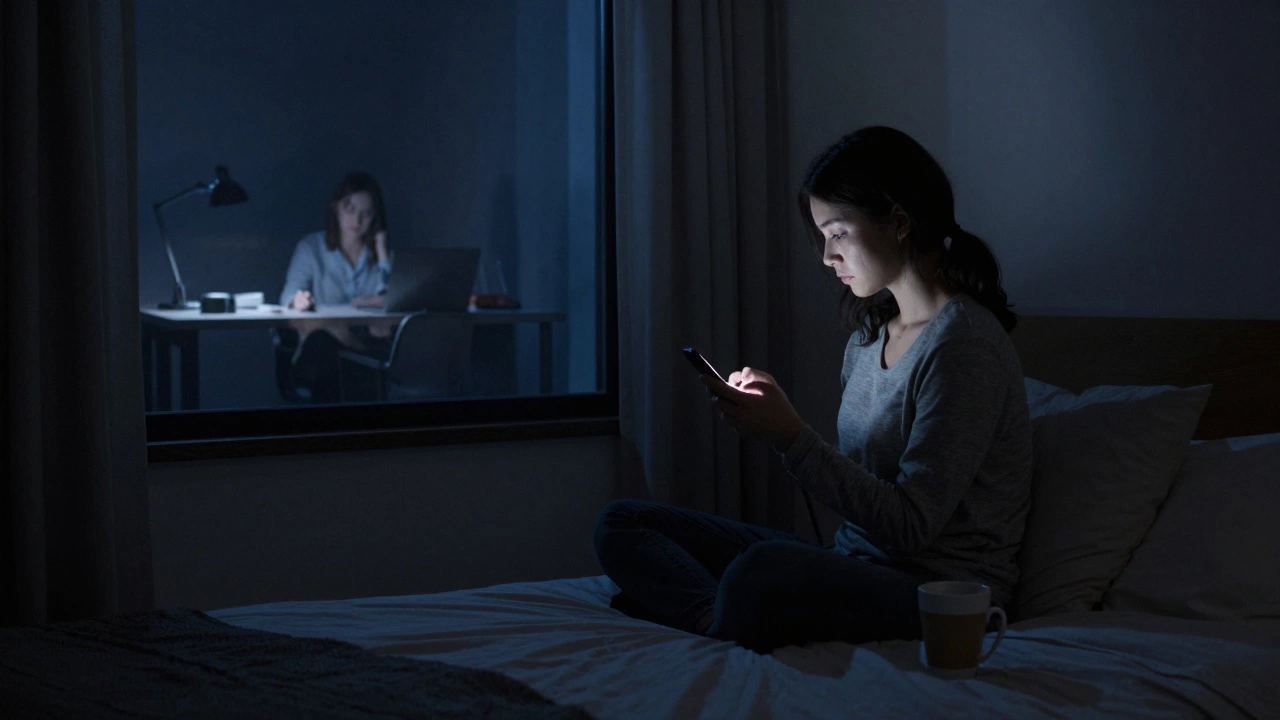
Work-life balance stress happens when the boundaries between your job and your personal life vanish. It’s not about working long hours alone - it’s about never being able to fully disconnect. Your phone buzzes during dinner. Your boss texts on Sunday. Your mind replays the day’s mistakes while you’re trying to fall asleep. This constant overlap creates chronic stress, and your body doesn’t know how to turn it off.
Unlike regular stress, which fades after a tough project ends, work-life balance stress sticks around because the trigger never goes away. It’s not a storm you weather - it’s a slow leak that drains you day after day. A 2024 study from the Australian Institute of Health and Welfare found that 62% of full-time workers in Australia reported feeling constantly ‘on call’ outside work hours. That’s not dedication. That’s burnout waiting to happen.
How It Shows Up - Not Just as Exhaustion
People think stress looks like crying at your desk or snapping at coworkers. But work-life balance stress is sneakier. It shows up as:
- Forgetfulness - missing appointments, losing keys, forgetting birthdays
- Physical symptoms - headaches, stomach issues, trouble sleeping
- Emotional numbness - feeling nothing when you used to feel everything
- Social withdrawal - skipping calls from friends, avoiding family dinners
- Loss of motivation - dreading tasks you used to enjoy, even outside work
One client I worked with - a marketing manager in Sydney - started waking up at 4 a.m. every day, heart racing, convinced she’d forgotten something critical. She hadn’t. Her brain just didn’t know how to stop working. She didn’t realize it was stress until she missed her niece’s first steps because she was in a Zoom call.
Why Modern Work Makes It Worse
Technology didn’t just change how we work - it erased the line between work and home. Slack notifications, Teams messages, and email alerts have turned our homes into open-plan offices. Remote work didn’t give us freedom - it gave us 24/7 access to our jobs.
And then there’s the culture. ‘Hustle porn’ tells us that working late is a badge of honor. ‘Being available’ is mistaken for being committed. Companies praise employees who reply to emails at midnight, then wonder why turnover is high. The truth? People who never unplug don’t perform better - they just burn out faster.
A 2023 survey by Deloitte found that 48% of employees who felt pressured to respond to work messages after hours reported higher levels of anxiety and lower job satisfaction than those who set clear boundaries.
The Real Cost - Beyond Burnout
Work-life balance stress doesn’t just hurt your mood. It hurts your health. Chronic stress raises cortisol levels, which increases your risk of heart disease, diabetes, and weakened immunity. The World Health Organization now classifies burnout as an occupational phenomenon - not just a personal failing.
It also damages relationships. Partners feel ignored. Kids grow up wondering why Mom or Dad is always distracted. Friendships fade because you’re too tired to show up. One woman in Melbourne told me she hadn’t had a real conversation with her husband in eight months - they just passed each other in the kitchen, exchanging grocery lists and work updates.
And the financial cost? High. People under this kind of stress take more sick days. They make more mistakes. They leave jobs faster. Replacing one employee can cost up to 200% of their salary. Companies lose more than just productivity - they lose trust, loyalty, and morale.
Breaking the Cycle - Small Changes That Actually Work
You don’t need to quit your job or move to a cabin in the woods. Real change starts with tiny, non-negotiable boundaries.
- Set a hard stop. Pick a time - 6 p.m., 7 p.m., whatever works - and turn off work notifications. Not ‘later.’ Not ‘after this one thing.’ Right then.
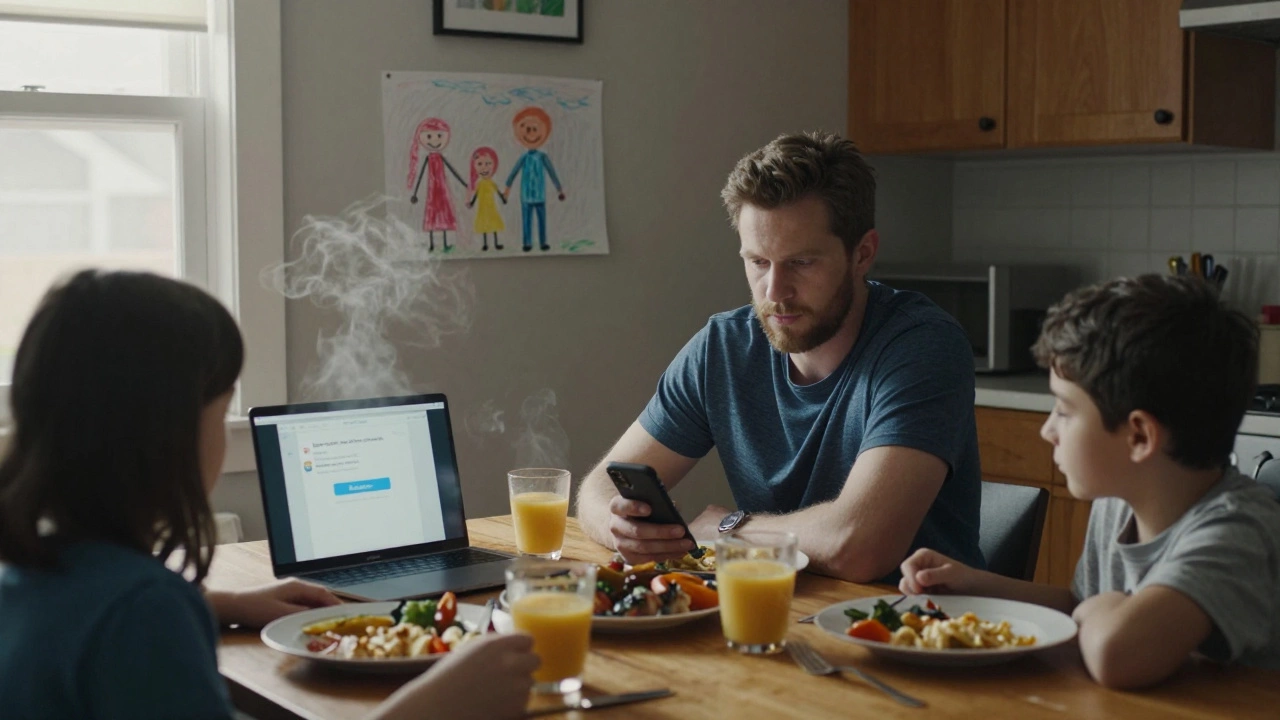
- Designate a work-free zone. No laptops in the bedroom. No emails at the dinner table. Your home should be a place your brain recognizes as safe.
- Use your vacation days. Not just ‘to catch up.’ Actually leave. Turn off work email. Tell your team you’re offline. If you can’t do this, your job is broken - not you.
- Protect your mornings. Start your day without checking your phone. Drink coffee. Walk the dog. Stretch. Let your mind wake up before the world demands it.
- Say no - politely but firmly. ‘I can’t take that on right now’ is a complete sentence. You don’t need to justify it.
One teacher in Brisbane started leaving her phone in another room after 8 p.m. Within two weeks, she slept through the night for the first time in years. She didn’t lose a single grade. Her students didn’t suffer. But she started reading novels again. She started laughing.

When It’s More Than Stress - Recognizing Burnout
Not every tired person is burned out. But if you’ve been feeling this way for months - if you’re cynical about your work, emotionally drained, and feel like nothing you do matters - you’re not just stressed. You’re burned out.
Burnout doesn’t fix itself with a weekend off. It needs space, support, and sometimes professional help. Therapy, counseling, or even talking to your manager about workload changes aren’t signs of weakness. They’re survival tools.
If you’re reading this and thinking, ‘I can’t afford to take time off,’ ask yourself: Can you afford to keep going like this? Your health, your relationships, your future self - they’re all counting on you to draw a line.
It’s Not a Luxury - It’s a Necessity
Work-life balance isn’t about being lazy. It’s about being human. You’re not a machine. You don’t run on caffeine and guilt. You need rest. You need connection. You need moments that have nothing to do with deadlines or deliverables.
The most successful people I know aren’t the ones who work the longest. They’re the ones who know when to walk away. They take walks. They cook dinner. They watch sunsets. They say no.
Your worth isn’t measured by how many hours you log. It’s measured by how fully you live - outside of work, too.
Is work-life balance stress the same as burnout?
Not exactly. Work-life balance stress is the ongoing tension from blurred boundaries between work and personal time. Burnout is the result - a deeper state of emotional, physical, and mental exhaustion. Think of stress as the leak, and burnout as the flooded room. If stress goes unaddressed long enough, burnout follows.
Can remote work cause work-life balance stress?
Yes, often more than office work. Remote work removes physical boundaries. Without a commute to signal the end of the day, work can creep into every corner of your home. The lack of separation makes it harder to mentally switch off. Studies show remote workers are more likely to work longer hours and feel pressured to respond outside normal hours.
How do I know if my job is causing my stress?
Ask yourself: Do I feel relief when I leave work? Do I dread Mondays? Do I feel guilty taking time off? If your answers are mostly yes, your job culture is likely the problem - not your ability to cope. A healthy job respects your time. An unhealthy one expects you to be always available.
What if my boss expects me to be available 24/7?
Set boundaries - even if it’s uncomfortable. Start small: ‘I respond to emails between 8 a.m. and 6 p.m. Monday to Friday.’ If your boss reacts badly, that’s a red flag. No job is worth your health. If you’re consistently punished for setting limits, it’s time to look elsewhere. Your value isn’t tied to your availability.
Can work-life balance stress affect my physical health?
Absolutely. Chronic stress raises cortisol, which increases blood pressure, weakens your immune system, and contributes to digestive issues, insomnia, and weight gain. Long-term, it raises your risk of heart disease and type 2 diabetes. The body doesn’t distinguish between a deadline and a lion chasing you - it reacts the same way. And if that stress never stops, your body never recovers.
What Comes Next?
Start with one boundary. One hour. One room. One day a week where work stays out. Don’t wait for permission. Don’t wait for the ‘right time.’ Your future self is already thanking you for doing it now.
Work will always need you. But you don’t have to be available all the time. You’re not a tool. You’re a person. And you deserve to live - not just to perform.