Senior Home Workout Planner & Budget Calculator
Customize Your Plan
Your Personalized Results
Essential Gear Checklist
Suggested Weekly Structure
Reminder: Always consult your physician before starting a new exercise regimen. Listen to your body—pain is a stop sign.
Turning sixty feels different than turning thirty. The joints might creak a little louder, the recovery time stretches out, and the fear of injury often sits right next to the desire to feel strong again. You want to move better, lift groceries without wincing, and keep your energy up. But staring down a complex gym routine or buying expensive gadgets that end up as coat racks is not the answer. The secret isn't intensity; it's consistency and safety.
Starting a fitness routine at this stage of life requires a shift in mindset. It’s less about burning calories and more about preserving function. You are building insurance against falls, stiffness, and muscle loss. The good news? You don’t need a membership to do it. In fact, starting with home workout equipment designed for stability and low impact is often the smartest move you can make for long-term health.
Why Medical Clearance Comes Before Movement
Before you buy a single resistance band, you need to talk to your doctor. This isn’t just bureaucratic red tape; it’s essential data gathering. At sixty, underlying conditions like hypertension, arthritis, or previous joint surgeries change how your body handles stress. Ask your physician specifically about weight-bearing limits and heart rate zones. If they give you the green light, ask if there are any movements to avoid-like deep squats if you have knee replacements or heavy overhead presses if you have shoulder impingement.
This conversation sets your boundaries. Knowing these limits allows you to choose equipment that supports rather than strains your body. It transforms vague anxiety into a concrete plan. You aren’t guessing; you’re following a protocol designed for your specific physiology.
The Golden Rules of Senior Fitness
When you start moving, three principles must guide every session. First, prioritize form over load. Lifting lighter weights with perfect technique builds functional strength and protects your spine. Second, embrace the warm-up. Your muscles and tendons are less elastic now, so spending five to ten minutes doing gentle dynamic movements-like arm circles or marching in place-is non-negotiable. Third, listen to the difference between discomfort and pain. Muscle fatigue is normal; sharp joint pain is a stop sign.
Consistency beats intensity every time. Three short sessions a week will yield better results than one exhausting marathon session that leaves you sidelined for days. Think of movement as medicine: you take it regularly, in measured doses, to maintain health.
Essential Home Workout Equipment for Beginners
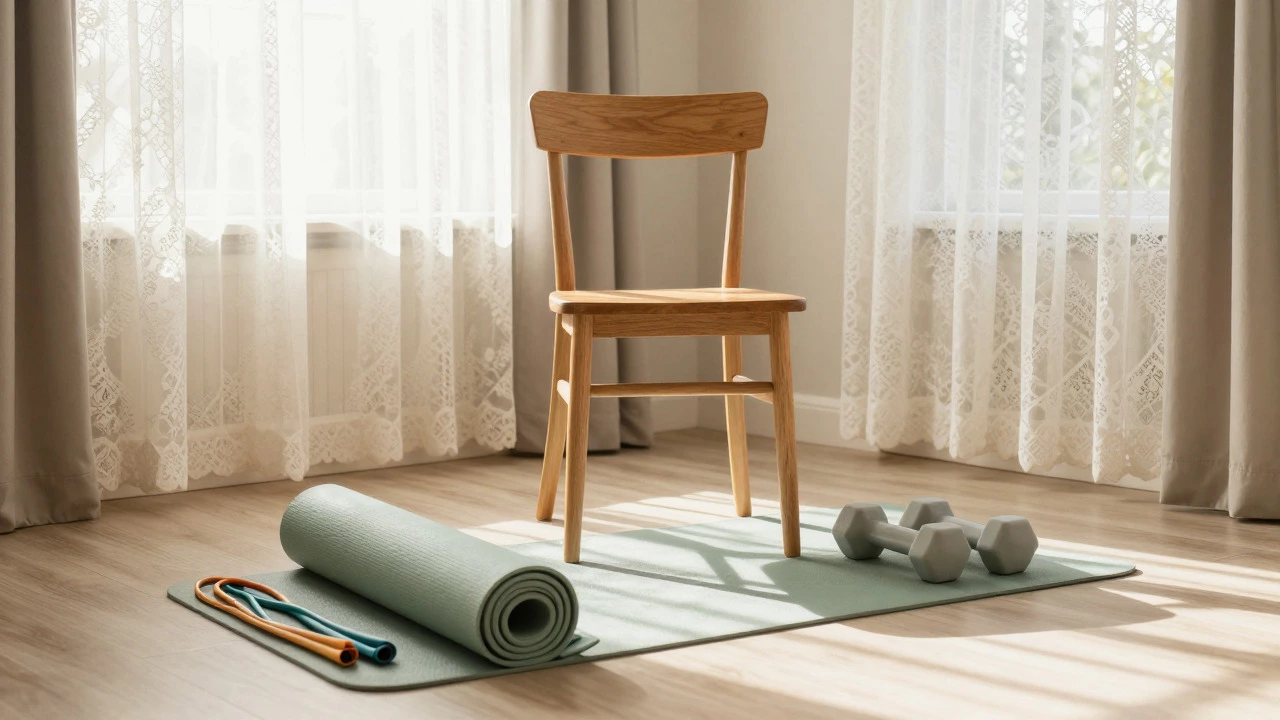
You don’t need a home gym. You need tools that offer support, adjustability, and safety. Here are the core items that provide the most value for someone starting out:
- Resistance Bands: These are versatile, inexpensive, and easy on the joints. They provide constant tension throughout the movement, which helps stabilize muscles without the jarring impact of free weights. Look for a set with varying resistance levels so you can progress gradually.
- A Sturdy Chair: A regular dining chair or an exercise chair is invaluable. It provides balance support for standing exercises and serves as a base for seated strength work. Ensure it doesn’t roll and has a solid backrest.
- Light Dumbbells: Start with weights between 2 and 5 pounds. These help build grip strength and upper body endurance. Hexagonal dumbbells are safer because they don’t roll away easily.
- A Yoga Mat: A thick, non-slip mat provides cushioning for floor exercises and prevents slipping during balance drills. Look for one with extra thickness to protect knees and hips.
| Equipment | Primary Benefit | Safety Feature | Cost Estimate |
|---|---|---|---|
| Resistance Bands | Joint-friendly resistance | No impact shock | $10 - $20 |
| Sturdy Chair | Balance support | Fall prevention | $0 (if owned) |
| Light Dumbbells | Muscle strengthening | Controlled range of motion | $30 - $50 |
| Yoga Mat | Cushioning and grip | Slip prevention | $20 - $40 |

Building Your First Routine
Start with a simple structure that covers mobility, strength, and balance. Aim for twenty to thirty minutes, three times a week. Here is a sample flow:
- Warm-up (5 minutes): March in place, rotate ankles, roll shoulders, and gently twist your torso side to side.
- Strength Circuit (15 minutes): Perform each exercise for 10-12 repetitions. Rest for 30 seconds between sets.
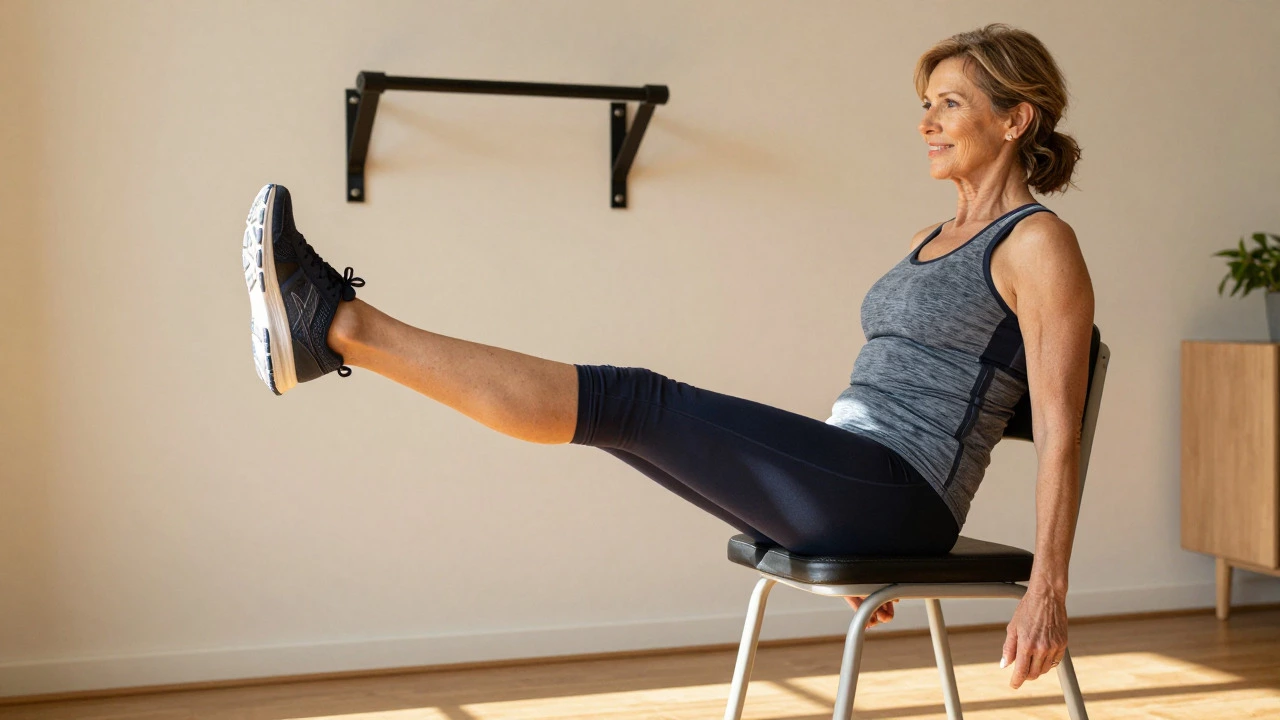
- Seated Leg Extensions: Sit tall in your chair, straighten one leg out until it’s parallel to the floor, hold for two seconds, and lower slowly. This strengthens quadriceps without loading the knee joint.
- Wall Push-ups: Stand arm-length from a wall, place hands on the surface, and lean in, pushing back out. This builds chest and arm strength safely.
- Band Rows: Anchor a resistance band at chest height. Pull the handles toward your ribs, squeezing your shoulder blades together. This counters slouching posture.
- Heel Raises: Hold onto your chair for balance, rise up on your toes, and lower slowly. This improves calf strength and ankle stability.
- Balance Work (5 minutes): Stand near a counter for safety. Try lifting one foot slightly off the ground and holding for 10 seconds. Switch sides. Progress to standing on one leg while brushing your teeth later on.
- Cool Down (5 minutes): Gentle stretching for hamstrings, chest, and neck. Focus on deep breathing to lower your heart rate.
Progressing Safely Over Time
As you get stronger, you need to challenge your body to see continued gains. But "progressive overload" at sixty looks different than it does at twenty. Instead of adding heavy weight, try increasing the number of repetitions, slowing down the tempo of the movement, or using a slightly thicker resistance band. Small increments prevent plateaus and injuries.
Track your progress in a simple notebook. Note how many reps you completed, how you felt afterward, and any minor aches. This data helps you identify what works and what needs adjustment. If you can easily do 15 reps of an exercise, it’s time to increase the difficulty slightly.
Common Pitfalls to Avoid
One major mistake is comparing yourself to younger people or social media influencers. Their routines are optimized for aesthetics, not longevity. Another error is skipping rest days. Muscles repair and grow during rest, not during the workout. Allow at least 48 hours between strength sessions targeting the same muscle groups.
Also, beware of "quick fix" equipment marketed to seniors. Devices promising miraculous results with zero effort rarely deliver. Stick to basic, proven tools. Simplicity reduces complexity, which reduces the chance of error.
Integrating Movement Into Daily Life
Exercise isn’t confined to your mat. Take the stairs instead of the elevator when possible. Park further away from store entrances. Garden actively by kneeling and reaching. These micro-movements accumulate and contribute significantly to your overall activity level. The goal is to make movement a natural part of your day, not a chore you dread.
Is it too late to start working out at 60?
Absolutely not. Research shows that adults over 60 can significantly improve muscle mass, bone density, and cardiovascular health within weeks of starting a consistent routine. The key is to start slow and focus on proper form to prevent injury.
What type of shoes should I wear for home workouts?
Wear supportive athletic shoes with good arch support and cushioning. Even indoors, barefoot workouts can lead to instability or slips. Choose sneakers designed for cross-training or walking to ensure your feet stay stable during lateral movements.
How often should I work out per week?
Aim for three to four days a week. This frequency allows enough stimulus for improvement while providing ample time for recovery. On off-days, consider gentle activities like walking or stretching to keep blood flowing without straining muscles.
Can I do cardio at home without equipment?
Yes. Low-impact cardio options include marching in place, step-ups using a sturdy bottom stair, or dancing to music. These activities elevate your heart rate safely without requiring treadmills or ellipticals.
What should I do if I feel pain during an exercise?
Stop immediately. Distinguish between muscle burn (normal) and sharp joint pain (abnormal). If pain persists after resting, consult your doctor or physical therapist before resuming that specific movement. Modifying the range of motion or switching to a seated variation often helps.