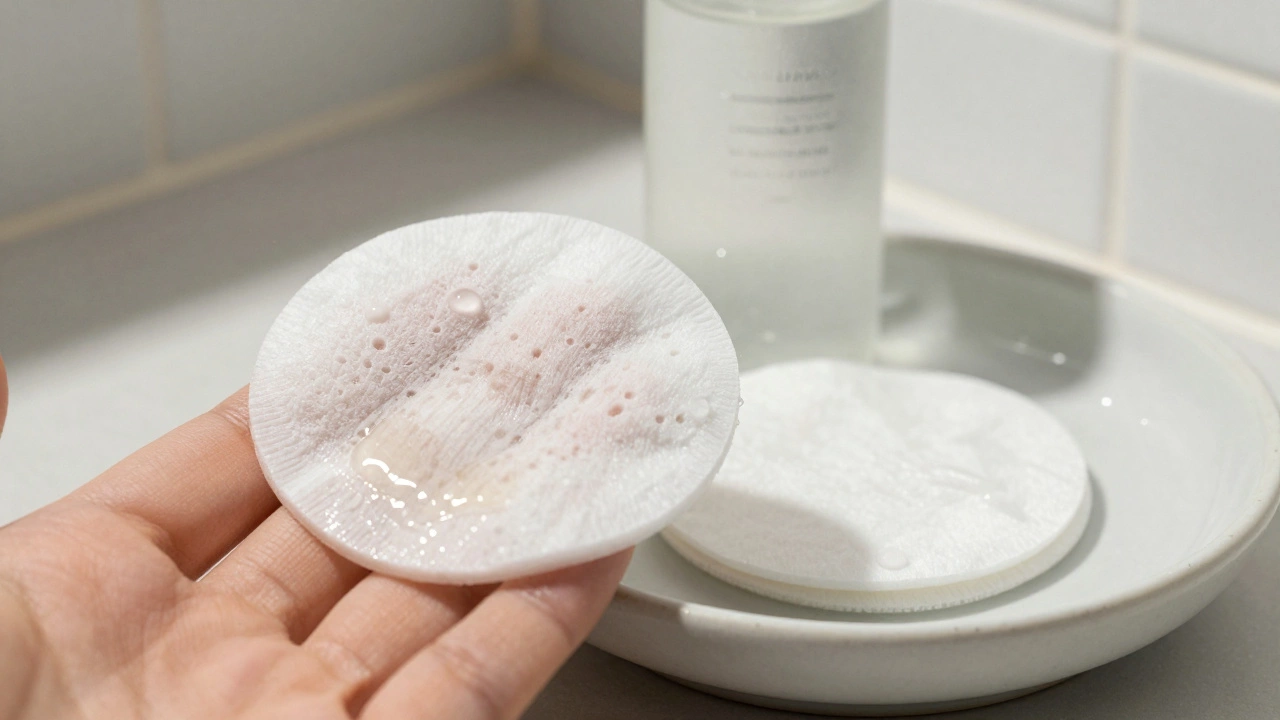
You’ve probably seen micellar water on your bathroom shelf, maybe even used it after a long day. But when you’re scrolling through skincare posts, someone always says, ‘Just use micellar water as your toner.’ Is that true? Or are you wasting your time-and money-on something that doesn’t do what you think it does?
What micellar water actually does
Micellar water is a gentle, no-rinse cleanser made of tiny oil molecules called micelles. These micelles act like magnets, pulling dirt, oil, and makeup off your skin without scrubbing. It’s perfect for quick cleanups, travel, or sensitive skin that reacts to harsh soaps.
Think of it like a soft sponge that soaks up grime instead of rubbing it around. Brands like Bioderma, La Roche-Posay, and CeraVe have made it popular because it works without stripping your skin’s natural barrier. You don’t need water to rinse it off-just swipe with a cotton pad and go.
But here’s the catch: it doesn’t balance your skin’s pH. It doesn’t tighten pores. It doesn’t deliver active ingredients like niacinamide, witch hazel, or hyaluronic acid. That’s where toners come in.
What a real toner does
A toner is designed to restore your skin’s pH after cleansing. Your skin naturally sits at a slightly acidic level-around 4.5 to 5.5. Soap-based cleansers, even gentle ones, can push that number up, making your skin more vulnerable to irritation and breakouts.
Traditional toners (especially alcohol-free ones) help bring that pH back down. Some also contain exfoliating acids like glycolic or lactic acid to gently slough off dead skin. Others hydrate, soothe redness, or prep your skin to better absorb serums and moisturizers.
For example, if you’re using a retinol serum at night, a hydrating toner can help reduce the chance of flaking or stinging. If you’re acne-prone, a toner with salicylic acid can reach into pores where cleansers can’t.
Micellar water? It doesn’t do any of that.
Why people confuse micellar water with toner
The confusion comes from how people use it. Many skip their cleanser and just use micellar water. Then they think, ‘I’m done with step one, so this must be my toner.’ But skipping a cleanser doesn’t make micellar water a toner-it just makes it your only step.
Also, some brands market micellar water as a ‘2-in-1 cleanser and toner.’ That’s marketing speak, not science. If a product claims to be both, it’s usually because it’s trying to be everything at once-and ends up being mediocre at both.
Real toners have a specific function: pH balancing and active delivery. Micellar water’s only job is to lift dirt off the surface. It’s not designed to penetrate or reform your skin’s environment.

Can you use micellar water as a toner?
Technically? Yes. Practically? Not really.
If you have oily, acne-prone skin and use a strong cleanser, skipping a toner might leave your skin out of balance. Micellar water won’t fix that. It might even leave behind a slight residue if it’s not rinsed off-especially if it contains glycerin or surfactants.
On the flip side, if you have super sensitive skin and don’t wear makeup, micellar water might be enough for your routine. But that doesn’t mean it’s acting as a toner. It just means you don’t need one.
Think of it like this: You can use a damp cloth to wipe your kitchen counter. Does that make it a disinfectant? No. It just removes surface crumbs. You still need vinegar or bleach to kill germs.
What to use instead
Here’s a simple breakdown:
- If you wear makeup or sunscreen daily: Use micellar water as your first cleanse, then follow with a gentle cleanser. After that, use a toner suited to your skin type.
- If you have dry or sensitive skin: Skip micellar water. Use a cream cleanser, then a hydrating toner with ceramides or panthenol.
- If you’re acne-prone: Use a salicylic acid toner after cleansing. Micellar water alone won’t clear pores.
- If you’re in a rush: Micellar water is fine for emergencies-but don’t make it your daily routine without following up with proper hydration and pH balancing.
There’s no rule that says you need both. But if you want your skincare to actually work, you need the right tool for the right job.
What dermatologists say
A 2023 study published in the Journal of Clinical and Aesthetic Dermatology looked at over 500 users who switched from micellar water-only routines to a cleanser + toner routine. After eight weeks, those using a toner reported 40% less redness, 32% fewer breakouts, and better absorption of serums.
Dr. Lena Park, a board-certified dermatologist in Sydney, says: ‘Micellar water is great for removing makeup, but it’s not a substitute for skin balancing. If you’re not restoring your skin’s pH, you’re setting yourself up for long-term sensitivity-even if your skin looks fine now.’
She recommends using micellar water only as a pre-cleanse step, never as a standalone.
Bottom line: They’re not the same
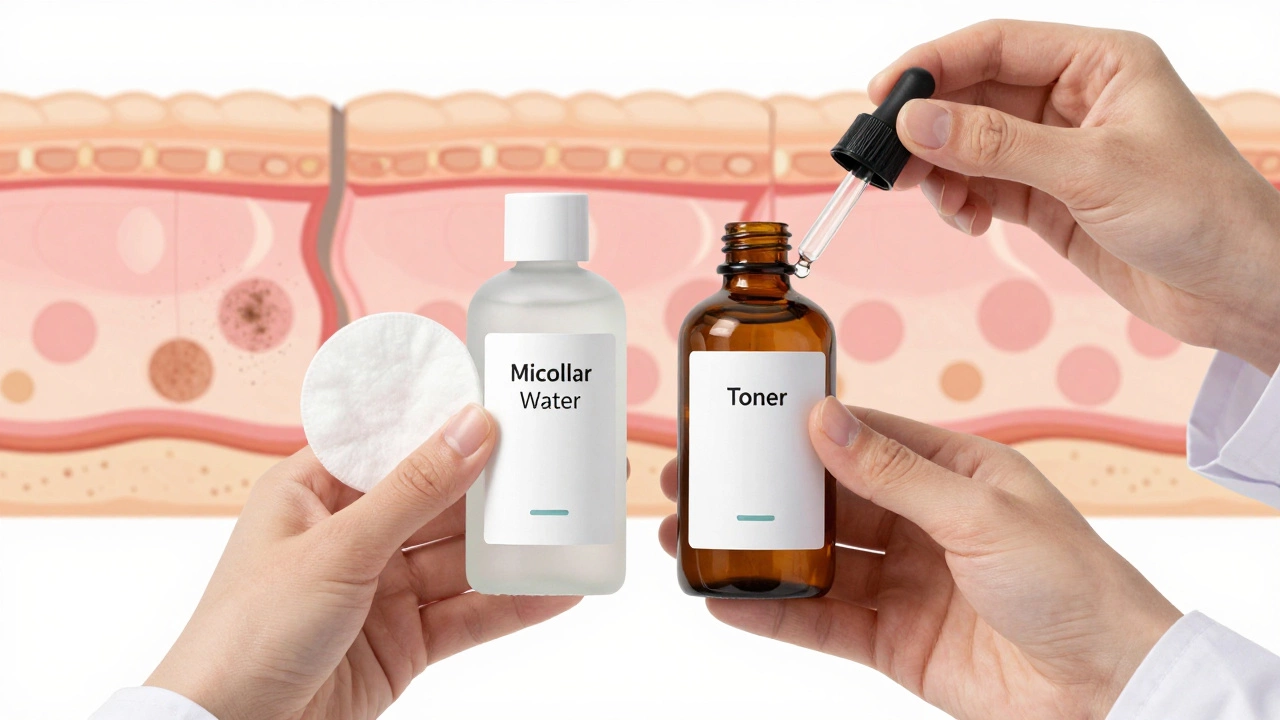
Micellar water cleanses. Toner balances. One removes surface gunk. The other prepares your skin to heal and absorb what comes next.
Using micellar water as your toner is like using a paper towel to mop up a spilled soda-and thinking you’ve cleaned the floor. You got the sticky part off, sure. But the bacteria are still there. The smell lingers. And the wood underneath? Still damaged.
Skincare isn’t about doing less. It’s about doing the right things in the right order.
If you love micellar water? Keep using it. Just don’t pretend it’s doing more than it can. Add a simple toner after your cleanse. You’ll notice the difference in how your moisturizer sinks in, how your skin feels by midday, and how little your face flares up after stress or weather changes.
It’s not about adding steps. It’s about adding purpose.
Can I use micellar water instead of a cleanser?
Yes, if you don’t wear makeup or sunscreen. Micellar water can remove light dirt and oil. But if you wear sunscreen, foundation, or even SPF daily, it’s not strong enough on its own. Use it as a first step, then follow with a proper cleanser.
Does micellar water clog pores?
Most micellar waters are non-comedogenic, but some contain ingredients like PEG-6 or fragrance that can irritate sensitive skin. If you break out after using it, check the label. Look for formulas labeled ‘oil-free’ and ‘fragrance-free.’ Rinse if your skin feels tight or sticky afterward.
What’s the best toner for sensitive skin?
Choose alcohol-free toners with soothing ingredients like centella asiatica, chamomile, or allantoin. Brands like Klairs, Avene, and First Aid Beauty offer gentle options. Avoid toners with witch hazel if your skin stings easily-even though it’s natural, it can be drying.
Do I need a toner if I use a hydrating cleanser?
Not always. If your cleanser is pH-balanced (around 5.5) and leaves your skin feeling soft-not tight or dry-you might skip the toner. But if your skin still feels flat, dull, or reacts to serums, a toner can help reset your skin’s readiness to absorb actives.
Can I use micellar water and toner together?
Absolutely. Many people use micellar water to remove makeup first, then follow with a gentle cleanser and toner. This is especially helpful if you wear waterproof sunscreen or long-wear foundation. It’s not overkill-it’s thorough.