Skincare Routine Checker
How Many Products Do You Use Daily?
Check the products in your morning and evening routines. Over 8 products can damage your skin barrier.
Risk Score
0
Simple & Healthy
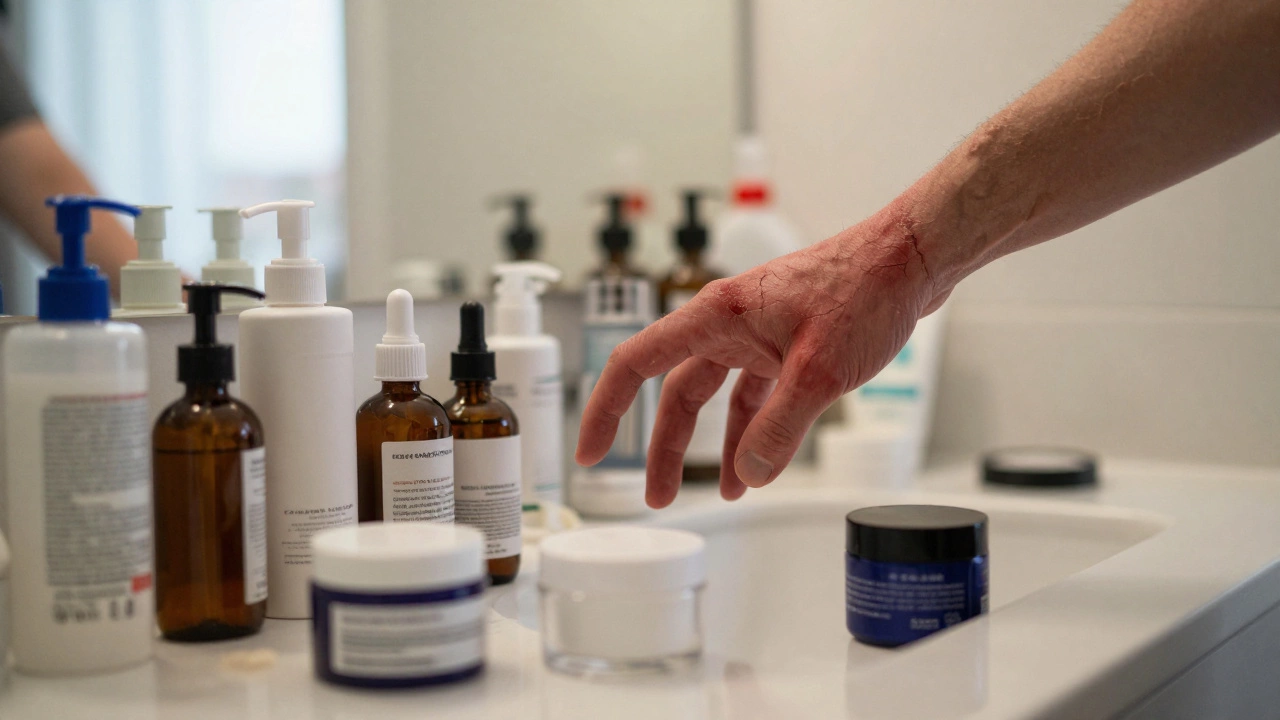
Ever looked at your bathroom counter and felt overwhelmed? Five serums, three exfoliators, a retinoid, a toner, an eye cream, a face oil, and a mask you swore you’d use twice a week-but never do? You’re not alone. Skincare has become a ritual, a hobby, even a form of self-care. But here’s the truth: too much skincare can actually be hurting your skin more than helping it.
Your Skin Isn’t a Machine
Your skin has one job: protect you. It’s not a car that needs a full tune-up every week. It’s a living, breathing barrier that balances moisture, fights off germs, and repairs itself overnight. When you pile on too many products, you’re not giving it a boost-you’re overwhelming its natural rhythm.Think of your skin barrier like a brick wall. The bricks are skin cells. The mortar is lipids-fats that hold everything together. Too many harsh cleansers, acids, or actives? You’re chipping away at the mortar. The result? Redness, stinging, flaking, and breakouts that don’t make sense. You’re not breaking out because you’re dirty. You’re breaking out because your barrier is damaged.
The Most Common Mistakes
Here’s what most people do wrong:
- Double cleansing twice a day, even if you didn’t wear makeup
- Using a chemical exfoliant every night, plus a physical scrub on weekends
- Layering three vitamin C serums because "more is better"
- Applying retinol, then niacinamide, then a hyaluronic acid serum-all at once
- Using 10+ products in the morning and another 8 at night
One dermatologist in Sydney told me she sees patients every week who come in with irritated, sensitive skin-all because they followed a TikTok routine with 12 steps. No one needs that many products. Not even people with acne or eczema.
What Happens When You Overdo It?
Your skin doesn’t get "stronger" with more products. It gets stressed. Here’s what overdoing skincare can actually do:
- Stripped natural oils → skin overproduces oil to compensate → clogged pores → breakouts
- Disrupted microbiome → good bacteria die off → inflammation, redness, rosacea flare-ups
- Barrier damage → water escapes → skin feels tight, dry, and sensitive
- Product stacking → ingredients fight each other → vitamin C gets deactivated by niacinamide, retinol loses effectiveness when mixed with acids
- Increased sensitivity → skin reacts to things it never used to-like water, sweat, or even sunlight
A 2024 study from the University of Melbourne tracked 1,200 people who followed "10-step skincare routines." After 12 weeks, 68% reported increased irritation. Only 12% saw noticeable improvement. The rest? Their skin got worse.

What Does a Healthy Routine Look Like?
Less is more. Always. Here’s what works for most people:
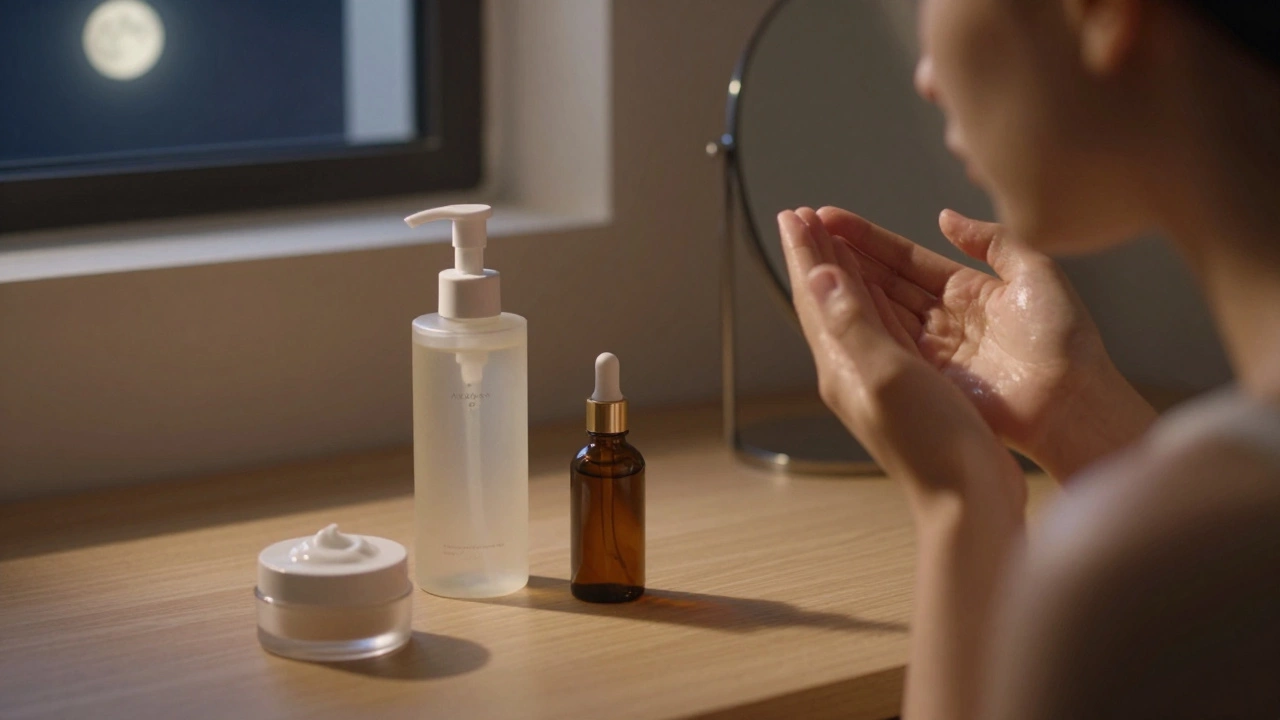
- Morning: Gentle cleanser → moisturizer → sunscreen
- Night: Gentle cleanser → treatment (one active-retinol, AHA, or BHA) → moisturizer
That’s it. Five products max. You don’t need a toner unless your skin feels tight after cleansing. You don’t need an eye cream unless you have actual under-eye concerns (and even then, your regular moisturizer often works fine). You don’t need a separate serum for hydration, brightening, and anti-aging. One good one does the job.
And sunscreen? Non-negotiable. No matter how many serums you use, if you skip SPF, you’re undoing all your work. UV damage is the #1 cause of aging, dark spots, and skin cancer.
How to Know If You’re Overdoing It
Your skin talks. You just have to listen.
- Stinging or burning after applying anything? → Barrier damage
- Breakouts where you’ve never had them before? → Overstimulation
- Flaky patches that won’t go away? → Dryness from too many actives
- Redness that lasts more than a day? → Inflammation
- Feeling like your skin "can’t breathe"? → Product overload
If you’re seeing any of these, stop everything for a week. Just wash with water or a soap-free cleanser, apply a simple moisturizer, and wear sunscreen. Let your skin reset. Then, add one product back at a time. Wait 3-4 days between each. See how your skin reacts.
What About "Skin Cycling"?
"Skin cycling"-using retinol on Monday, exfoliating on Wednesday, hydrating on Friday-is a trend that sounds smart. But it’s not science. It’s marketing.
True dermatologists don’t follow rigid schedules. They adjust based on how your skin feels. If your skin is sensitive, you don’t exfoliate weekly. You do it every 10-14 days. If your skin is oily and acne-prone, you might skip moisturizer at night-but only if your skin doesn’t feel tight. You don’t follow a calendar. You follow your skin.
What to Keep, What to Cut
Here’s a simple filter:
| Keep | Consider Cutting |
|---|---|
| Gentle cleanser | Double cleansing (unless wearing heavy makeup) |
| Moisturizer (with ceramides or squalane) | 5+ serums |
| SPF 30+ (daily) | Exfoliating more than twice a week |
| One active treatment (retinol, AHA, or BHA) at night | Layering multiple actives at once |
| Hydrating toner (if your skin feels dry) | Essential oils, fragranced products |
Real-Life Fix: A Melbourne Woman’s Story
Anna, 32, used to spend 20 minutes on her skincare every morning and night. She had seven products. Her skin was red, flaky, and breakout-prone. She tried everything-switching brands, buying "clean" products, even going organic.
Then she cut it down. Just: cleanser, moisturizer, SPF in the morning. Cleanser, retinol, moisturizer at night. No toner. No serum. No mask. No eye cream.
In 10 days, her redness faded. In three weeks, her skin felt smooth. In two months, her dermatologist said her barrier had fully recovered. "I thought I needed all that stuff," she told me. "Turns out, I just needed to stop."
Skincare Isn’t a Competition
Social media makes it look like more products = better skin. But real skin health isn’t about quantity. It’s about consistency, simplicity, and listening.
Your skin doesn’t care if you use 12 products. It cares if you protect it, hydrate it, and leave it alone to heal. The most powerful skincare product you own? Patience.
Can using too many skincare products cause breakouts?
Yes. Overloading your skin with actives, oils, and exfoliants can clog pores, irritate the skin barrier, and trigger inflammation. When your skin is damaged, it often overproduces oil to compensate, which leads to acne-even if you never had it before. It’s not about dirt. It’s about disruption.
How many skincare products should I use daily?
For most people, three to five products total is enough. Morning: cleanser, moisturizer, sunscreen. Night: cleanser, treatment (one active), moisturizer. You don’t need more unless you have a diagnosed skin condition like severe acne or rosacea-and even then, a dermatologist will usually recommend fewer products, not more.
Is it bad to use retinol and vitamin C together?
It’s not dangerous, but it’s not ideal. Vitamin C works best in an acidic environment (pH 3-4), while retinol can break down in low pH. Using them together can reduce the effectiveness of both. Better to use vitamin C in the morning and retinol at night. If you want to use both at night, space them out by 20-30 minutes.
Should I stop all skincare if my skin is irritated?
Not necessarily. Stop the actives-retinoids, acids, scrubs, essences-but keep a gentle cleanser and a simple moisturizer. Sunscreen is still essential. This is called a "skin reset." Give your barrier time to heal. Most people see improvement in 7-14 days. If it gets worse, see a dermatologist.
Can I use natural or organic skincare to avoid irritation?
Not always. "Natural" doesn’t mean gentle. Essential oils, citrus extracts, and plant-based acids can be just as irritating as synthetic ingredients. In fact, some natural ingredients are more likely to cause allergic reactions. Look for fragrance-free, non-comedogenic, and dermatologist-tested products-not just "organic" labels.