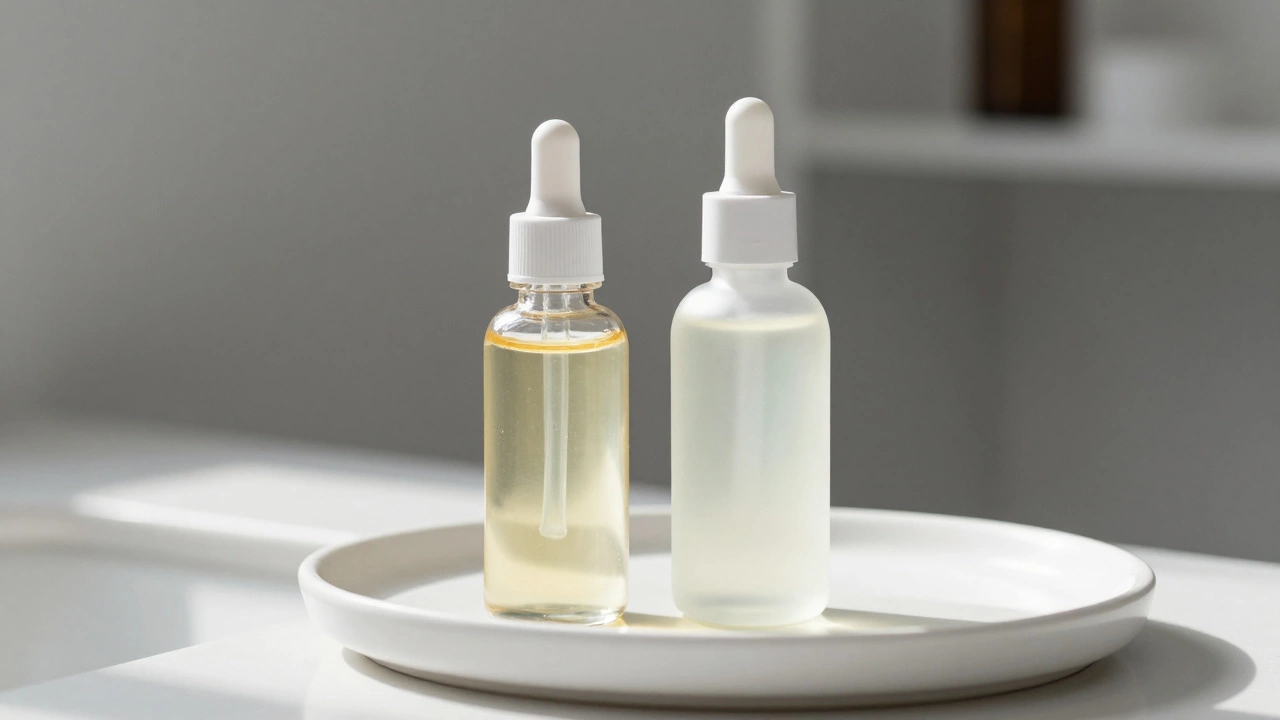
Personalized Skincare Layering Guide
The Short Answer
If you stand staring at your vanity counter wondering which bottle goes first, here is the direct truth: generally, Vitamin C should go before Hyaluronic Acid. It is an antioxidant that protects against environmental damage, while Hyaluronic Acid locks moisture into the skin.
This isn't just about picking sides. It is about understanding how chemistry works against your biology. Putting them in the wrong order doesn't destroy your face, but it might stop you from getting the full glow you paid for. Sometimes, skipping a step entirely makes more sense than forcing two products together that fight over space on your skin.
Understanding What These Bottles Actually Do
You cannot figure out the order until you understand the job each product has for your skin. Most of us grab these bottles because we want "anti-aging," but that term hides a lot of details.
Vitamin C: The Bodyguard
L-Ascorbic Acid, the most active form of Vitamin C, is unstable and aggressive by nature. Its main job is to neutralize free radicals-the messy bits of pollution and UV light that break down collagen. Think of it as a shield.
To work effectively, pure Vitamin C needs a very acidic environment. We measure this using pH levelsA scale measuring acidity or alkalinity.. For the molecule to penetrate your pores and reach where it helps, the pH of the serum needs to be around 3.5 or lower. If the product is too high on the pH scale, it sits on the surface of your skin and does nothing. This is why Vitamin C serums often tingle when you apply them.
Hyaluronic Acid: The Sponge
In contrast, Sodium HyaluronateThe salt form of hyaluronic acid found in skincare. does not care about acidity. It is a humectant, meaning it pulls water from the air or deeper layers of your skin to hydrate the top layer.
You have seen this described as holding "1000 times its weight in water." In reality, that number depends heavily on humidity. On a dry winter day, if you slather Hyaluronic Acid on dehydrated skin without sealing it, it can actually pull water *out* of your skin, leaving you tighter than before. It needs a partner-a moisturizer-to lock that water in.
The Science Behind the Sequence
Why do experts insist on putting Vitamin C before Hyaluronic Acid? It comes down to size and concentration.
Vitamin C serums are usually formulated to be very watery and thin. This allows the molecules to slip through your skin barrier easily. If you apply a thicker Hyaluronic Acid gel first, you create a physical barrier. That thick gel dries into a film. Once that film exists, the Vitamin C molecules bounce off it instead of sinking in. You end up wasting expensive Vitamin C.
| Feature | Vitamin C | Hyaluronic Acid |
|---|---|---|
| Primary Function | Brightening, protection, collagen support | Hydration, plumping |
| Ideal pH Range | Below 3.5 (Acidic) | pH Neutral (Compatible with skin barrier) |
| Texture | Thin, watery serum | Gel-like or viscous liquid |
| Molecular Size | Small (High Penetration) | Varying sizes (Surface + Deep) |
There is also the chemical interaction risk. While Hyaluronic Acid is generally stable, Vitamin C is reactive. Some older formulas mixed these together in a single bottle, causing the Vitamin C to oxidize quickly-turning dark orange or brown. Oxidized Vitamin C can stain clothes and even irritate the skin. Separating them allows you to control the stability of each active ingredient.
Does Timing Change Everything?
Your skin behaves differently at night compared to morning. The "order" stays mostly the same, but the goal changes.
Morning Ritual
During the day, your biggest enemy is the sun and pollution. Your primary defense is Sunscreen. Vitamin C boosts sunscreen efficacy by fighting off the UV rays that make it through the filter.
Apply Vitamin C immediately after cleansing. Wait about 60 seconds for it to absorb. Follow up with Hyaluronic Acid. Then, seal everything with a moisturizer and finish with sunscreen. This sandwiches the antioxidants right against your skin so they act as a primer.
Night Repair
At night, repair happens. While you still generally apply Vitamin C before Hyaluronic Acid, you might consider swapping Vitamin C for other actives like retinol or peptides if you want less sensitivity. However, if you use Vitamin C at night (which is fine, it helps overnight), you still keep the pH order. Acids penetrate best on clean skin.
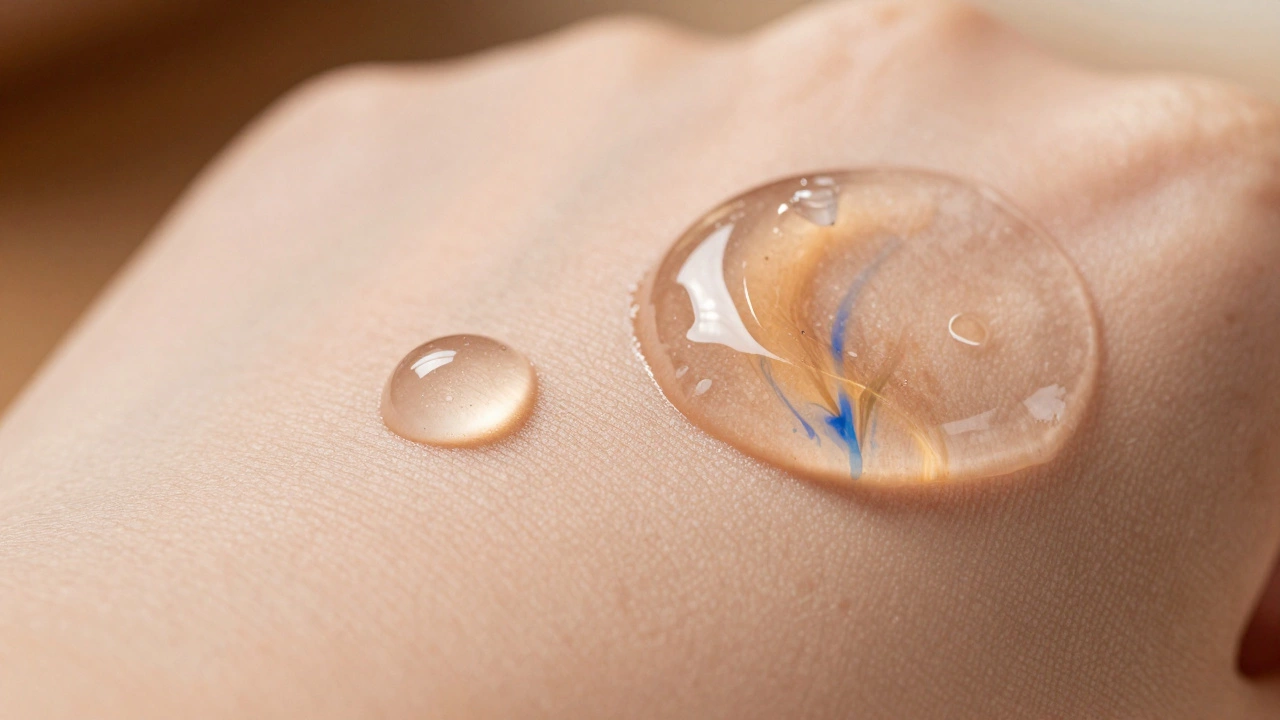
The Texture Rule: Thinner to Thicker
If you look at the labels of dozens of different brands, you will see some exceptions to the standard advice. Some Vitamin C serums are oil-based, and some Hyaluronic acids are water-light.
Here is the heuristic rule that works every time regardless of brand: Go from thinnest consistency to thickest consistency.
- Liquid/Water: Toners, Essences
- Serums: Vitamin C, Salicylic Acid, Growth Factors
- Gels: Hyaluronic Acid, Aloe-based treatments
- Creams: Moisturizers, Anti-aging creams
- Oils: Facial oils
If your Hyaluronic Acid is a watery spray, put it on before a heavy Vitamin C cream. If your Vitamin C is a droplet serum and your HA is a sticky gel, Vitamin C wins the race.
Skin Types and Exceptions
We rarely talk about how sensitive skin changes the game. If your barrier is compromised-you flush red easily, get stinging sensations often-putting an acid (even gentle ones) on bare skin might hurt.
The Damp Skin Hack
If you find Vitamin C irritating, try applying your cleanser, patting your face slightly dry but keeping a bit of moisture, then applying the Vitamin C. The trace water dilutes the impact slightly, making it gentler. After that, move to Hyaluronic Acid. Or better yet, mix a drop of Hyaluronic Acid into your Vitamin C bottle (if compatible) or layer HA instantly after.
However, wait times matter. Pure L-Ascorbic Acid takes about 2 minutes to fully penetrate. If you rush Hyaluronic Acid on top, you disrupt that penetration. If you aren't worried about maximum potency, you can layer them closer together.
Dry Skin Considerations
If you have chronically dry skin, Hyaluronic Acid alone will never fix it. It creates a vacuum effect. You must follow HA with a lipid-rich moisturizer containing ceramides or fatty acids. Without that seal, you are essentially pulling water out of your dermis to feed the epidermis, which leads to dehydration.
Combination/Oily Skin
For oily skin, you often skip the moisturizer after Hyaluronic Acid and just go straight to sunscreen or a very lightweight lotion. This allows the Hyaluronic Acid to sit without feeling greasy.
How to Fix Common Mistakes
It is easy to ruin the results of these potent ingredients without realizing it. Here are three pitfalls to avoid.
Pilling or Flaking
Have you ever rubbed your face and saw little white balls roll off? This is "pilling." It happens when polymers in Hyaluronic Acid react with silicones or minerals in the next layer (often sunscreen or makeup).
Fix: Let each layer dry completely before adding the next. Also, check your sunscreen formula. Mineral sunscreens pill more easily than chemical ones when layered over high concentrations of HA.
Using Expired Products
Vitamin C oxidizes. It turns brown. Once it's dark amber, throw it away. Using oxidized Vitamin C can cause acne or rashes because it acts like free radical fuel instead of fighting them. Check your bottle every few weeks during daylight exposure.
Sensitizing Other Actives
Vitamin C lowers your tolerance for other exfoliants temporarily. If you add Retinol, Glycolic Acid, or Benzoyl Peroxide at the same time as high-strength Vitamin C, you risk breaking your skin barrier. Space them out: Vitamin C in AM, Retinol in PM.
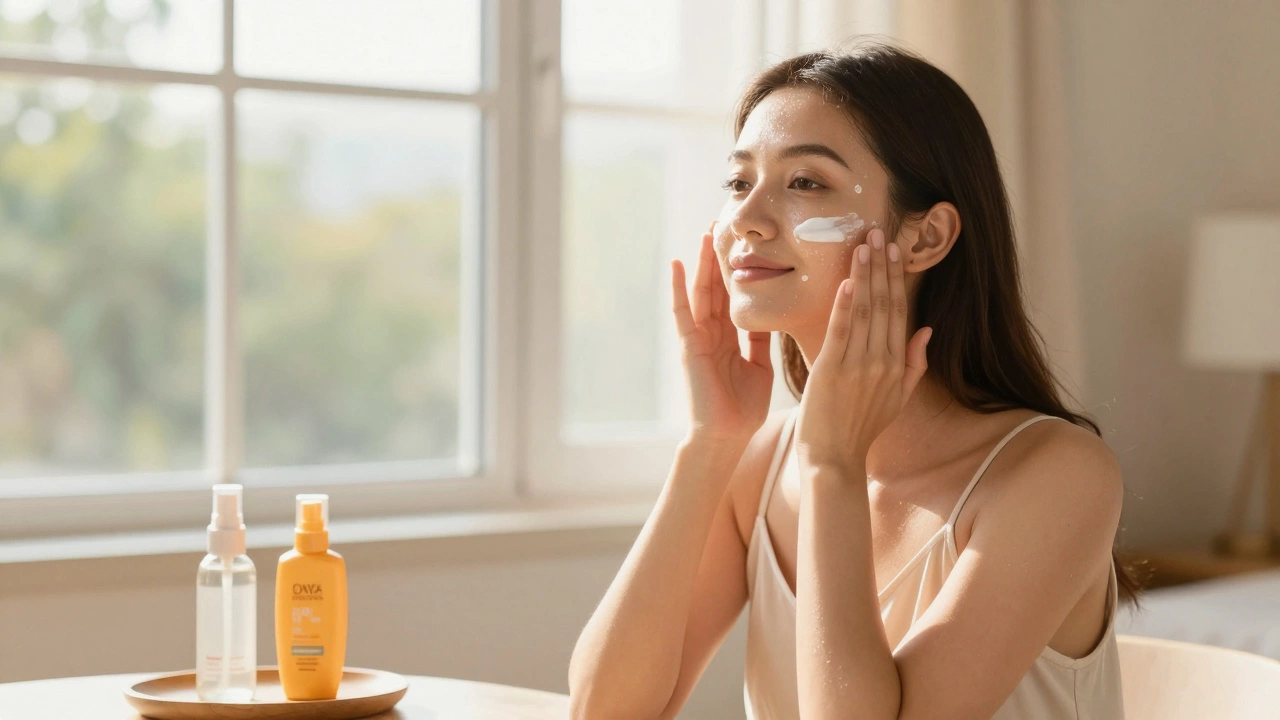
Step-by-Step Morning Routine
- Cleanse: Use a gentle foaming or milk cleanser. Pat dry with a towel, leave it slightly damp.
- Tone (Optional): If you use an alcohol-free toner, apply now. Let it settle.
- Vitamin C Serum: Apply 3-4 drops. Massage gently until absorbed. Wait 60 seconds.
- Hyaluronic Acid: Apply generously. If your room is dry, mist your face with water before this step to give it something to hold onto.
- Moisturizer: Seal the hydration. This stops the HA from evaporating.
- Sunscreen: Apply SPF 30 or higher. Wait 10 minutes before applying makeup.
Can You Mix Them in One Product?
Some modern formulations combine stabilized Vitamin C (like Sodium Ascorbyl Phosphate) with Hyaluronic Acid in a single bottle. These are convenient and safe for sensitive skin who want to save steps.
The downside is potency. To keep both ingredients stable, manufacturers have to compromise on strength. If your priority is significant brightening or anti-pollution defense, buying them separately and layering manually yields stronger results. But for maintenance or busy mornings, combined is perfectly fine.
Summary Checklist
- Always prioritize the thinnest texture first.
- Vitamin C is usually thinner than Hyaluronic Acid gels.
- Acidity is required for Vitamin C absorption; HA works best on hydrated skin.
- Seal HA with a moisturizer to prevent water loss.
- Avoid layering with Retinol immediately after unless your skin is resilient.
- Check Vitamin C color regularly; toss if it browns.