Decluttering Impact Calculator
How many items will you keep?
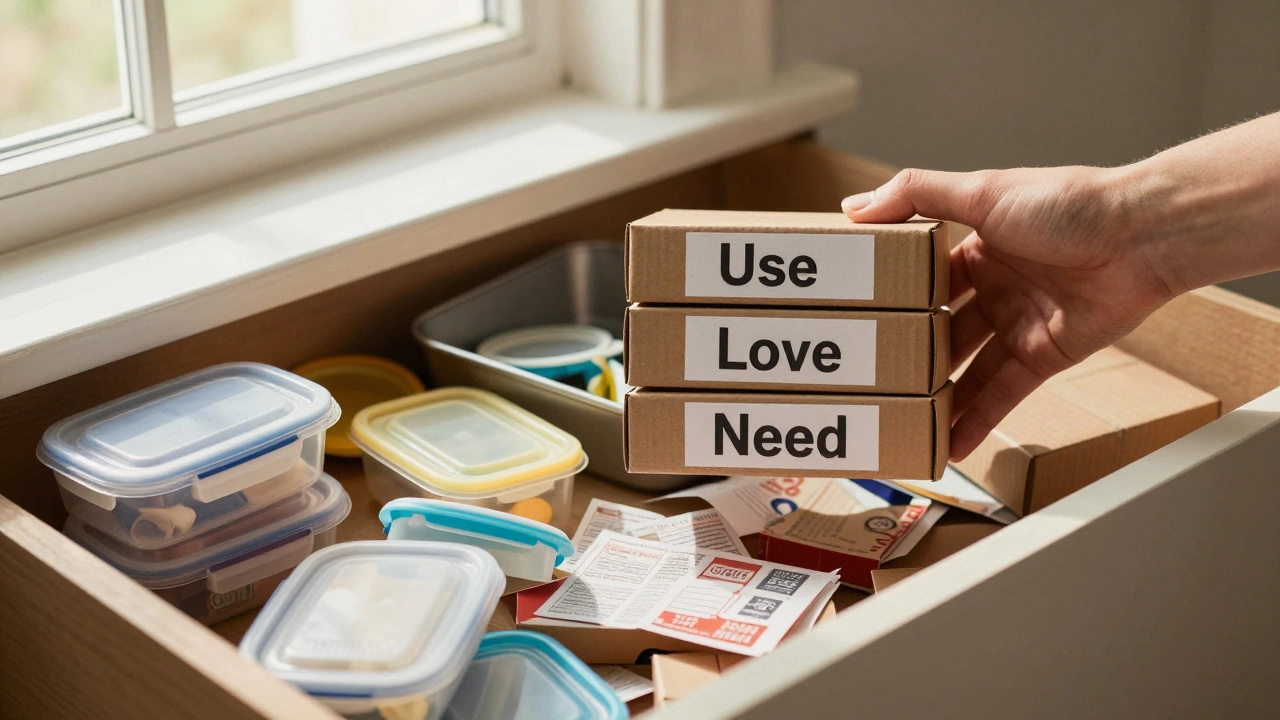
The Golden Rule of Decluttering says: Keep only what you use, love, or need. Based on research, people who follow this rule typically keep about 53% of their items.
Your Impact
Why this works:
The Golden Rule (keep only what you use, love, or need) helps you focus on what truly matters. Most people keep items out of guilt or habit, but applying this filter frees up space and mental energy. Research shows people following this rule can reduce clutter by up to 47% in 30 days.
Most people think decluttering is about throwing things away. But that’s not the real work. The real work is deciding what stays - and why. If you’ve ever spent a weekend sorting through boxes, only to end up with the same mess you started with, you’re not alone. The problem isn’t your effort. It’s your rule.
The golden rule of decluttering
The golden rule of decluttering is simple: Keep only what you use, love, or need. Not what’s valuable. Not what was a gift. Not what you might use someday. If it doesn’t serve one of those three purposes, it’s taking up space that could be used for something that does.
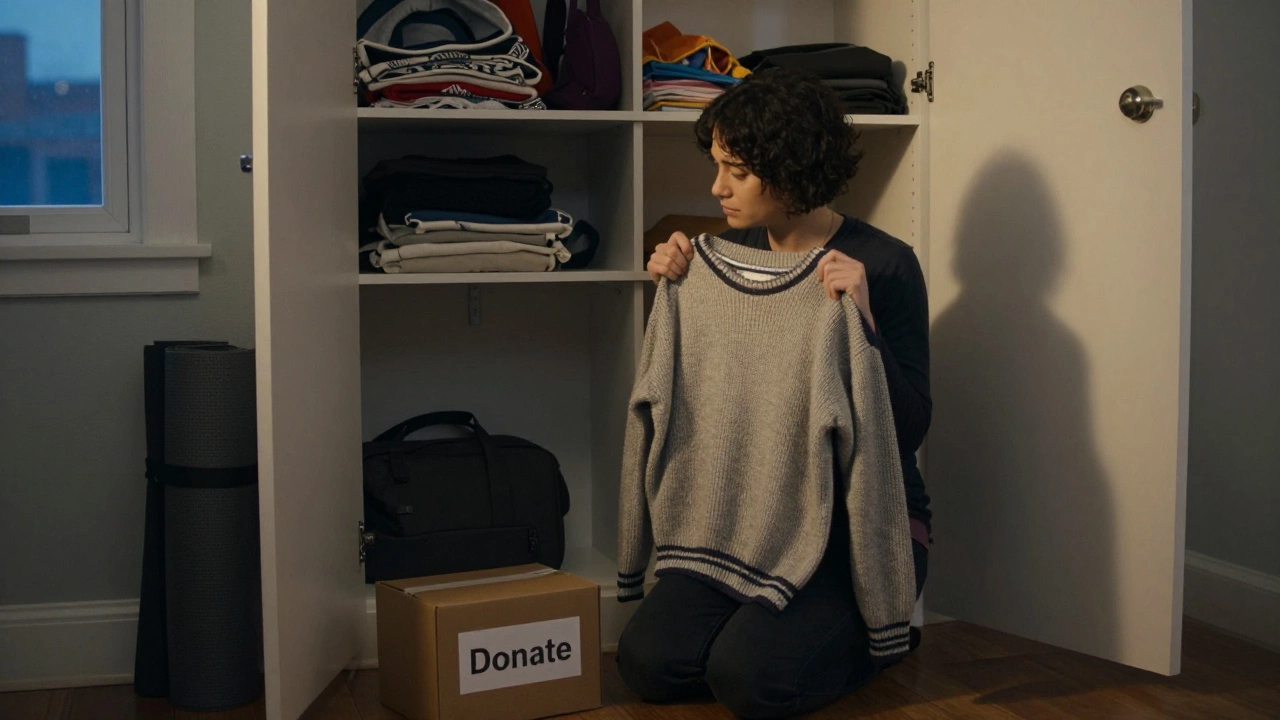
This isn’t a suggestion. It’s a filter. Every item in your home should pass through it. That old sweater from college? If you haven’t worn it in three years, it doesn’t meet the bar. That set of mismatched Tupperware lids? If you can’t find the right match, it’s clutter. That decorative plate you got at a flea market? If it doesn’t bring you joy every time you see it, it’s just dust waiting to happen.
People often confuse this rule with minimalism. Minimalism is a style. This rule is a system. You don’t have to live in a white box with one chair to follow it. You can have books, photos, art, and collections - as long as each one is there because you use it, love it, or need it.
Why the three-part filter works
Let’s break it down. Each part of the rule tackles a different kind of clutter.
- Use: This is about function. Your blender gets used every week? Keep it. The bread maker you bought on a whim? It’s been in the box for 14 months. Let it go.
- Love: This is about emotion. That handmade quilt from your grandmother? If it makes your chest tighten when you see it, keep it. The vase you bought because it looked pretty in the store but never fits your space? It doesn’t count.
- Need: This is about survival. Toothpaste, socks, a working flashlight - obvious. But what about the extra set of sheets? Or the second coffee maker? Are you really using both? Or just keeping them because you think you should?
Here’s the truth: most of what we hold onto doesn’t pass any of these tests. We keep things out of guilt, fear, or habit. Guilt over gifts. Fear of wasting money. Habit because “it’s always been here.”
A 2023 study from the University of California tracked 500 households over six months. Those who followed the three-part rule lost an average of 47% of their household items in the first 30 days. Not because they threw everything away. But because they stopped keeping things that didn’t serve them.
What the golden rule doesn’t say
This rule isn’t about perfection. It’s not about having zero stuff. It’s about having only what matters.
You can still have:
- 100 books if you read them
- A collection of vintage cameras if you still use them
- Five pairs of shoes if you wear each one regularly
But you can’t keep:
- That wedding dress if you’ve never worn it since the ceremony
- Three unused yoga mats because you thought you’d get into it
- Three years’ worth of expired coupons
Here’s where people get stuck: they think the rule is harsh. But it’s actually kinder than pretending you’ll use something again. Holding onto unused items creates invisible stress. You don’t notice it until you walk into a closet and feel overwhelmed. Or you can’t find your keys because there’s too much stuff in the way.
How to apply the rule in real life
Start small. Pick one drawer. One shelf. One corner. Don’t try to do your whole house at once. That’s how people quit.
Here’s how to do it:
- Take everything out. Yes, everything. Put it on the floor.
- Hold each item. Ask: Do I use this? Do I love this? Do I need this?
- If the answer is no to all three, let it go. Donate it. Sell it. Recycle it. Trash it. Don’t overthink.
- Put back only what passes the test.
Use a box for each category:
- Donate: Things in good condition someone else could use.
- Sell: Items with resale value - electronics, tools, collectibles.
- Trash/Recycle: Broken, expired, or unusable stuff.
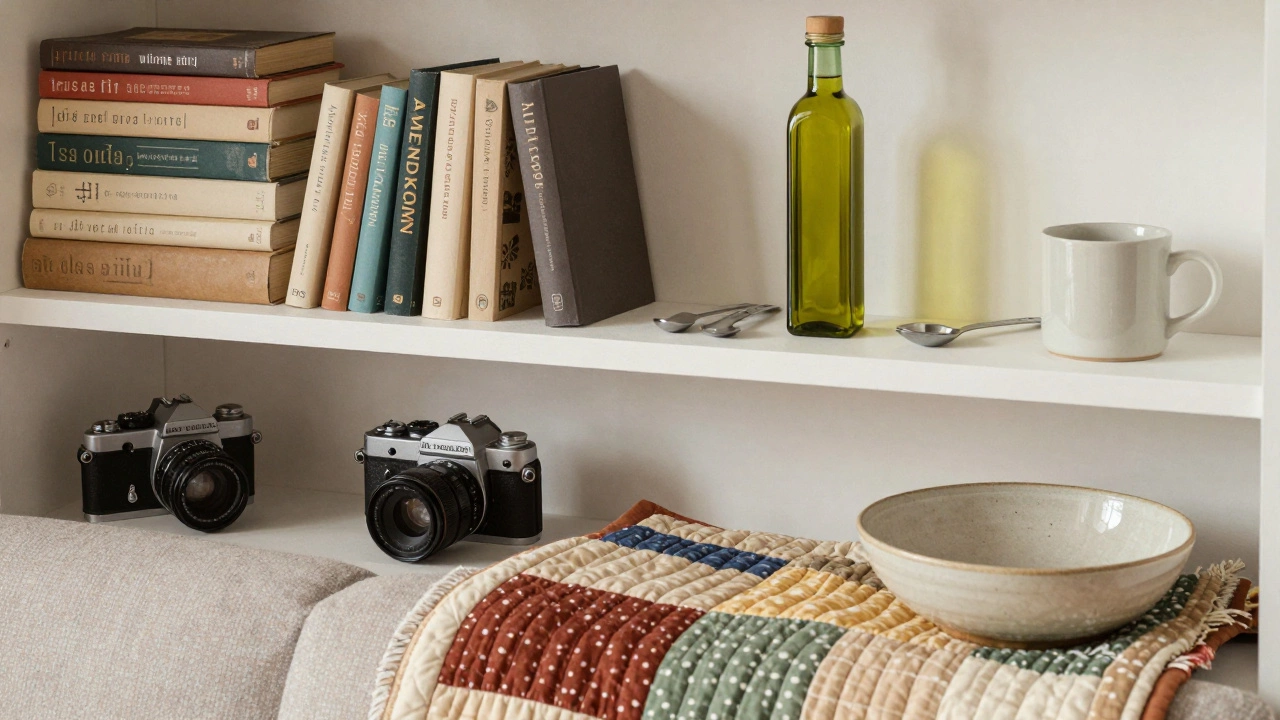
One person I talked to used this method on her kitchen pantry. She found 17 cans of the same soup, 12 spice jars with no labels, and three unused baking pans. She kept three things: the olive oil she cooks with every day, one set of measuring spoons, and a ceramic bowl she loves to eat from. The rest? Gone in 20 minutes.
What happens when you follow the rule
It’s not just about space. It’s about clarity.
When you remove the noise, you start to notice what’s left. The things that stay become more meaningful. You notice how much you enjoy your favorite mug. You remember how good it feels to open a drawer and find exactly what you need. You stop wasting time searching.
People who stick with this rule report:
- Less stress in the morning
- Faster cleaning routines
- More confidence in decision-making
- Less impulse buying
Why? Because you start to see clutter as a symptom - not a problem. The real issue is attachment. Once you stop holding onto things just because they’re there, you stop accumulating in the first place.
The long-term benefit
This rule isn’t a one-time fix. It’s a lifelong habit.
Every time you bring something new into your home - a gift, a sale item, a freebie - ask: Will this pass the test? If the answer is no, say no. It’s not about being strict. It’s about being intentional.
Think of your space like a garden. You don’t plant weeds just because they’re easy to grow. You choose what to nurture. The same goes for your stuff. Let go of what doesn’t grow with you. Make room for what does.
Clutter isn’t about having too much. It’s about holding on to what no longer belongs.
Is the golden rule of decluttering the same as minimalism?
No. Minimalism is a lifestyle choice that often involves owning fewer things. The golden rule - keep only what you use, love, or need - is a decision-making tool you can apply whether you own 50 items or 500. You can follow this rule and still have a cozy, full home. You just won’t have things that don’t serve you.
What if I feel guilty about getting rid of gifts?
Gifts are meant to be appreciated, not kept as guilt tokens. If the gift doesn’t fit your life now, it’s not a betrayal to let it go. The person who gave it to you wanted you to enjoy it - not to store it. Letting it go can be a quiet act of honoring their intention.
Can I keep things "just in case?"
"Just in case" is the biggest clutter trap. If you haven’t needed something in the last 12 months, you probably won’t need it next year. The odds of needing that extra phone charger, seasonal decor, or old manual are far lower than the cost of storing it. Let go of the fear. You can always replace it if you truly need it.
How do I know if I love something?
Love isn’t about how much it cost or how pretty it looks. It’s about how it makes you feel. Do you smile when you see it? Do you reach for it without thinking? Does it make your space feel more like you? If yes - keep it. If it just sits there - it’s decoration, not joy.
What if I have kids or a partner who doesn’t agree?
Start with your own space. Model the behavior. When someone sees how calm and easy your closet is, they’ll ask how you did it. Don’t force it. Let them discover the benefit on their own. You can’t declutter someone else’s life - only your own.
Next steps: Start today
You don’t need a system. You don’t need an app. You don’t need to wait for the weekend.
Right now, pick one drawer. One shelf. One corner. Take everything out. Hold each item. Ask: Use? Love? Need?
One decision at a time. That’s all it takes.