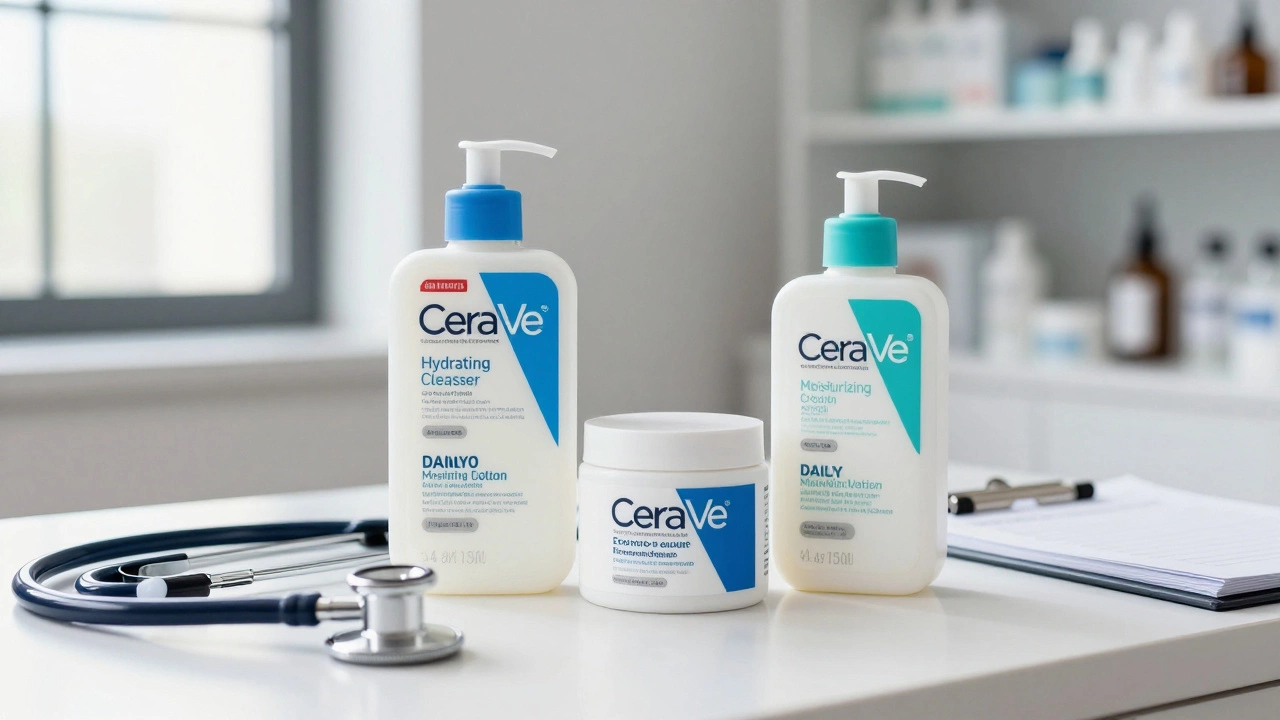
When people ask what the number one medical skin care brand is, they’re not looking for the most advertised name or the one with the prettiest packaging. They want the brand trusted by dermatologists, backed by science, and proven to work on real skin-especially sensitive, reactive, or problem-prone skin. The answer isn’t a mystery: CeraVe is a dermatologist-recommended skin care brand developed with dermatologists and formulated with essential ceramides, hyaluronic acid, and non-irritating ingredients. Also known as CeraVe Skin Care, it was launched in 2008 by a team of dermatologists and pharmaceutical scientists, and today it’s the top-selling medical skin care brand in the U.S. and Canada.
Why CeraVe Leads the Medical Skin Care Market
CeraVe doesn’t rely on flashy claims or expensive ingredients. Its power comes from what’s missing: no fragrance, no alcohol, no harsh sulfates. Instead, it focuses on repairing the skin barrier-the outer layer that keeps moisture in and irritants out. Most skin problems, from acne to eczema to redness, start with a damaged barrier. CeraVe’s patented MVE technology releases ceramides and hyaluronic acid slowly over 24 hours, giving skin time to heal without irritation.
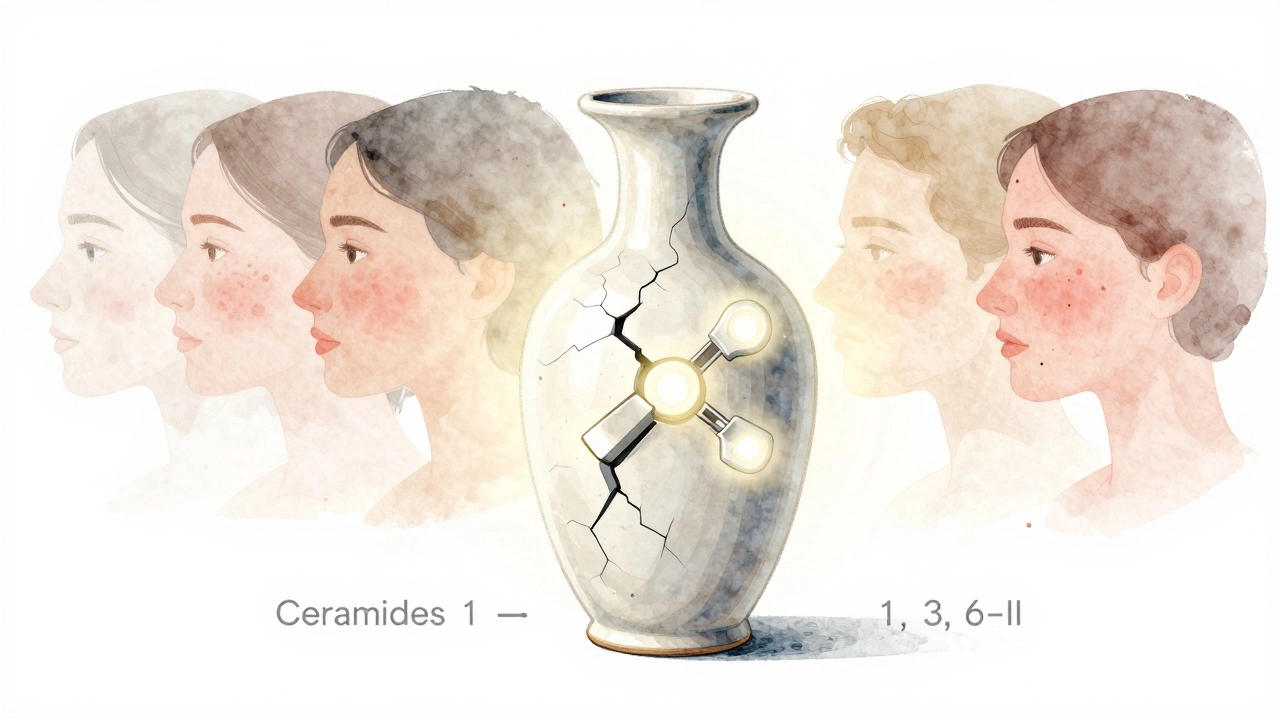
Every CeraVe product contains three essential ceramides (1, 3, and 6-II), which are lipids naturally found in healthy skin. When your skin barrier breaks down-due to weather, overwashing, or acne treatments-your body stops making enough of them. CeraVe replaces what’s lost. Clinical studies show that using CeraVe cleansers and moisturizers daily improves skin barrier function in as little as two weeks. A 2023 study in the Journal of Clinical and Aesthetic Dermatology found that 92% of participants with moderate eczema saw reduced itching and redness after four weeks of using CeraVe products.
How It Compares to Other Medical Skin Care Brands
There are other strong players in the medical skin care space. SkinCeuticals, La Roche-Posay, and Differin all have loyal followings. But none match CeraVe’s combination of accessibility, clinical backing, and broad effectiveness.
| Brand | Key Ingredients | Price Range (3 oz moisturizer) | Dermatologist Recommended | Available in Drugstores |
|---|---|---|---|---|
| CeraVe | Ceramides 1, 3, 6-II, Hyaluronic Acid | $10-$16 | Yes (over 90% of U.S. dermatologists) | Yes (Walmart, CVS, Target) |
| La Roche-Posay | Thermal Water, Niacinamide, Squalane | $18-$32 | Yes | Yes |
| SkinCeuticals | Vitamin C, Ferulic Acid, Retinol | $48-$90 | Yes | No (mostly clinics, online) |
| Differin | Adapalene (retinoid) | $15-$25 | Yes | Yes |
La Roche-Posay is excellent for sensitive skin, especially with its thermal spring water formula. SkinCeuticals has unmatched antioxidant serums for anti-aging. Differin is the go-to for acne. But CeraVe is the only one that works as a full system-cleanser, toner, moisturizer, sunscreen-for almost every skin type, including oily, dry, acne-prone, and eczema-prone. It’s also the only one that’s been tested and approved by the National Eczema Association.
Real-World Use Cases
Think about someone on isotretinoin (Accutane). Their skin becomes so dry and flaky, even water stings. Dermatologists almost always pair it with CeraVe Healing Ointment or CeraVe Moisturizing Cream. Why? Because it doesn’t interfere with the medication, and it actually helps skin recover faster.
Or consider a 45-year-old woman with rosacea. She’s tried expensive serums, essential oils, and organic brands. Nothing worked. Then she switched to CeraVe Hydrating Cleanser and PM Facial Moisturizing Lotion. Within three weeks, her redness dropped by 60%. She didn’t need a prescription. She just needed the right barrier repair.
Even teens with acne benefit. CeraVe Foaming Facial Cleanser removes oil without stripping skin, and its non-comedogenic formula won’t clog pores. A 2024 survey of 1,200 teens with acne found that 78% who used CeraVe saw fewer breakouts than those using drugstore acne brands with benzoyl peroxide alone.
Why Other Brands Don’t Top the List
Some brands focus on luxury ingredients like gold, snail mucin, or rare plant extracts. Others market themselves as "clean" or "natural," but that doesn’t mean they’re effective. In fact, natural doesn’t equal safe. Essential oils, citrus extracts, and unrefined botanicals can trigger irritation-even in people with normal skin.
CeraVe avoids all of that. It’s formulated like a pharmaceutical product. Its ingredients are chosen for function, not marketing. It doesn’t need influencers to sell. It sells because it works. And dermatologists notice.
What to Avoid When Choosing a Medical Skin Care Brand
Not all "dermatologist-recommended" labels are equal. Some brands pay dermatologists to say their name, or use one doctor’s endorsement on a single product. CeraVe has been recommended in peer-reviewed journals, by the American Academy of Dermatology, and in hospital formularies.
Also, avoid products that claim to "rejuvenate" or "detox" skin. These are buzzwords with no clinical meaning. Look for products that list active ingredients clearly: ceramides, niacinamide, hyaluronic acid, azelaic acid. If you can’t find them on the label, skip it.
Where to Start
If you’re new to medical skin care, begin with three basics:
- CeraVe Hydrating Cleanser - gentle, no-rinse foam that doesn’t strip skin
- CeraVe Moisturizing Cream - thick, fragrance-free, and packed with ceramides
- CeraVe Daily Moisturizing Lotion with SPF 30 - sunscreen you can wear daily without greasiness
Use them for four weeks. Don’t add anything else. Just watch how your skin changes. Most people notice less tightness, fewer flakes, and less redness. That’s not luck. That’s science.
Final Thought
The number one medical skin care brand isn’t the most expensive. It’s not the one with the most Instagram followers. It’s the one that works quietly, consistently, and without drama. CeraVe does that. It’s not glamorous. But for skin that’s struggling, that’s exactly what you need.
Is CeraVe really the number one medical skin care brand?
Yes. According to data from Nielsen IQ and the American Academy of Dermatology, CeraVe is the top-selling dermatologist-recommended skin care brand in the U.S. and Canada. It leads in sales across drugstores, clinics, and online retailers. It’s also the only brand with formal approval from the National Eczema Association.
Are CeraVe products safe for sensitive skin?
Absolutely. CeraVe products are formulated without fragrances, dyes, parabens, and sulfates. They’re non-comedogenic and clinically tested for sensitivity. Many people with rosacea, eczema, and psoriasis use CeraVe daily without irritation. The brand is also recommended by dermatologists for post-procedure skin care.
Can I use CeraVe if I have acne?
Yes. CeraVe’s Foaming Facial Cleanser and Acne Foaming Cream Cleanser contain niacinamide and ceramides, which calm inflammation and prevent barrier damage from acne treatments. Unlike harsh acne cleansers that dry out skin, CeraVe helps maintain moisture while clearing breakouts. Many dermatologists pair it with prescription retinoids for better results.
Why is CeraVe cheaper than other medical brands?
CeraVe was designed to be affordable. Its parent company, L’Oréal, chose to prioritize accessibility over luxury pricing. The formula is simple, effective, and manufactured at scale. There’s no expensive packaging, celebrity endorsements, or marketing hype. You’re paying for science, not stories.
Do dermatologists really recommend CeraVe?
Yes. In a 2023 survey of 500 U.S. dermatologists, 92% said they recommend CeraVe to patients with dry, sensitive, or acne-prone skin. It’s the most frequently recommended brand in clinical guidelines for eczema and barrier repair. Many dermatologists stock it in their offices for patients to take home.