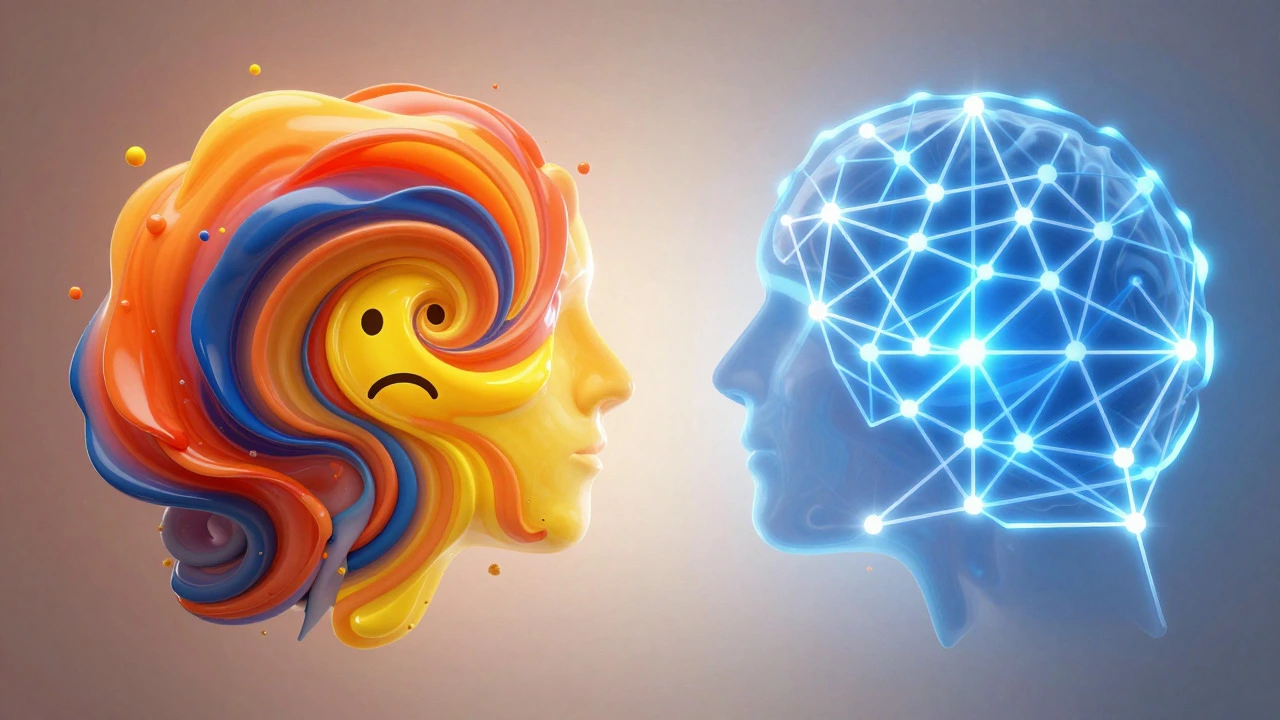
Emotional vs. Mental Well-being Self-Assessment
Emotional Well-being Signs
Mental Well-being Signs
Emotional Score
Based on feelings & mood regulation
Mental Score
Based on cognition & thought patterns
Your Personalized Insight
Suggested Next Steps:
You’ve probably heard these terms thrown around in the same breath. Emotional well-being is the ability to experience, express, and manage a range of emotions effectively. Then there’s Mental well-being, which refers to our cognitive state, including how we think, process information, and make decisions. They sound like twins, right? But if you treat them as the exact same thing, you might miss out on half the picture when it comes to your overall health. Think of it this way: one is about what you feel, and the other is about how you think. Getting this distinction clear isn’t just semantics; it’s the first step toward actually fixing problems when they arise.
The Core Difference: Feeling vs. Thinking
To really get this, we need to strip away the jargon. Emotional well-being is your relationship with your feelings. It’s about recognizing that you’re angry, sad, or joyful, and having the tools to handle those sensations without getting swept away by them. If you have high emotional intelligence, you can sit with discomfort. You don’t suppress anger until it explodes, nor do you deny sadness until it turns into depression. You acknowledge it, process it, and move forward.
Mental well-being, on the other hand, is about the machinery of your mind. It covers your thought patterns, memory, concentration, and logic. When someone says their "mental health" is off, they often mean their thoughts are racing, they can’t focus at work, or they’re stuck in negative loops of anxiety. It’s the software running in the background of your brain. While emotions are the weather-stormy one day, sunny the next-mental well-being is the climate system itself. If the climate is broken, the weather will always be unpredictable.
Why does this matter? Because you can treat them differently. If your issue is purely emotional, therapy focused on emotional regulation (like Dialectical Behavior Therapy) might help. If your issue is cognitive, like intrusive thoughts or inability to concentrate, Cognitive Behavioral Therapy (CBT) targets those specific thinking errors. Knowing which bucket your struggle falls into helps you pick the right tool for the job.
How They Interact: The Feedback Loop
Here’s the tricky part: they don’t exist in separate silos. They talk to each other constantly. Your thoughts influence your emotions, and your emotions influence your thoughts. This is called the cognitive-emotional loop. Let’s say you’re stressed about a project at work. A negative thought ("I’m going to fail") triggers an emotional response (anxiety). That anxiety then makes it harder to think clearly, leading to more negative thoughts ("See? I can’t even focus"). It’s a vicious cycle.
Conversely, positive mental habits can improve emotional stability. If you practice reframing negative thoughts-a core technique in CBT-you reduce the intensity of negative emotions. For example, changing "Everyone hates me" to "Some people had a bad day" lowers your stress levels. This shows why holistic approaches to wellness are so effective. You can’t just fix your mood without addressing your mindset, and vice versa.
Research from the World Health Organization highlights that mental disorders affect over 970 million people globally, yet many suffer in silence because they confuse emotional distress with clinical mental illness. Understanding the interplay helps destigmatize both. It’s not just "being moody"; it’s a complex interaction between your brain’s chemistry and your life experiences.
| Aspect | Emotional Well-being | Mental Well-being |
|---|---|---|
| Primary Focus | Feelings, moods, and affective states | Thoughts, cognition, and logic |
| Key Skills | Empathy, emotional regulation, resilience | Problem-solving, critical thinking, memory |
| Common Challenges | Alexithymia (inability to identify emotions), suppressed anger | Rumination, brain fog, decision paralysis |
| Therapeutic Approach | DBT, mindfulness, art therapy | CBT, psychoeducation, neurofeedback |
| Physical Symptoms | Tension headaches, stomach issues, fatigue | Insomnia, restlessness, difficulty concentrating |
Signs Your Emotional Health Needs Attention
It’s easy to ignore emotional struggles because they feel internal and private. But your body keeps score. If you find yourself snapping at loved ones over small things, that’s a sign of poor emotional regulation. Maybe you feel numb most of the time, unable to enjoy hobbies you used to love. This isn’t just "sadness"; it’s an emotional disconnect.
Look for these red flags:
- You avoid social situations because you’re afraid of feeling judged or overwhelmed.
- You have intense mood swings that seem unrelated to external events.
- You struggle to understand why you’re feeling a certain way (alexithymia).
- You use substances or food to cope with uncomfortable feelings rather than processing them.
These aren’t character flaws. They’re signals that your emotional toolkit needs upgrading. Just like you wouldn’t expect to run a marathon without training, you shouldn’t expect to navigate complex relationships without emotional skills.

Indicators of Struggling Mental Health
Mental health issues often manifest as cognitive distortions. You might notice that your thoughts are racing so fast you can’t sleep. Or perhaps you’re stuck in a loop of "what ifs," constantly worrying about scenarios that haven’t happened. This is rumination, a hallmark of anxiety disorders.
Other signs include:
- Difficulty making simple decisions due to fear of making the wrong choice.
- Forgetfulness or "brain fog" that affects your work performance.
- Negative self-talk that feels like an inner critic you can’t shut up.
- Lack of motivation driven by a belief that effort won’t change the outcome.
Unlike emotional pain, which is often acute and situational, mental health struggles can be chronic and pervasive. They affect your ability to function in daily life. If you’re struggling to remember appointments or focus on conversations, it’s not laziness; it’s a cognitive barrier that needs addressing.
Practical Steps to Improve Both
So, how do you boost both areas? The good news is that many lifestyle changes benefit both simultaneously. Sleep is the foundation. Poor sleep disrupts emotional regulation centers in the brain (the amygdala) and impairs cognitive function. Aim for 7-9 hours of quality sleep. Without it, no amount of therapy will fully fix the underlying biological imbalance.
For emotional well-being, practice labeling your emotions. Instead of saying "I feel bad," try "I feel frustrated because my deadline was moved." Specificity reduces the power of the emotion. Journaling is also powerful here. Writing down your feelings helps externalize them, making them easier to manage.
For mental well-being, challenge your thoughts. When a negative thought arises, ask: "Is this true? What evidence do I have?" This simple exercise breaks the cycle of automatic negative thinking. Mindfulness meditation strengthens the prefrontal cortex, the part of the brain responsible for rational decision-making, helping you stay grounded in the present moment.
Don’t forget physical activity. Exercise releases endorphins, which improve mood, and increases blood flow to the brain, enhancing cognitive function. It’s a dual-action remedy. Even a 20-minute walk can reset your emotional state and clear mental fog.

When to Seek Professional Help
Sometimes, self-help isn’t enough. If your emotional or mental struggles interfere with your work, relationships, or daily functioning for more than two weeks, it’s time to talk to a professional. Therapists, psychologists, and psychiatrists specialize in different aspects of well-being. A therapist might help you unpack emotional trauma, while a psychiatrist can evaluate whether medication is needed to balance neurotransmitters affecting your mood and cognition.
Remember, seeking help is a sign of strength, not weakness. It means you value your well-being enough to invest in it. Whether you’re dealing with grief, anxiety, or depression, there are evidence-based treatments available. Don’t wait until you’re at rock bottom. Early intervention leads to better outcomes.
Building Long-Term Resilience
Resilience isn’t about bouncing back quickly; it’s about adapting and growing through adversity. People with high emotional and mental well-being don’t avoid stress; they navigate it effectively. They have a support network, healthy coping mechanisms, and a realistic view of themselves and the world.
Start small. Set boundaries at work to protect your energy. Practice gratitude daily to shift your focus from lack to abundance. Connect with others regularly, as social connection is a potent buffer against both emotional and mental decline. Wellness is a journey, not a destination. By understanding the difference between emotional and mental well-being, you equip yourself with the knowledge to nurture both, leading to a richer, more balanced life.
Can you have good emotional well-being but poor mental health?
Yes. Someone might be emotionally stable and able to regulate their feelings but still struggle with cognitive issues like ADHD, dementia, or severe anxiety that affects their thinking processes. Conversely, someone might have sharp cognitive abilities but lack emotional intelligence, leading to relationship difficulties.
What is the role of biology in emotional vs. mental well-being?
Biology plays a significant role in both. Neurotransmitters like serotonin and dopamine affect mood (emotional) and attention (mental). Genetic predispositions can influence susceptibility to conditions like depression or bipolar disorder. However, lifestyle factors and therapy can modify how these biological systems function.
How does stress impact emotional and mental well-being differently?
Acute stress often triggers immediate emotional responses like fear or anger. Chronic stress, however, impacts mental well-being by impairing memory, concentration, and decision-making capabilities. Over time, prolonged stress can lead to burnout, affecting both emotional resilience and cognitive function.
Are there specific exercises for improving emotional intelligence?
Yes. Practicing active listening, asking open-ended questions, and reflecting on your own reactions to stimuli can enhance emotional intelligence. Mindfulness meditation also helps increase awareness of your emotional states without judgment, fostering better regulation.
Does diet affect mental and emotional health?
Absolutely. The gut-brain axis connects your digestive system to your brain. A diet rich in omega-3 fatty acids, antioxidants, and probiotics supports brain health, reducing inflammation linked to depression and anxiety. Poor nutrition can lead to energy crashes and mood swings, impacting both emotional and mental stability.