Minimalist Mindset Quiz
Answer these questions to see how aligned you are with minimalist principles. There are no wrong answers—just honest ones.
Your Minimalist Score
Personalized Advice:
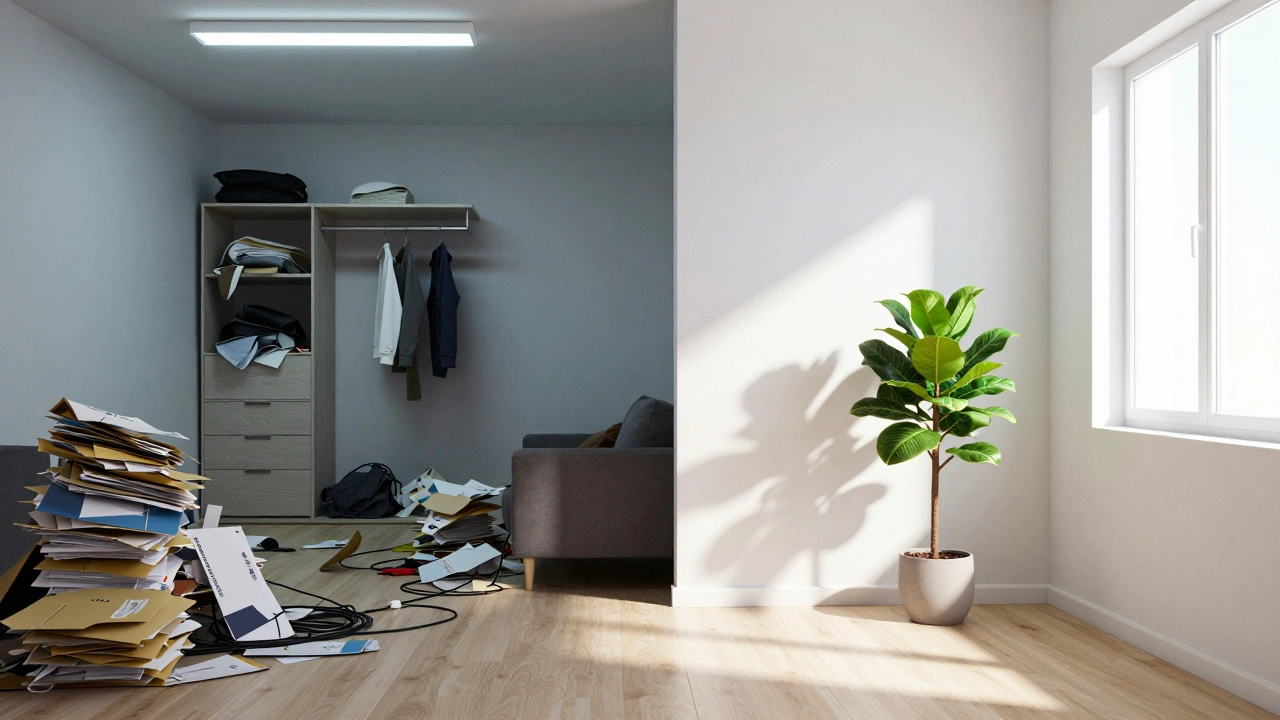
You have probably seen the photos. The white walls, the single plant in the corner, the kitchen counter that looks like it belongs in an architectural magazine. It looks peaceful. It looks easy. But if you are standing in your own living room, staring at a pile of mail and a closet that refuses to close, that aesthetic might feel less like inspiration and more like judgment. You want that peace. You want that space. But where do you actually start? Most people think the first step is buying new furniture or throwing everything away. They aren't right.
The real first step to becoming a minimalist is not physical. It is mental. Before you touch a single object, you have to decide what you value. Minimalism is not about having less for the sake of having less. It is about making room for what matters. If you skip this step, you will just end up with an empty house and a confused mind. Let's break down how to take that first step without burning out.
Defining Your Why
Why do you want to simplify your life? This question sounds cliché, but it is the most important one you will ask yourself. Are you tired of cleaning? Do you feel anxious when you look around your home? Or are you trying to save money? Your reason will dictate your method. If you are motivated by cleanliness, you will focus on surfaces and storage. If you are motivated by anxiety, you will focus on reducing visual noise. If you are motivated by finance, you will focus on spending habits.
Take five minutes to write down your reasons. Be specific. Instead of writing "I want a better life," write "I want to spend Sunday mornings reading instead of organizing my garage." This clarity acts as your anchor. When the process gets hard-and it will-you can refer back to this list. Without a clear why, the initial excitement fades quickly, and the old habits creep back in.
The Audit: Seeing What You Have
Once you know your why, you need to see your reality. This is the audit phase. You don't need to throw anything away yet. You just need to observe. Walk through your home with a fresh pair of eyes. Look at your things not as useful objects, but as data points. How many coffee mugs do you really use? How many cables are tangled in a drawer? How many clothes haven't been worn since last winter?
This stage is about awareness. Many of us live in a state of autopilot, adding things to our homes without noticing the accumulation. The audit breaks that trance. You might be surprised by the sheer volume of stuff you own. Don't judge yourself for it. Just note it. This observation creates the gap between who you are and who you want to be. That gap is where change happens.
Starting Small: The One-Drawer Rule
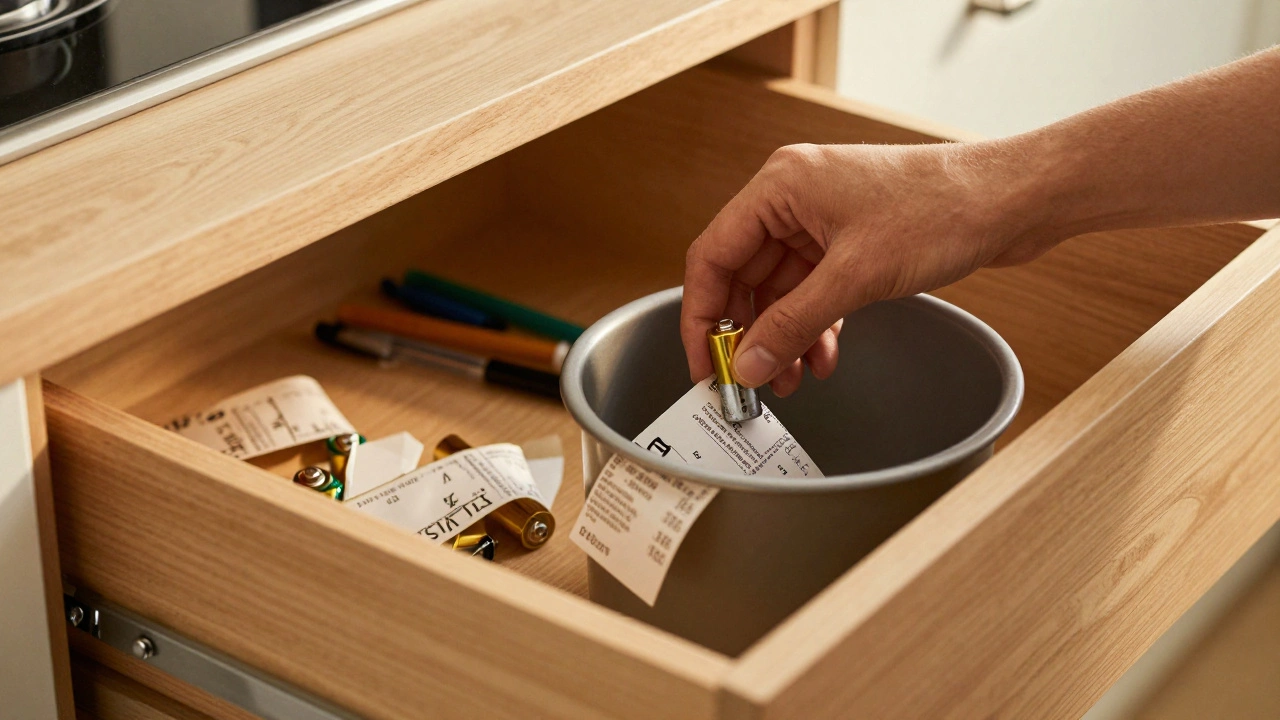
Here is where most people fail. They try to declutter their entire house in a weekend. They get overwhelmed, exhausted, and quit. The secret to success is starting absurdly small. Pick one drawer. Just one. Maybe it is the junk drawer in the kitchen. Maybe it is the top drawer of your nightstand. Clear it out completely. Throw away the dead batteries, the dried-up pens, and the mystery receipts. Keep only what you use regularly.
Why does this work? Because it is achievable. You can finish it in twenty minutes. You get a quick win. You see a tangible result. This builds momentum. Once that drawer is done, you might feel like tackling the next one. If not, that is okay too. You have still taken the first step. The goal is not speed; it is consistency. Building the habit of evaluating your possessions is more important than the number of items you discard.
- Choose a low-stakes area: Start with something that doesn't hold deep emotional weight, like office supplies or kitchen utensils.
- Set a timer: Give yourself fifteen minutes. When the timer goes off, stop. This prevents burnout.
- Celebrate the win: Acknowledge that you did it. This positive reinforcement encourages you to continue.
The Decision Framework
As you start removing items, you will face a constant question: Do I keep this or let it go? To answer this efficiently, you need a framework. Relying on gut feeling alone is slow and inconsistent. Use these three questions for every item:
- Do I use it? If you haven't used it in the past year, and it's not a seasonal item like a snow shovel, you probably don't need it.
- Does it bring me joy or serve a purpose? This is the Marie Kondo approach, but with a twist. Joy is subjective. Purpose is objective. A ugly mug might bring no joy, but if it is your favorite size for morning coffee, it has purpose.
- Would I buy it again today? If the answer is no, let it go. We often keep things because we paid for them, not because they add value now.
This framework removes the emotion from the decision. It turns decluttering into a logical process. Over time, you will develop a sharper intuition for what deserves space in your life.
Managing Digital Clutter
Minimalism isn't just about physical objects. In 2026, much of our clutter is digital. Our phones, computers, and email inboxes are often overflowing with notifications, apps, and files we never open. This digital noise contributes to stress and distraction just as much as a messy desk does.
The first step in digital minimalism is auditing your subscriptions and apps. How many streaming services do you pay for but rarely watch? How many social media apps do you open out of habit rather than interest? Unsubscribe from newsletters you don't read. Delete apps that drain your battery and your attention. Turn off non-essential notifications. This creates mental space, allowing you to focus on the tasks and relationships that truly matter.
| Aspect | Physical Decluttering | Digital Decluttering |
|---|---|---|
| Primary Action | Removing objects | Unsubscribing/Deleting |
| Immediate Impact | Visual calm | Mental clarity |
| Common Barrier | Sentimental attachment | Fear of missing out (FOMO) |
| Time Required | Hours/Days | Minutes |
Handling Sentimental Items
Sentimental items are the hardest part of minimalism. These are the gifts from friends, the souvenirs from trips, the baby clothes. They carry memories, so letting them go feels like losing a part of your history. But remember: the memory lives in you, not in the object. Keeping a box of unused tickets does not preserve the experience of the concert; it just takes up shelf space.
For sentimental items, consider digitizing them. Take high-quality photos of cards, letters, and small trinkets. Create a digital album. For larger items, keep only the ones that you genuinely interact with or display. If you haven't looked at a souvenir in two years, it is likely serving no purpose other than dust collection. Be kind to yourself during this process. It is okay to keep a few things. The goal is balance, not emptiness.

Creating Systems to Maintain Simplicity
Decluttering is a one-time event; minimalism is a lifestyle. To maintain a minimalist home, you need systems. The most effective system is the "one in, one out" rule. For every new item you bring into your home, one old item must leave. Bought a new shirt? Donate an old one. Got a new book? Sell or give away an old one. This prevents accumulation over time.
Another helpful system is regular maintenance checks. Schedule a thirty-minute session once a month to review your spaces. Put away stray items, donate things you no longer need, and reset your environment. This small investment of time saves hours of deep cleaning later. It keeps your home aligned with your values continuously.
Overcoming Social Pressure
Living minimally in a consumer-driven society can feel isolating. Friends might invite you shopping. Family might offer unwanted gifts. Colleagues might bond over retail therapy. You don't have to reject these interactions entirely, but you do need to set boundaries. It is okay to say, "I'm focusing on simplifying my life right now, so I'm not buying much." Most people will respect your honesty.
Shift the focus of your social activities. Instead of going to malls, suggest hiking, cooking together, or visiting museums. Build connections based on experiences rather than exchanges. This not only supports your minimalist goals but also enriches your relationships. True friends care about you, not your stuff.
The Long-Term Perspective
Becoming a minimalist is not a destination; it is a journey. There will be days when you slip up and buy something unnecessary. There will be weeks when life gets busy and your home gets messy. That is normal. Don't let perfectionism paralyze you. Progress is more important than purity. Each small step toward simplicity brings you closer to the freedom and clarity you seek.
Remember the first step: defining your why. Keep returning to it. Let it guide your decisions. As you clear away the excess, you will find more than just physical space. You will find time, energy, and peace. And that is worth every bit of effort.
Is minimalism just for rich people?
No. Minimalism is often misunderstood as a luxury trend featuring expensive, sparse interiors. In reality, it is a practical tool for anyone, regardless of income. For those on a budget, minimalism helps reduce waste, avoid impulse buys, and focus resources on essentials. It is about intentionality, not aesthetics.
How long does it take to become a minimalist?
There is no set timeline. Some people see significant changes in a few months, while others take years. The key is consistency. Start with small steps, like the one-drawer rule, and build from there. Rushing the process often leads to regret and burnout.
What should I do with items I no longer need?
Donate usable items to local charities or shelters. Sell valuable items online or at garage sales. Recycle materials that cannot be reused. Avoid throwing good items in the trash. Giving items a second life adds meaning to the decluttering process.
Can I be a minimalist with kids?
Yes, but it requires flexibility. Children need toys and books, but they don't need hundreds of them. Rotate toys to keep interest high without cluttering the space. Involve kids in the process by letting them choose which items to keep. Teach them the value of caring for fewer, higher-quality items.
Does minimalism mean I can't own anything I love?
Absolutely not. Minimalism encourages keeping what you love and use. It is about removing the things that distract you from what matters. If you love art, keep your art. If you love cooking, keep your tools. The goal is to curate your life, not strip it bare.