Decluttering Timer
Set Your Decluttering Session
Start with just 15 minutes. Set a timer and focus on one small area of your home. You don't need to finish everything today—just make progress.
You're making progress! Just keep going for one more minute.
Most people don’t realize how much mental energy they waste every day just searching for things. Keys that vanished. Socks that disappeared. That one tool you swear you had last week. It’s not magic-it’s clutter. And clutter doesn’t just take up space. It steals focus, drains calm, and makes your home feel heavier than it should.
The good news? You don’t need to buy fancy bins, hire a professional, or spend a weekend in a frenzy. Decluttering and organizing your home is about making smarter choices with what you already have. It’s not about perfection. It’s about progress.
Start with one drawer, not the whole house
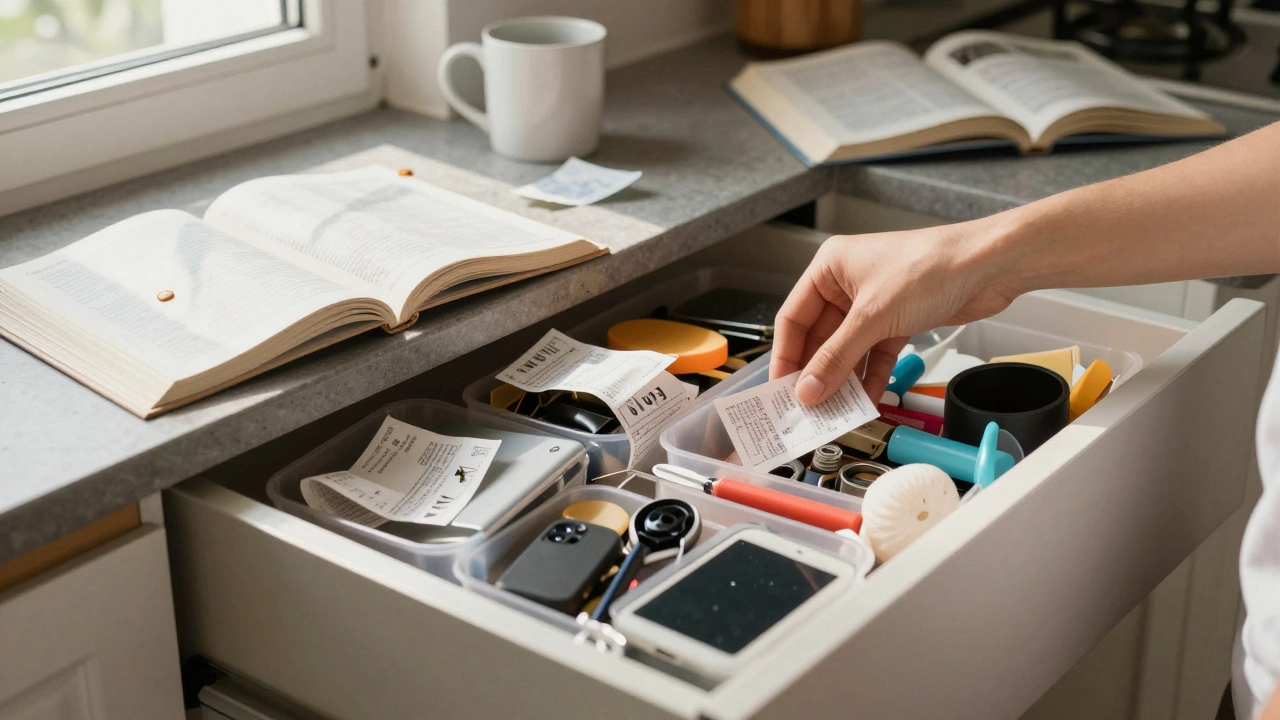
Trying to tackle your entire home at once is the fastest way to quit. You’ll feel overwhelmed before you even begin. Instead, pick one tiny space-a junk drawer, a single shelf, or even just your nightstand. That’s it. One spot. Do that first.
Set a timer for 15 minutes. Empty everything out. Sort items into three piles: keep, donate/sell, trash. Be ruthless. If you haven’t used it in the last 12 months, ask yourself: why are you still holding onto it? That blender you bought for smoothies in January 2023? You haven’t made one since. Give it away. That pile of old receipts? Toss them. Digital backups exist for a reason.
When you’re done, put back only what you truly need and use. Group like items together. Use small boxes or dividers if they help. The goal isn’t to make it look Instagram-perfect. It’s to make it easy to find what you need, every single time.
Use the 80/20 rule-your stuff isn’t as important as you think
Here’s a simple truth: you use about 20% of your belongings 80% of the time. That’s the Pareto Principle in action. The other 80%? They’re just taking up space, collecting dust, and making decisions harder.
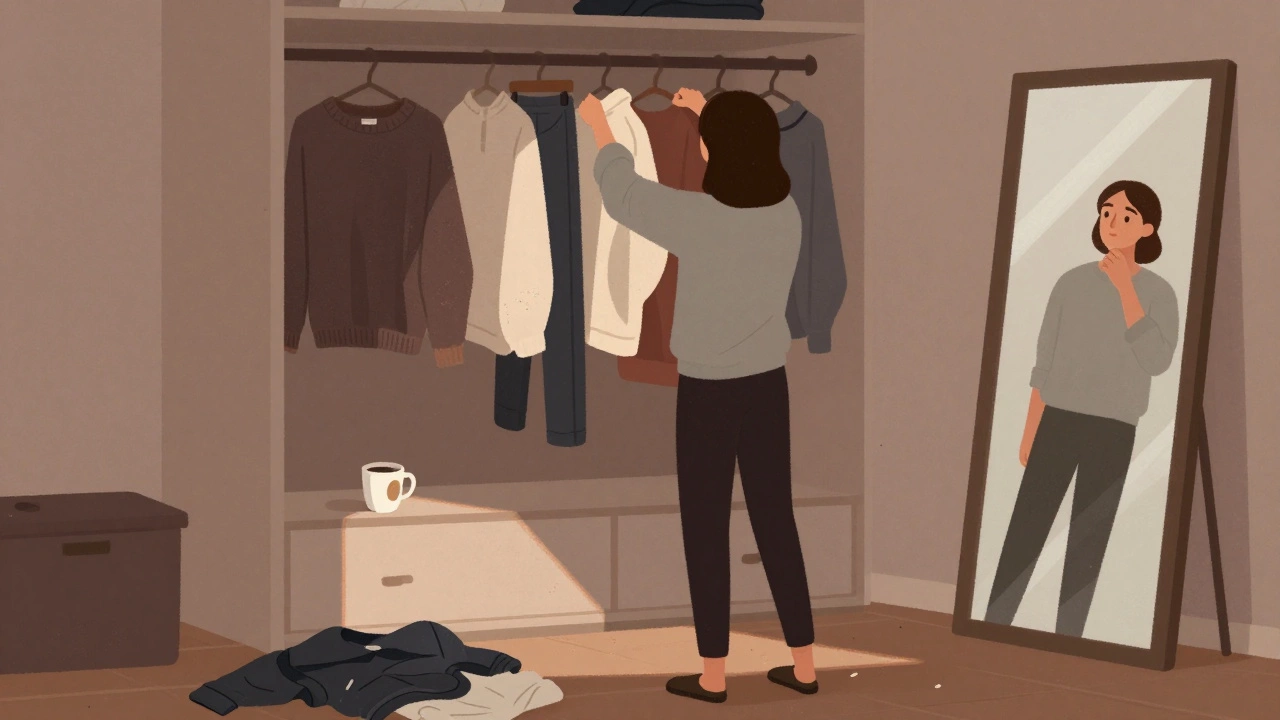
Walk through your closet. Pull out everything. Now, try on each item. Does it fit? Do you love how it looks? Would you buy it again today? If the answer is no to any of those, it’s going out. Same with books, kitchen gadgets, toys, and electronics. If it doesn’t serve you now, it’s not yours anymore.
This isn’t about being minimalistic for the sake of it. It’s about creating space for what actually matters. Your favorite sweater. Your go-to coffee mug. The board game your family still plays on Friday nights. Keep those. Let go of the rest.
Organize by use, not by category
Most people organize by type: all the pens here, all the batteries there, all the cleaning supplies in the cupboard under the sink. But that doesn’t match how you live.
Instead, organize by activity. Think about your daily routines. Where do you actually use things?
- Where do you make coffee? Keep the mug, beans, filter, and kettle right there-not in a cabinet across the kitchen.
- Where do you pay bills or check your calendar? Have a small tray or basket on your desk with pens, stamps, and notepads.
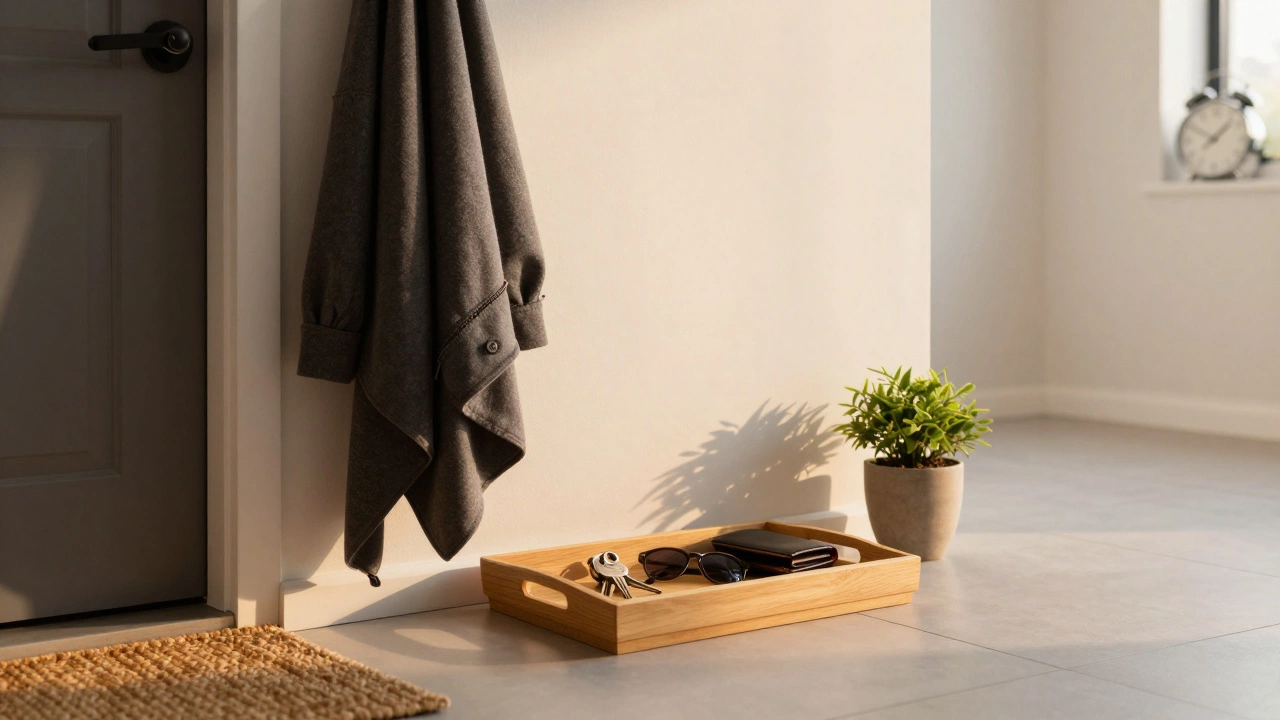
- Where do you grab your keys, wallet, and sunglasses before leaving? Put a hook and a small tray by the door. No more frantic searches at 8 a.m.
When you organize by use, you reduce friction. You stop wasting time. You stop feeling like your home is working against you.
Stop buying storage solutions until you’ve decluttered first
How many times have you bought a set of bins, baskets, or drawer organizers-only to fill them with the same clutter you already had?
Storage doesn’t fix clutter. It hides it. And hidden clutter still weighs on your mind. You know it’s there. You just can’t see it.
Before you buy anything, ask: do I need more storage, or do I need less stuff? If you haven’t sorted through your belongings first, you’re just building a bigger box for the same mess.
Once you’ve cleared out the excess, then-and only then-get containers that fit what’s left. Use what you already have: shoeboxes, mason jars, old tins. Repurpose before you purchase. You’ll save money and reduce waste.
Make it stick with a weekly 10-minute reset
Decluttering isn’t a one-time project. It’s a habit. And habits need rhythm.
Set a timer for 10 minutes every Sunday evening. Walk through your home and do one thing: put everything back where it belongs. Put clothes in the hamper. Return books to the shelf. Wipe down the kitchen counter. Toss any trash that’s accumulated.
That’s it. No deep clean. No pressure. Just a quick reset. You’ll be amazed how much this prevents buildup. It’s like brushing your teeth-you don’t wait until your mouth hurts to do it.
After a few weeks, you’ll notice something: you’re less stressed. You’re not yelling at your partner because you can’t find the charger. You’re not avoiding your closet because it’s a nightmare. Your home feels lighter. And so do you.
Let go of guilt, sentiment, and "what if"
The biggest barriers to decluttering aren’t physical. They’re emotional.
You’re holding onto that gift from your aunt because you feel guilty. You’re keeping your kid’s toddler drawings because you think you’ll regret it later. You’re saving that broken toaster because "maybe I’ll fix it someday."
Here’s the truth: you’re not honoring memory by keeping clutter. You’re honoring it by remembering the feeling, not the object. Take a photo of the drawings. Thank your aunt and pass the gift on to someone who’ll use it. Fix the toaster-or buy a new one. Either way, stop letting guilt rule your space.
Ask yourself: if I lost everything in a fire tomorrow, what would I truly miss? The things you answer with are the only things worth keeping.
What happens after you’re done?
Once your home feels calm and clear, you’ll notice changes you didn’t expect.
- You’ll spend less time cleaning because there’s less to clean.
- You’ll find things faster, so you’ll be less frustrated.
- You’ll start making better purchases-you’ll think twice before buying something you don’t need.
- You’ll feel more in control of your life.
This isn’t about having a perfect home. It’s about having a home that works for you. A space where you can breathe, relax, and feel at ease. That’s the real goal.
Start small. Be consistent. Let go of what doesn’t serve you. Your future self will thank you.
How long does it take to declutter a whole house?
There’s no fixed timeline-it depends on your space and how much you own. Most people see real change after just 30 minutes of focused work. A full home can take weeks or months, but you don’t need to finish it all at once. Focus on one drawer, one shelf, one room at a time. Progress, not perfection, is the goal.
What if I’m overwhelmed by how much stuff I have?
Start with something tiny-a single drawer, a shoebox, or a corner of your nightstand. Don’t think about the rest. Just do that one small thing. Once you finish, you’ll feel a sense of accomplishment. That momentum will carry you to the next spot. You don’t need to fix everything today. Just fix one thing.
How do I stop buying things I don’t need?
After decluttering, you’ll naturally start noticing how much stuff you already have. When you feel the urge to buy something, pause. Ask: Do I have something that already does this? Will I use this regularly? Will I still want it in six months? Often, the answer is no. Waiting 24 hours before buying also helps-most impulses fade.
What should I do with items I want to donate?
Keep a box or bag in a corner of your closet or garage labeled "Donate." As you declutter, put unwanted but usable items directly into it. Once it’s full, drop it off at a local charity, thrift store, or community center. In Melbourne, places like Vinnies, Salvos, or local op-shops accept most household items. Don’t wait until you’re "ready"-just go.
Is it okay to keep sentimental items?
Yes-but limit them. Choose one box, and only one, for sentimental items. Not three. Not a whole closet. One box. Fill it with the things that truly matter-your child’s first drawing, your grandmother’s jewelry, your wedding invitation. Once it’s full, stop. Take photos of the rest. Let go of the guilt. You’re not forgetting your memories-you’re making space for the ones you’re living now.
If you’ve read this far, you already know what to do. Start small. Pick one drawer. Empty it. Sort it. Put back only what you need. That’s the first step. The rest will follow.