Rice Safety Checker
Check if your prepped rice is safe to consume based on storage time and cooling method.
Every Monday morning, thousands of people boil a big pot of rice, portion it into containers, and stash it in the fridge for the week. It’s quick, cheap, and seems like the smart way to eat healthy. But here’s the truth most meal prep guides won’t tell you: rice is one of the worst foods to prep ahead of time - and the risks aren’t just about taste.
Rice Carries a Silent Threat
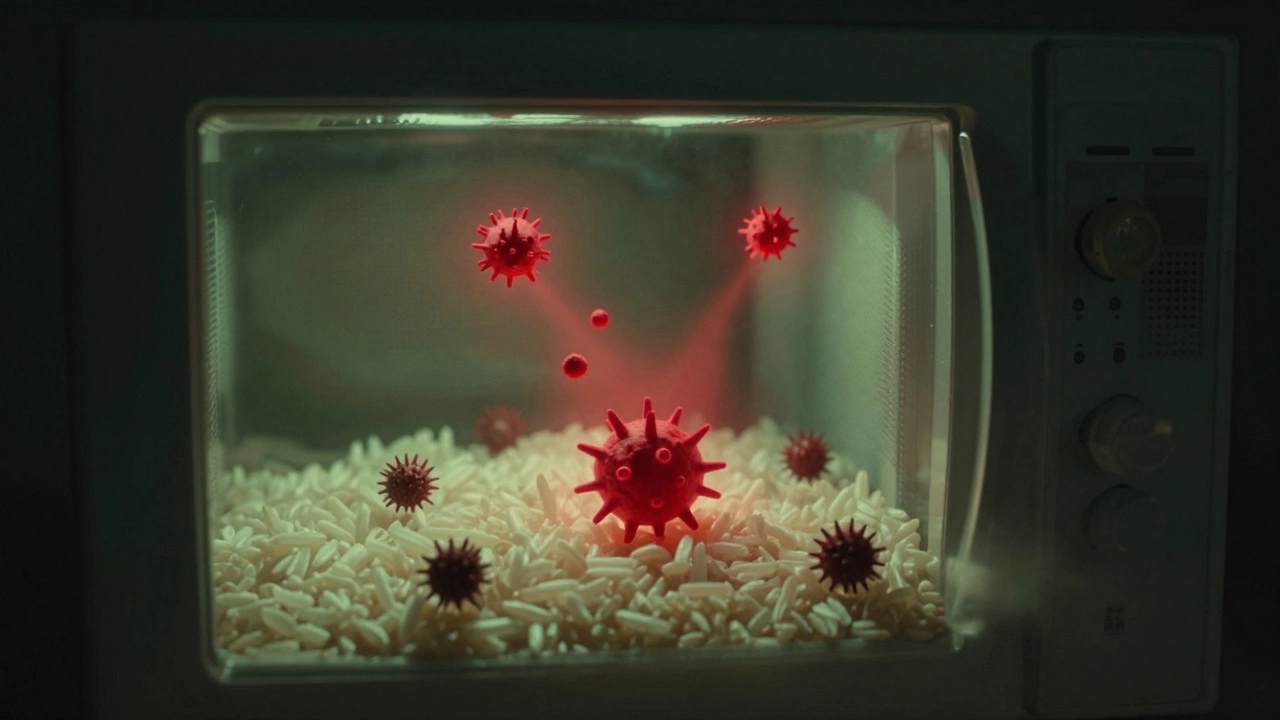
Uncooked rice naturally contains spores of a bacteria called Bacillus cereus. These spores survive boiling and can wake up when the rice cools down slowly. Unlike harmful bacteria like salmonella, B. cereus doesn’t make the rice smell bad or look spoiled. It doesn’t even multiply much in the fridge. But when you reheat that rice - especially if it’s been sitting for more than 24 hours - those spores turn into toxin-producing bacteria.
The result? Food poisoning. Not the kind that sends you to the hospital for days, but the kind that hits fast and hard: nausea, vomiting, stomach cramps, and diarrhea. Symptoms can start as soon as 30 minutes after eating, or within 6 to 15 hours. And it’s not rare. The Australian Department of Health reports that rice-related food poisoning is one of the top causes of meal prep-related illness in households.
Why the Fridge Doesn’t Save You
You’ve probably heard: "Just cool it fast and refrigerate." That’s good advice - but only if you do it perfectly. The problem? Most people don’t.
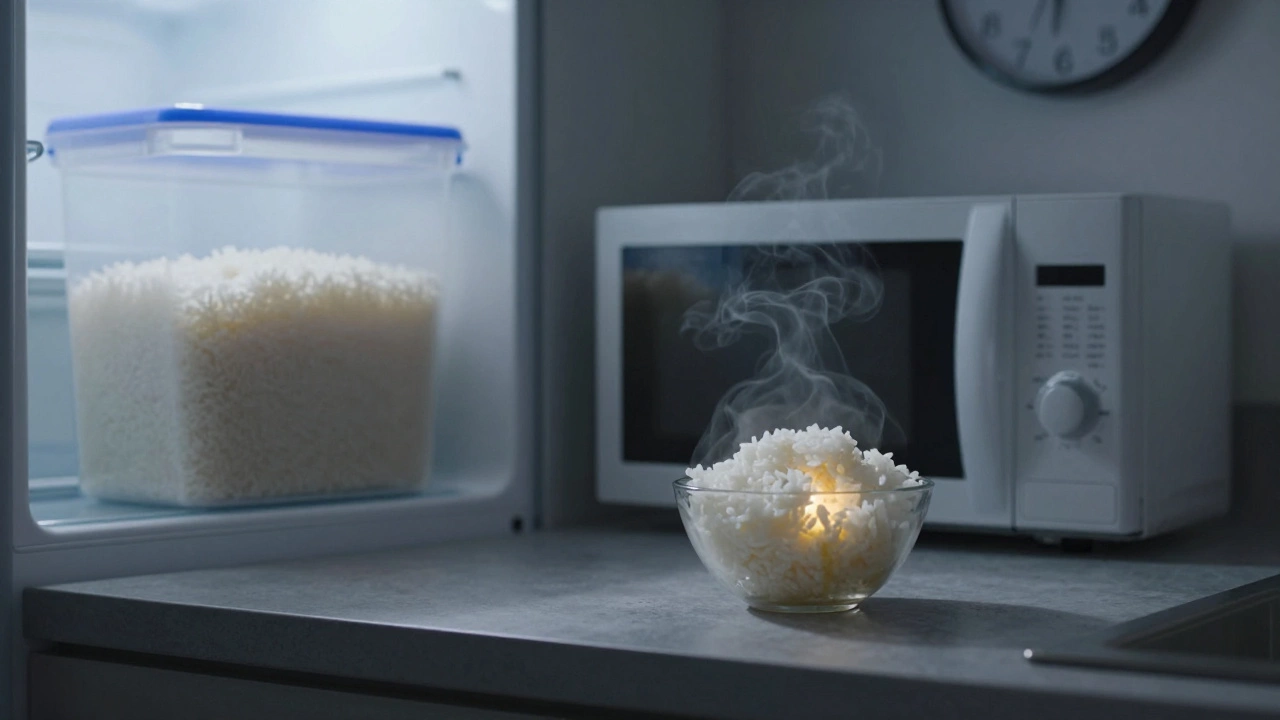
Let’s say you cook a big pot of rice at 6 p.m. You leave it on the counter to cool while you clean up. By 8 p.m., it’s room temperature. You finally put it in the fridge at 9 p.m. That’s three hours in the danger zone - between 20°C and 60°C - where spores germinate and start making toxins. Even if you refrigerate it right away, if it’s still warm inside the container, the center stays hot for hours. That’s a breeding ground.
Studies from the University of Melbourne’s Food Safety Lab show that rice left in containers larger than 1 liter takes over 4 hours to cool to 5°C. That’s way past the safe window. The spores don’t die in the fridge. They just wait. And when you microwave your portion on Wednesday, you’re not killing the toxins - you’re just warming them up.
Reheating Doesn’t Fix It
Many people think: "If I heat it up good and hot, it’ll be fine." That’s a dangerous myth. The toxins produced by B. cereus are heat-stable. Boiling, microwaving, or even baking the rice won’t destroy them. You might kill the bacteria, but the poison is already there. It’s like burning a letter - the words are gone, but the damage is done.
There’s no safe temperature or time that neutralizes these toxins. The only way to avoid them is to stop letting them form in the first place.
What About Frozen Rice?
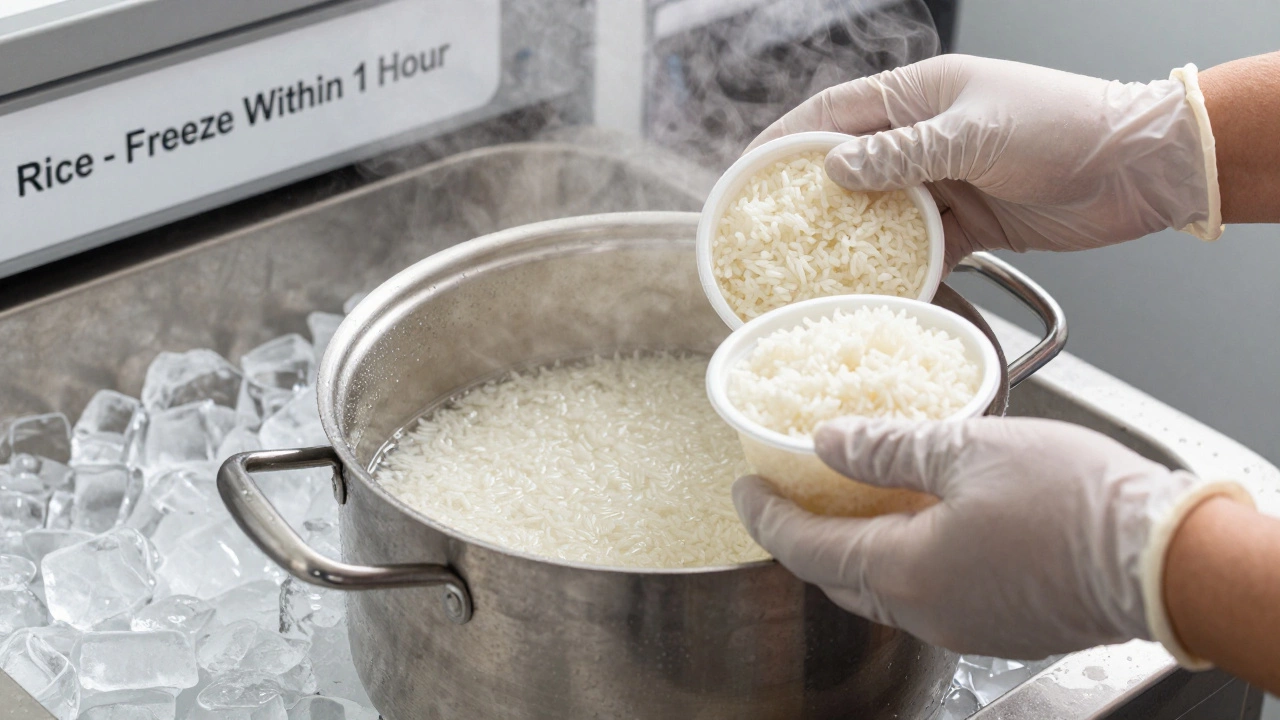
Freezing rice is the only safe way to prep it long-term. If you freeze rice within an hour of cooking - while it’s still warm - you freeze the spores in place. They don’t grow. They don’t produce toxins. When you thaw and reheat it, you’re not risking illness.
But here’s the catch: most people don’t freeze rice because it’s inconvenient. You need to portion it immediately after cooking, get it into the freezer fast, and remember to thaw it overnight. That’s not the "set it and forget it" meal prep people love. It’s extra work. And that’s why so many skip it.
Alternatives That Actually Work
If you’re meal prepping to save time, here’s what you can do instead:
- Prep other grains: Quinoa, barley, farro, and bulgur are low-risk and hold up well in the fridge for 4-5 days.
- Cook rice fresh: Use a rice cooker with a timer. Set it to finish 20 minutes before you get home. You get hot, fresh rice without the hassle.
- Use instant rice: Microwaveable brown rice pouches (like Uncle Ben’s or Trader Joe’s) cook in 90 seconds. No prep, no risk.
- Make rice dishes you eat once: Risottos, fried rice, or rice bowls are better made fresh. They’re more flavorful anyway.
These options don’t require you to plan 3 days ahead. They fit real life - busy mornings, unexpected overtime, kids’ soccer games.
Real-Life Consequences
Last year, a Melbourne family of four got sick after eating meal-prepped rice they’d stored for five days. Two kids were hospitalized with dehydration. The mother told the health department: "We did everything right. We cooled it, we refrigerated it, we reheated it well." She didn’t know about the toxins. She wasn’t careless - she was misinformed.
This isn’t about being perfect. It’s about knowing what’s risky and what’s not. Rice is the silent culprit in so many "healthy meal prep" stories. You’re not being lazy if you skip it. You’re being smart.
What to Do If You’ve Already Prepped Rice
If you’ve got rice in the fridge that’s been there more than 24 hours, here’s your simple rule:
- Under 24 hours? Reheat it to steaming hot (75°C or higher) and eat it in one sitting. Don’t reheat leftovers again.
- Over 24 hours? Toss it. No exceptions. Even if it smells fine. Even if it looks fine. Even if you’re "sure it’ll be okay."
It’s not worth the risk. One episode of food poisoning can cost you a full day of work, a trip to the doctor, and weeks of caution around leftovers.
Bottom Line
Rice is not the enemy. But meal prepping it is. The convenience isn’t worth the hidden danger. You don’t need to give up meal prep - just ditch the rice. Swap it for safer grains, cook it fresh, or use microwave pouches. Your stomach will thank you.
Next time you plan your weekly meals, ask yourself: "Is this really helping me eat better - or just making me sick?"