Skin Type Quiz: Find Your Perfect Routine
Take this 3-minute quiz to identify your skin type
Answer these simple questions to discover your skin type and get personalized product recommendations
Question 1: How does your skin feel after washing?
Question 2: How does your skin look in the morning?
Question 3: Do you experience frequent breakouts or redness?
Your Skin Type
Most people think they need a dozen products to get good skin. That’s not true. You don’t need serums, essences, or five-step routines. You just need to start simple-and stick with it.
Start with the basics: clean, moisturize, protect
Your skin doesn’t need fancy ingredients to be healthy. It needs three things: clean, moisturize, and protect. That’s it. Skip the TikTok trends and focus on these three pillars.
Start with a gentle cleanser. Look for something labeled "fragrance-free" and "non-comedogenic." You don’t need a foaming gel or a scrub. Just wash your face twice a day-morning and night-with lukewarm water. Hot water strips your skin. Cold water doesn’t clean well. Lukewarm is the sweet spot.
After washing, pat your face dry with a clean towel. Don’t rub. Then apply a simple moisturizer. It doesn’t have to be expensive. CeraVe Moisturizing Cream, Vanicream, or even a basic drugstore lotion with ceramides or hyaluronic acid works fine. Apply it while your skin is still slightly damp. That helps lock in moisture.
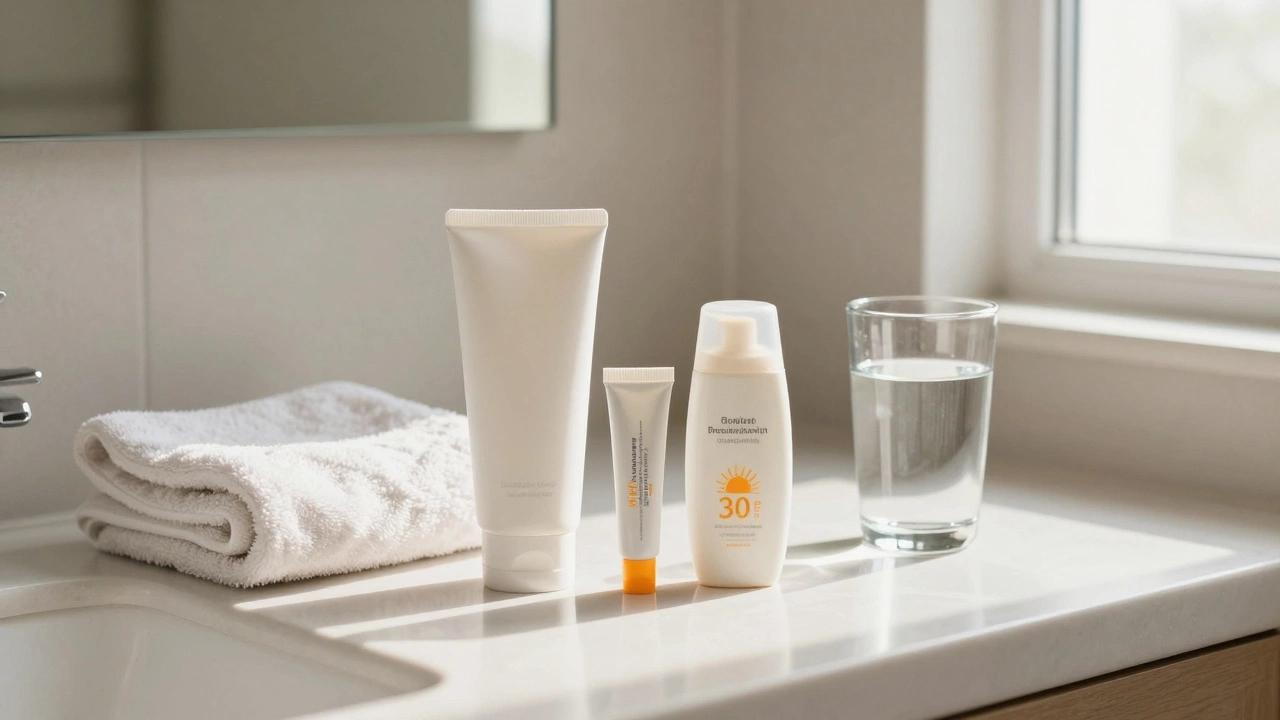
Then, every morning, put on sunscreen. Not "sometimes." Not "only when it’s sunny." Every single day. Even in winter. Even if you’re indoors. UV rays come through windows. UVA rays age your skin. They cause wrinkles, dark spots, and even skin cancer. Use at least SPF 30. Look for "broad-spectrum" on the label. Reapply if you’re outside for hours. If you hate the white cast, try a tinted version. Or a mineral sunscreen with iron oxide. They’re better for sensitive skin.
Don’t overdo it in the beginning
When people start a skin care routine, they go all in. They buy five serums, an exfoliator, a toner, a retinol, and a face oil. Then their skin turns red, flaky, and angry. That’s not progress. That’s damage.
Start with one new product at a time. Wait at least a week before adding another. Your skin needs time to adjust. If you use a new cleanser and your skin feels tight, switch back. If you try a moisturizer and it breaks you out, try a different one. This isn’t a race. It’s a trial-and-error process.
Most beginners make the mistake of using too many active ingredients too soon. Retinol, vitamin C, salicylic acid, niacinamide-these are powerful. But they’re not for day one. Wait until your skin is calm, balanced, and hydrated before adding them. That usually takes 4-6 weeks.
Know your skin type
You can’t pick the right products if you don’t know your skin type. Here’s how to figure it out:
- Oily skin: Shiny all day, especially on the T-zone (forehead, nose, chin). Pores look larger. Prone to blackheads and acne.
- Dry skin: Feels tight after washing. Flaky patches. Looks dull. May itch or feel rough.
- Oily in the T-zone, dry on the cheeks. Most common type.
- Sensitive skin: Redness, burning, stinging. Reacts to fragrances, alcohol, or harsh scrubs.
- Normal skin: Balanced. Not too oily, not too dry. Rare.
Test it: Wash your face with a gentle cleanser. Wait an hour without applying anything. Then look in the mirror. Where’s shiny? Where’s tight? That tells you your type.
If you’re not sure, go with products made for sensitive skin. They’re the safest starting point. Avoid alcohol, menthol, essential oils, and physical scrubs with walnut shells or microbeads. They irritate more than they help.

Morning vs. night routine: what’s the difference?
Your skin has different needs in the morning and at night.
Morning: Cleanse → Moisturize → Sunscreen
That’s it. You don’t need serums in the morning unless you have a specific concern. Sunscreen is non-negotiable. It’s the most important step in preventing aging and damage.
Night: Cleanse → Moisturize
At night, your skin repairs itself. You don’t need to add anything extra right away. But once your skin is stable, you can slowly add one nighttime treatment. Retinol is the most researched ingredient for anti-aging and acne. Start with a low concentration (0.025% or 0.05%). Use it 2-3 nights a week. Always apply it after moisturizer to reduce irritation. Never use retinol with vitamin C or AHA/BHA exfoliants on the same night.
Other options: If you’re dealing with dark spots, try niacinamide. If you’re dry, try a ceramide-rich cream. But again-wait. Don’t rush.
What to avoid
Here’s what most beginners do wrong:
- Using harsh scrubs or washcloths to scrub their face. Your skin isn’t a dish. Don’t scrub it raw.
- Washing your face with bar soap. Most bar soaps are too alkaline. They strip your skin’s natural barrier.
- Skipping sunscreen because it’s cloudy or you’re inside. UVA rays don’t care.
- Using too many products at once. Less is more.
- Changing products every week. Your skin needs consistency.
- Expecting results in 3 days. Skin turnover takes 28 days. You’ll see changes in 4-6 weeks.
Also, avoid DIY remedies. Lemon juice, baking soda, honey masks-these aren’t science. They can burn your skin or trigger allergies. Stick to products made for face use.
Realistic expectations
Don’t expect glowing skin overnight. Don’t expect to look like a model after two weeks. Skin care is long-term. It’s about consistency, not quick fixes.
If you have acne, eczema, rosacea, or persistent dark spots, see a dermatologist. Over-the-counter products won’t fix medical conditions. A dermatologist can prescribe treatments that actually work.
But if you just want clearer, calmer, more even skin? Start with the three basics. Do them every day. Don’t skip sunscreen. Wait 6 weeks. Then reevaluate. That’s how real change happens.
Sample beginner routine (under $30)
Here’s what a simple, affordable routine looks like:
- Morning: CeraVe Hydrating Cleanser ($12) → CeraVe Moisturizing Lotion ($14) → Neutrogena Ultra Sheer Dry-Touch SPF 50 ($11)
- Night: Same cleanser → Same moisturizer
That’s $37 total. You can find sales. Buy travel sizes first to test. Use each product for 3 weeks before deciding. You don’t need more.
What to do next
Once your skin is stable-no redness, no dryness, no breakouts-you can think about adding one active ingredient.
For acne: Try a low-dose salicylic acid cleanser (0.5%-2%) 2-3 nights a week.
For dullness or dark spots: Try niacinamide 5-10% serum. It’s gentle and helps with redness too.
For fine lines: Try retinol 0.025% 2 nights a week. Apply after moisturizer. Always use sunscreen the next day.
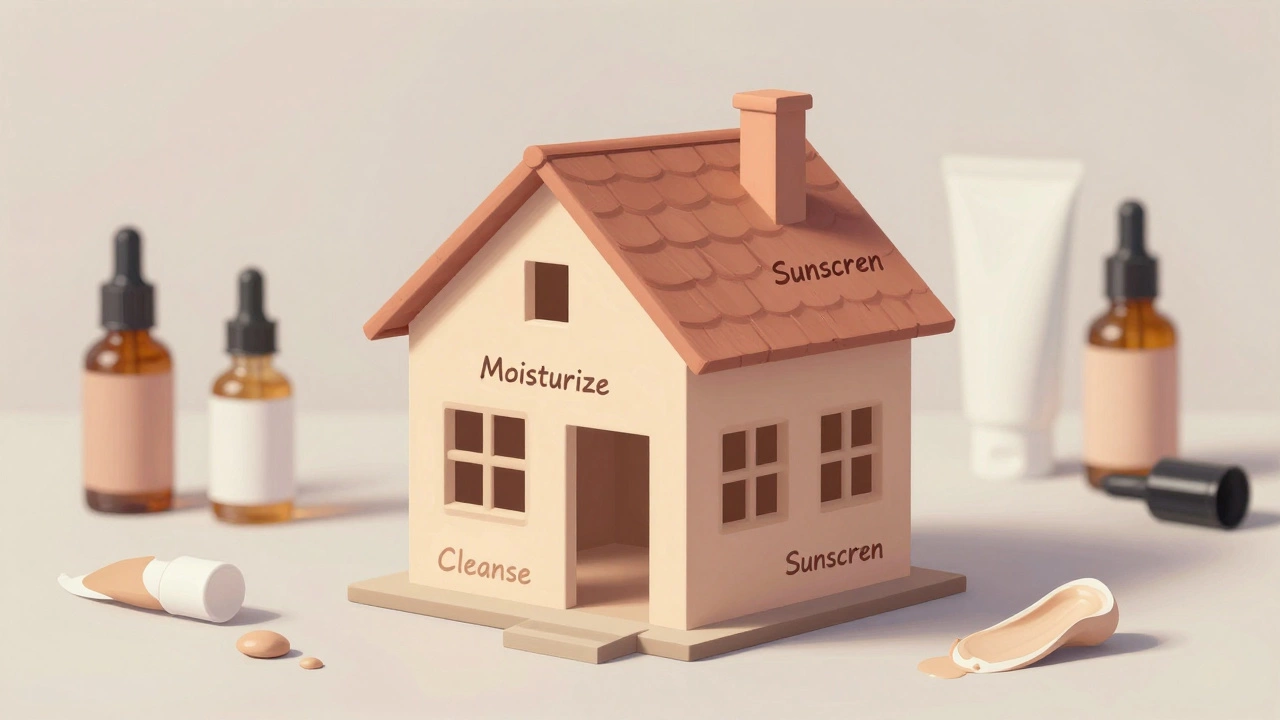
But again-don’t rush. Build your routine like you’re building a house. Foundation first. Then walls. Then the roof. One layer at a time.