Meal Prep Container Calculator
Calculate Your Container Needs
Based on your meal frequency and portioning needs
Your Container Needs
Total0 containers
Based on your setup (3 meals × 5 days × 1 portion)
Meal Prep Recommendations
Start small: Prep only 2-3 lunches weekly as the article suggests. Don't overwhelm yourself.
Use compartmentalized containers: Prevent sogginess by separating ingredients like greens from warm rice.
Freeze extras: If you make more than 4 days' worth, freeze portions for later. This aligns with the article's advice to 'freeze what you won't eat in 4 days'.
Meal prep sounds simple: cook once, eat all week. But if you’ve ever ended up with soggy salads, rubbery chicken, or a fridge full of uneaten containers, you’re not alone. Most people fail at meal prep not because they’re lazy, but because they skip the real steps that make it actually work. Here’s how to do it right-no fancy tools, no 3-hour sessions, and no wasted food.
Start with what you actually eat
Don’t meal prep based on Pinterest recipes or what your fitness influencer eats. Look at your last two weeks. What did you actually eat? What did you throw out? If you ate pasta three times last week, don’t prep five different grain bowls. If you skipped lunch because you didn’t feel like reheating tofu, maybe tofu isn’t your go-to.Real meal prep starts with your habits, not your goals. Write down your top 3 meals. Make those the base of your prep. You can add variety later, but start with what sticks.
Choose the right containers
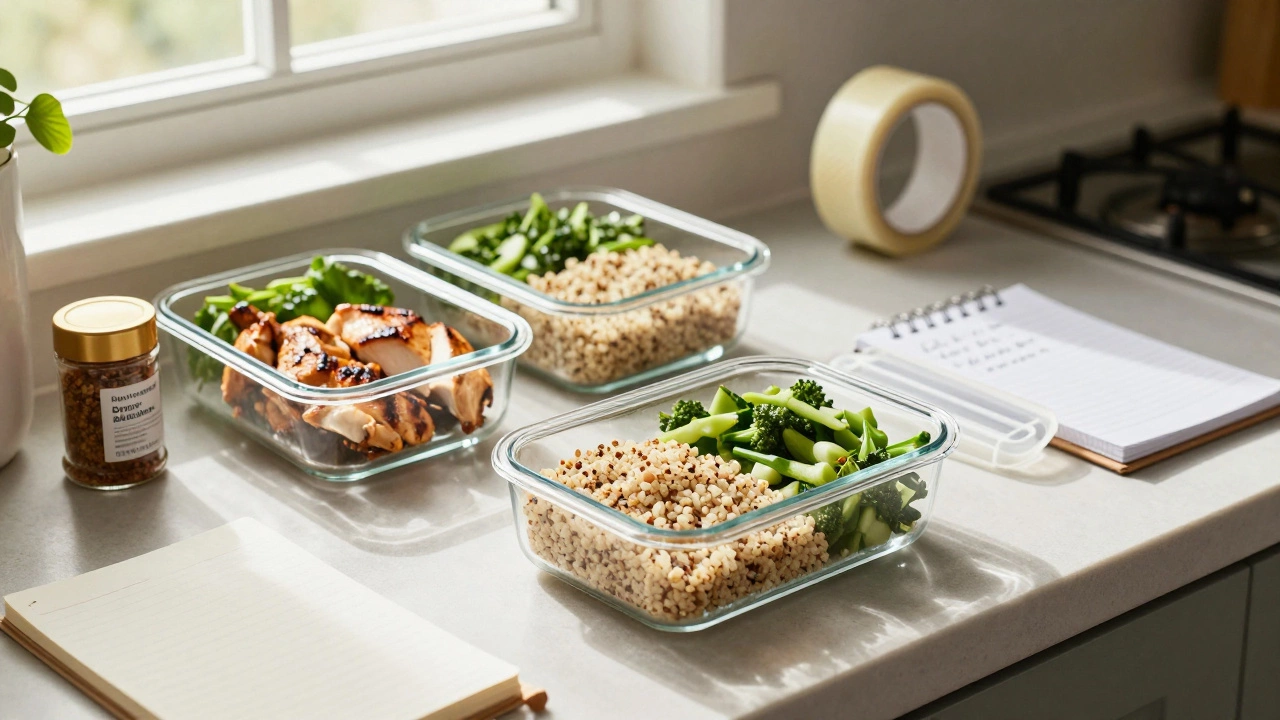
Not all containers are created equal. Glass is great for reheating, but if you’re rushing out the door, a leak-proof BPA-free plastic container with a tight seal is better. Look for ones with separate compartments-no more soggy greens on top of warm rice.I use 1.5L containers with built-in dividers. They fit one full meal: protein, carb, veggie, and sauce. No need to juggle three containers. And always, always label them. Use masking tape and a marker. If you don’t know what’s inside by Thursday, you won’t eat it.
Prep in stages, not all at once
Most guides tell you to cook everything on Sunday. That’s why people quit. Instead, break it into chunks.- **Sunday night:** Wash and chop veggies. Hard-boil eggs. Cook a big batch of rice or quinoa.
- **Monday night:** Grill chicken or bake tofu. Portion out sauces.
- **Wednesday night:** Assemble salads or stir-fry packs. Reheat and reseal anything that’s been sitting.
This way, you’re not overwhelmed. And your food stays fresh. Greens don’t wilt if they’re added last-minute. Proteins don’t dry out if they’re cooked closer to when you’ll eat them.
Use flavor boosters, not just salt
The biggest reason people get tired of meal prep? Bland food. You can’t just season everything with salt and pepper and expect to enjoy it five days in a row.Keep three flavor packs on hand:
- Asian:** Soy sauce, sesame oil, ginger, garlic, chili flakes
- Mediterranean:** Lemon juice, olive oil, oregano, cumin, capers
- Mexican:** Lime, cumin, smoked paprika, cilantro, hot sauce
Store them in small jars or squeeze bottles. Add one to each meal. It takes 10 seconds and turns chicken and rice into something you actually look forward to.
Don’t prep everything
You don’t need to prep breakfast, lunch, and dinner. That’s where most people burn out.Focus on one or two meals. Lunch is the easiest win. Most people don’t have time to cook at work. Prepping 3-4 lunches a week cuts out 15 hours of decision-making and takeout spending.
Keep breakfast simple: Greek yogurt with fruit and nuts. Overnight oats. Hard-boiled eggs. You don’t need to prep these. Just stock up.
Freeze what you won’t eat in 4 days
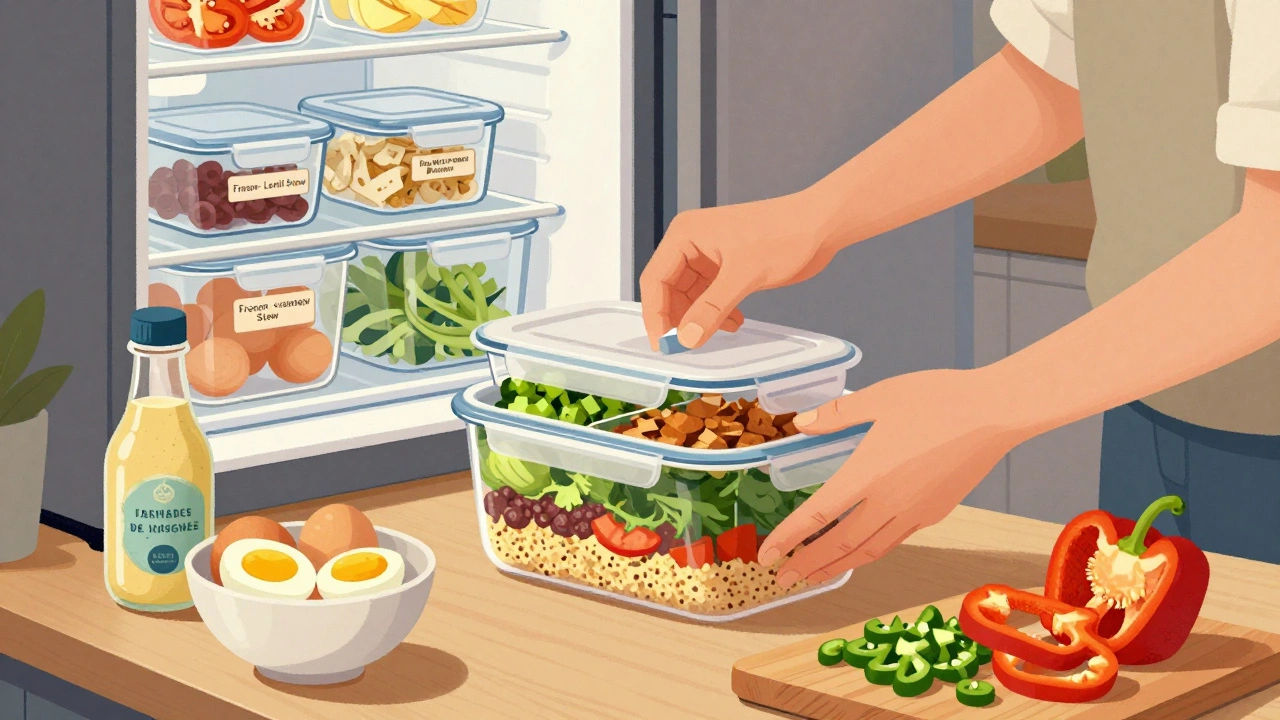
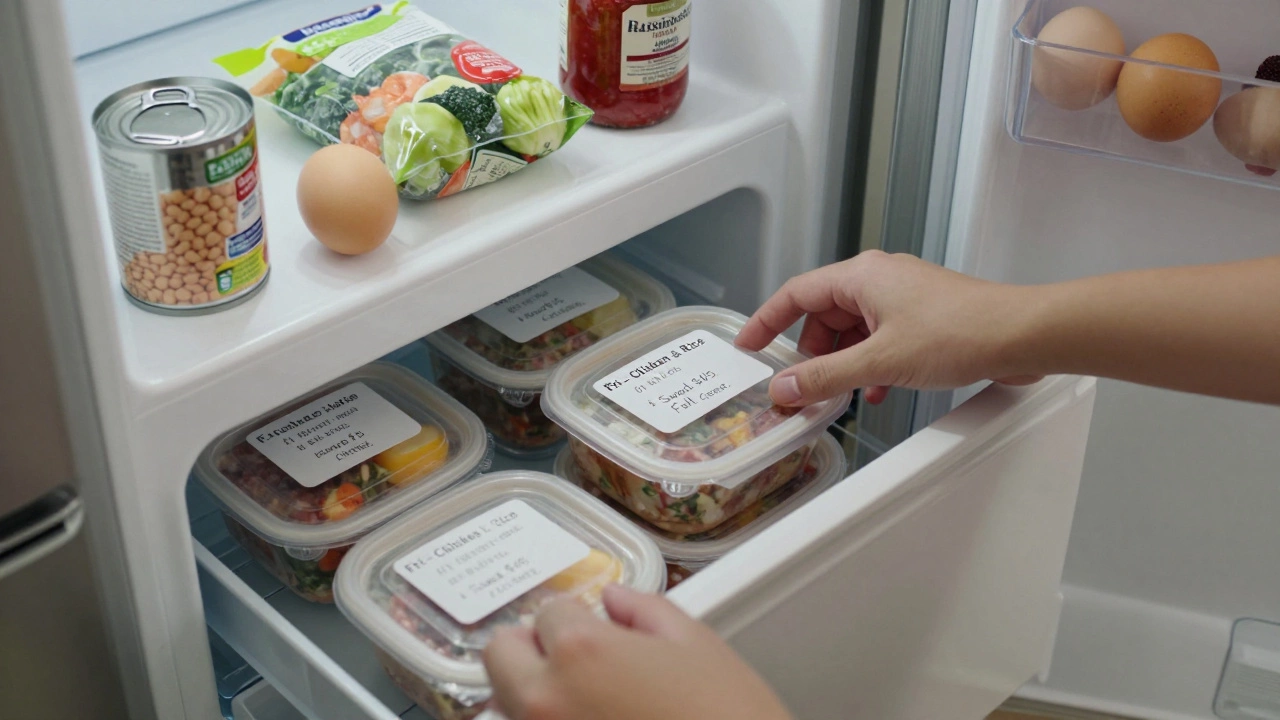
Not everything lasts. Soups, stews, and cooked grains freeze perfectly. If you cook a big pot of lentil stew on Sunday, freeze half in single portions. Label them with the date and what’s in them.When you’re tired on Friday? Grab a frozen meal. Thaw it overnight in the fridge. Reheat it in the morning. No stress. No waste.
Plan for mistakes
You’ll mess up. You’ll overcook the chicken. You’ll forget the spinach. You’ll eat one container by accident. That’s normal.Always have a backup plan:
- A can of beans
- A bag of frozen veggies
- Some eggs
- A jar of marinara sauce
Keep these in your pantry. If your prep fails, you can still make a decent meal in 10 minutes. No takeout needed.
Track what works
After two weeks, ask yourself:- Which meals did I eat every day?
- Which ones sat untouched?
- Did I save money?
- Did I feel less tired from not deciding what to eat?
Write it down. Not in a journal. Just a note on your phone. Adjust next week. Keep what works. Drop what doesn’t. Meal prep isn’t a rigid system. It’s a tool. Use it the way that fits your life.
It’s not about perfection
You don’t need to prep seven days. You don’t need to eat the same thing every day. You don’t need to buy special gadgets. You just need to make it easy enough that you’ll do it again.Start small. Prep two lunches. Use two containers. Add one flavor pack. Freeze one extra portion. That’s it. Do that for a week. Then do it again next week. That’s how real change happens.
What you’ll notice
Once you get the rhythm:- You’ll stop ordering takeout on busy nights
- You’ll spend less money on food
- You’ll feel less stressed about what to eat
- You’ll actually enjoy cooking again
That’s the real win. Not the perfect meal containers. Not the Instagram-worthy fridge. Just knowing you’ve got something good waiting, and you didn’t have to scramble.