Healthy Weight Gain Calorie Planner
Select foods to add to your daily routine to reach your surplus goal without feeling overly full.
| Food Item | Amount | Calories |
|---|---|---|
| Olive Oil | 1 tbsp | 120 |
| Walnuts | ~30g | 200 |
| Avocado | 1 medium | 300 |
| Peanut Butter | 2 tbsp | 190 |
| Chia Seeds | 2 tbsp | 100 |
| Weight Gain Smoothie | 1 glass | 600 |
| Greek Yogurt + Honey | 1 cup | 150 |
Watching the number on the scale drop when you aren't trying to lose weight can be frustrating. Whether it's due to a high metabolism, a hectic schedule that makes you forget to eat, or an underlying health shift, the goal is the same: you need to put more energy into your body than you're burning. But simply eating bags of chips and sugary donuts isn't the answer. That leads to a 'sugar crash' and sluggishness, not the healthy, sustainable bulk you're after. The secret is focusing on nutrient-dense, calorie-rich foods that fuel your muscles and organs without making you feel bloated or sick.
Key Takeaways for Weight Maintenance
- Focus on calorie density: foods that pack a lot of energy into small portions.
- Prioritize healthy fats and proteins to build lean muscle instead of just fat.
- Eat more frequently; five to six small meals are easier than three huge ones.
- Liquid calories (smoothies/shakes) are a cheat code for adding energy without feeling full.
The Science of Calorie Density
To stop the slide, you have to understand Caloric Density is the amount of energy (calories) per gram of food. When you're struggling to gain weight, volume is your enemy. If you fill your stomach with a giant bowl of steamed spinach, you'll feel full, but you've only consumed about 30 calories. If you swap that for a handful of walnuts, you get 200 calories in a fraction of the space.
The goal is to pick foods where the energy is concentrated. Think of Avocados. One medium avocado provides about 250 to 320 calories and is packed with monounsaturated fats. By adding a slice of avocado to your toast or a scoop to your salad, you're adding significant energy without needing to eat a massive volume of food. This is the most efficient way to stop losing weight without feeling like you're forcing yourself to overeat.
Power-Packing Your Plate with Healthy Fats
Fats are your best friend when trying to gain weight because they contain 9 calories per gram, compared to only 4 calories per gram for proteins and carbohydrates. However, you want the kind of fats that support your heart and brain, not the processed trans fats found in fried fast food.
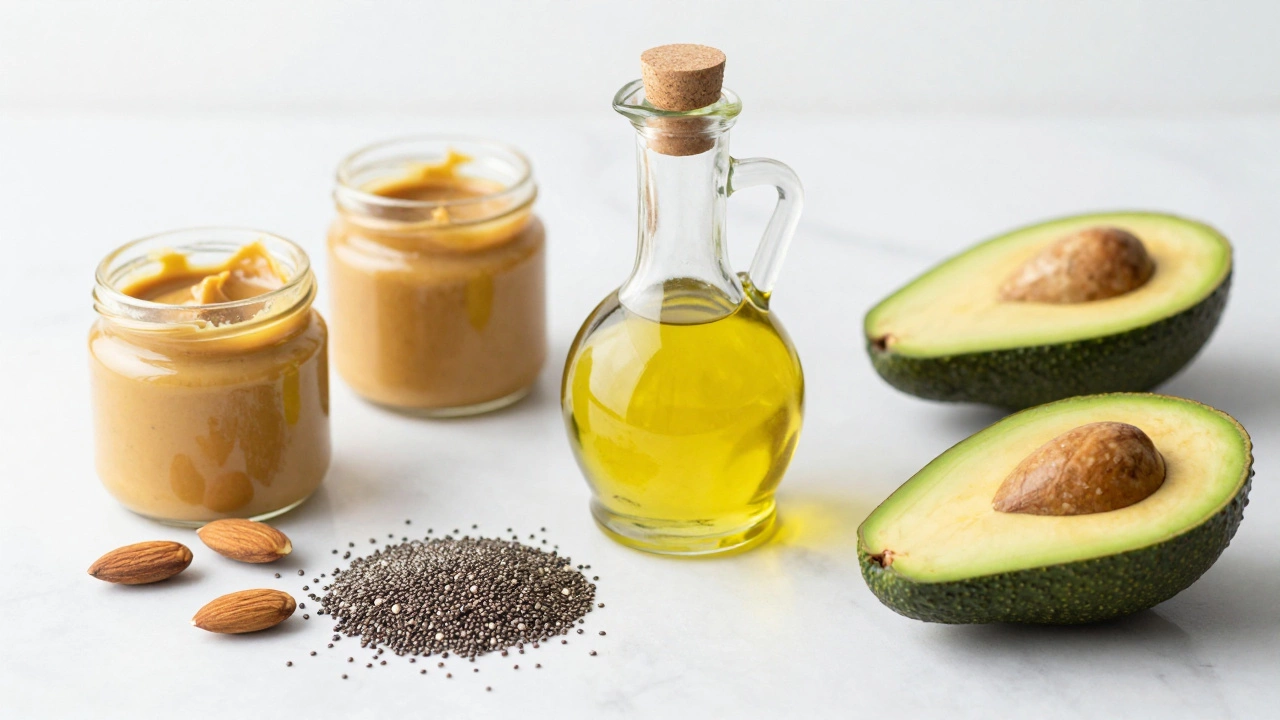
Start with Extra Virgin Olive Oil. This liquid gold is a powerhouse. A single tablespoon adds about 120 calories to any dish. Drizzle it over grilled vegetables, stir it into pasta, or use it as a base for homemade dressings. Another fantastic option is Nut Butters, such as almond butter or peanut butter. These are incredibly versatile; you can spread them on apples, stir them into oatmeal, or blend them into shakes.
Don't overlook seeds. Chia Seeds and flaxseeds are tiny but mighty. They provide omega-3 fatty acids and fiber. Stirring two tablespoons of chia seeds into a yogurt parfait can easily add 100 extra calories and a boost of nutrition that keeps your energy levels stable throughout the day.
| Food Item | Estimated Calories (per 100g) | Primary Nutrient | Best Use Case |
|---|---|---|---|
| Walnuts | 654 | Omega-3 Fatty Acids | Snacking/Salads |
| Avocado | 160 | Monounsaturated Fats | Breakfast/Sandwiches |
| Olive Oil | 884 | Healthy Fats | Cooking/Drizzling |
| Full-fat Greek Yogurt | 100-120 | Protein/Probiotics | Breakfast/Smoothies |
| Quinoa | 120 | Complex Carbs/Protein | Main Grains |
Building Muscle with Protein and Complex Carbs
If you just eat fats, you might gain weight, but it won't necessarily be the kind of weight that makes you feel strong and healthy. To ensure you're gaining lean mass, you need a steady supply of Protein, which provides the building blocks for muscle tissue. Focus on high-quality sources like salmon, chicken thighs (which have more calories and flavor than breasts), and eggs. If you prefer plant-based options, lentils and chickpeas are excellent choices because they offer a double whammy of protein and carbohydrates.
Pair those proteins with Complex Carbohydrates. These provide the glucose your brain and muscles need for energy. Instead of white rice, try Quinoa or sweet potatoes. Quinoa is particularly useful because it is a complete protein, meaning it contains all nine essential amino acids your body cannot make on its own. A bowl of quinoa with roasted chickpeas and a drizzle of tahini is a calorie-dense meal that supports muscle growth and digestive health.
Consider the 'pairing' rule: never eat a carb alone. Eating an apple? Pair it with peanut butter. Having a bowl of oatmeal? Stir in some honey and hemp seeds. By pairing every snack with a protein or fat source, you maximize the caloric intake of every single bite.
The Magic of Liquid Calories
One of the hardest parts of gaining weight is the feeling of being 'too full' to eat another bite. This is where liquid calories become a game changer. Your body doesn't register liquid fullness the same way it does solid food, allowing you to sneak in 500 to 1,000 extra calories without feeling stuffed.
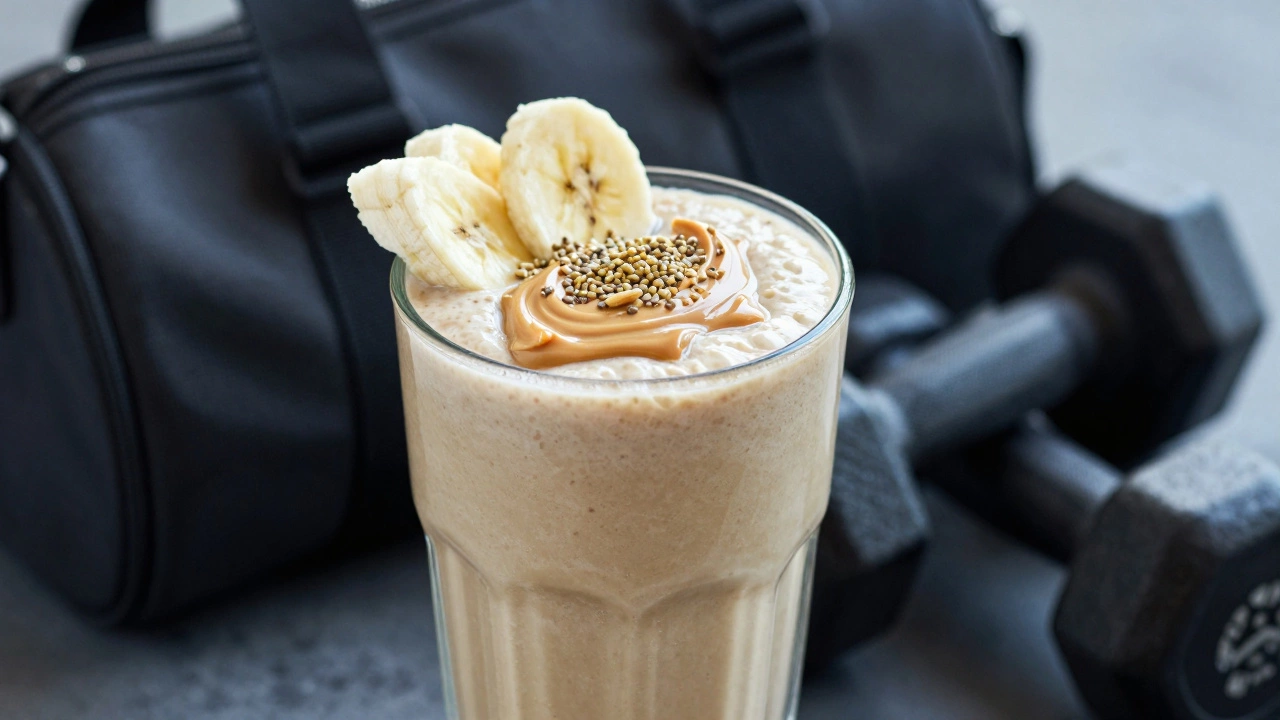
Instead of drinking water or black coffee during your meals, try a homemade Weight Gain Smoothie. Forget the store-bought shakes filled with corn syrup; make your own with a base of full-fat Greek yogurt or coconut milk. Add a frozen banana for creaminess, a scoop of whey or pea protein, a tablespoon of almond butter, and a handful of spinach (you won't even taste it). This combination creates a nutritional powerhouse that supports both weight gain and overall health.
If you aren't a fan of smoothies, try drinking whole milk or a fortified plant-based alternative like oat milk. Adding a glass of milk to your dinner adds a few hundred calories and essential minerals like calcium and potassium, which are vital for bone density and muscle function.
Creating a Sustainable Eating Schedule
Trying to eat three massive meals a day often leads to indigestion or skipped meals because the thought of a giant plate is overwhelming. The better approach is a 'grazing' strategy. Aim for five to six smaller meals spaced three hours apart. This keeps your blood sugar stable and ensures you're constantly providing your body with the fuel it needs to stop the weight loss trend.
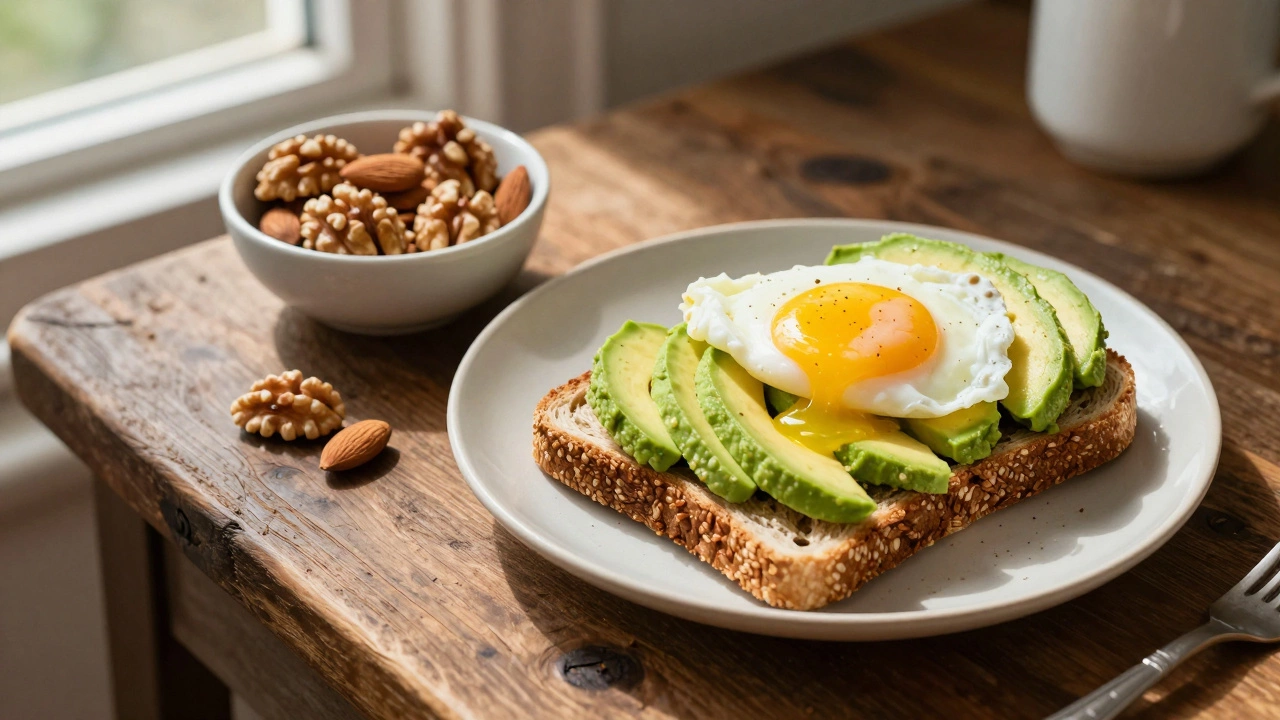
An example day might look like this: start with eggs and avocado on whole-grain toast for breakfast. For a mid-morning snack, have a handful of almonds and a piece of dried fruit. Lunch could be a salmon bowl with quinoa and olive oil. A mid-afternoon smoothie provides the energy boost needed to get through the workday. Dinner might be pasta with a pesto sauce (made with pine nuts and parmesan), and a small bowl of Greek yogurt with honey before bed.
Consistency is more important than any single meal. It is better to eat an extra 300 calories every day than to eat 2,000 extra calories on Sunday and nothing on Monday. Your body responds best to a steady, predictable surplus of energy.
Common Pitfalls to Avoid
Many people make the mistake of turning to 'dirty bulking'-eating anything and everything, regardless of quality. While this might move the scale, it often leads to inflammation, skin breakouts, and poor sleep. Avoid an over-reliance on processed sugars. While a cookie has calories, it doesn't provide the nutrients your body needs to actually build tissue. Use treats as a supplement, not a foundation.
Another common error is overdoing the cardio. While walking and light exercise are great for your heart, excessive long-distance running or high-intensity interval training (HIIT) can burn through your calorie surplus very quickly. If you're exercising, shift your focus toward strength training. Lifting weights signals to your body that those extra calories should be used to build muscle rather than just being stored as fat or burned off immediately.
How quickly can I expect to see weight gain?
A healthy rate of weight gain is typically 0.5 to 1 pound (0.25 to 0.5 kg) per week. Gaining weight too quickly can lead to excessive fat accumulation rather than lean muscle. Be patient and focus on consistent caloric surpluses rather than overnight results.
What if I have a very low appetite?
If you struggle with appetite, focus on 'calorie-dense' liquids and small, frequent snacks. Try drinking your calories in the form of smoothies or shakes. Additionally, avoid drinking large amounts of water immediately before meals, as this can fill your stomach and make you feel full before you've eaten enough calories.
Are dried fruits better than fresh fruits for gaining weight?
Yes, for the purpose of weight gain, dried fruits (like dates, raisins, and dried apricots) are generally better because the water has been removed, concentrating the calories and sugar. You can eat a much larger quantity of dried fruit than fresh fruit before feeling full, making it easier to hit your calorie goals.
Should I take weight gain supplements?
Mass gainer supplements can be helpful if you absolutely cannot eat enough whole foods. However, they are often loaded with artificial sweeteners and fillers. It is usually better to make your own high-calorie shakes using oats, nut butters, and protein powder, which give you more control over the ingredients.
Can stress cause me to lose weight?
Yes, stress can trigger a 'fight or flight' response that increases your metabolic rate and suppresses your appetite. If you are under significant stress, you may find that your body burns through calories faster. In these cases, liquid nutrition and scheduled eating times are crucial because you cannot rely on hunger cues.
Next Steps for Your Journey
If you've tried increasing your calories for a few weeks and the scale still won't budge, it might be time to look deeper. First, keep a food diary for three days to see if you're actually eating as much as you think you are; many people overestimate their intake. Second, consider tracking your macros (protein, carbs, fats) using an app to ensure you're hitting a genuine surplus.
If the weight loss is sudden and unexplained, it is always a good idea to visit a healthcare professional. Things like hyperthyroidism or nutrient malabsorption can make weight gain nearly impossible regardless of how much you eat. A simple blood test can rule these out and give you a clear path forward.
For those who are healthy but just have a 'fast' metabolism, the focus remains the same: be consistent, embrace the healthy fats, and don't be afraid of the smoothie blender. Start by adding one extra snack today, and gradually build up your intake as your stomach adjusts to the new volume.