Eco-Impact Calculator
Your Eco Habits
Your Environmental Impact
Start Your Journey
Select your habits above to see how much you contribute to a sustainable planet.
It is easy to feel overwhelmed by the sheer volume of advice on how to save the planet. You might think you need to buy expensive solar panels or completely overhaul your lifestyle overnight. But the truth is, small changes add up. You do not need a degree in environmental science to make a difference. In fact, some of the most impactful actions are surprisingly simple and fit right into your daily routine.
We often hear about global crises, but we forget that individual choices drive market demand and cultural norms. When you choose an eco-friendly activity, you are voting for the kind of world you want to live in. This article breaks down three specific, high-impact activities that anyone can start today. These are not just theoretical ideas; they are practical steps that reduce waste, lower carbon emissions, and often save you money in the process.
| Activity | Primary Benefit | Difficulty Level | Cost Impact |
|---|---|---|---|
| Composting Organic Waste | Reduces methane emissions from landfills | Low to Medium | Saves money on fertilizer |
| Adopting a Plant-Forward Diet | Lowers carbon footprint and water usage | Medium | Potentially lower grocery bills |
| Practicing Conscious Consumption | Reduces plastic pollution and resource extraction | Low | Saves money long-term |
1. Composting Organic Waste at Home
One of the biggest misconceptions people have is that throwing food scraps in the bin is harmless. It is not. When organic matter like fruit peels, vegetable trimmings, and coffee grounds end up in a landfill, they decompose without oxygen. This anaerobic decomposition produces methane, a greenhouse gas that is significantly more potent than carbon dioxide in trapping heat in the atmosphere. By composting, you prevent this methane release entirely.
Home Composting is the process of breaking down organic materials into nutrient-rich soil amendment. It transforms waste into gold. Instead of paying for garbage collection services that transport heavy waste to distant facilities, you create free fertilizer for your garden or houseplants. The cycle becomes closed-loop: waste returns to the earth to grow new food.
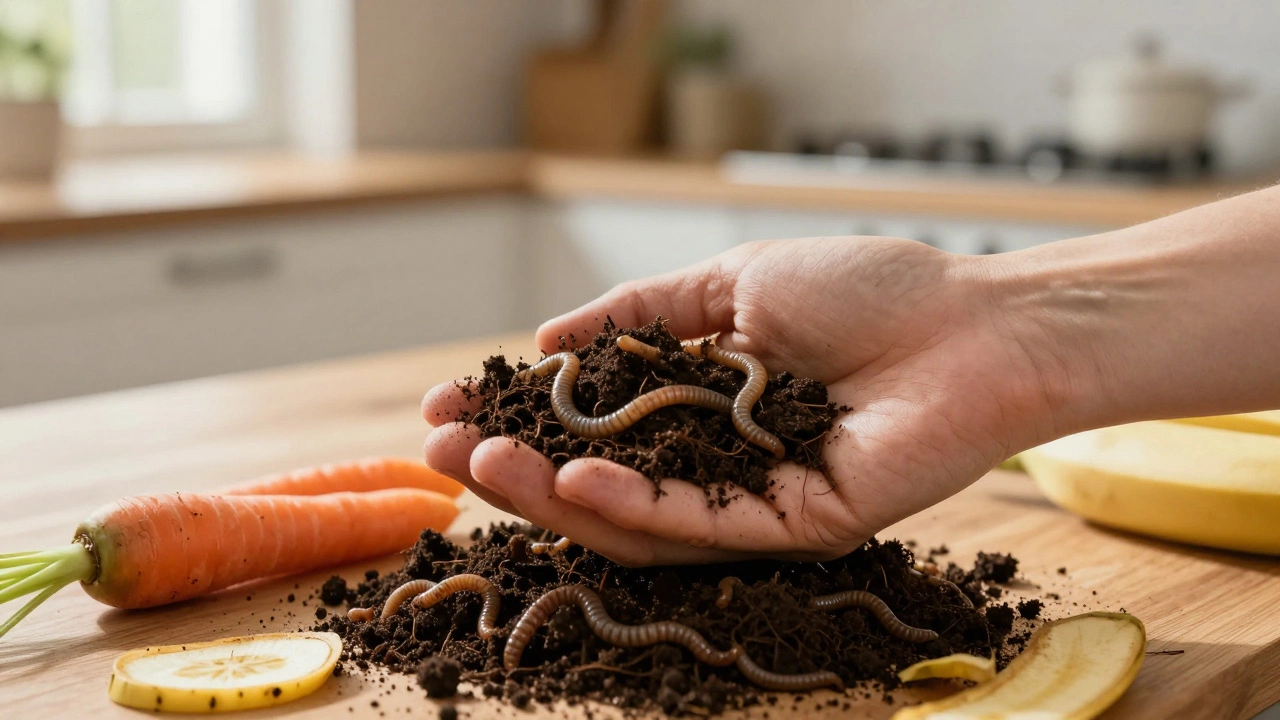
You do not need a large backyard to compost. If you live in an apartment, you can use a worm bin (vermicomposting) or a simple countertop electric composter. For those with outdoor space, a simple pile or a tumbling composter works well. The key is balancing "greens" (nitrogen-rich items like kitchen scraps) with "browns" (carbon-rich items like dried leaves, cardboard, and paper). A general rule of thumb is a ratio of two parts browns to one part greens.
- What to include: Fruit and vegetable scraps, eggshells, coffee grounds, tea bags (without synthetic tags), and yard waste.
- What to avoid: Meat, dairy, oily foods, and diseased plants, as these can attract pests and cause odors.
- Maintenance: Turn the pile occasionally to aerate it, which speeds up decomposition and prevents smells.
The result is dark, crumbly soil known as "black gold." Using this in your garden reduces the need for chemical fertilizers, which are energy-intensive to produce and can runoff into local waterways, causing algal blooms. By composting, you actively improve soil health, sequester carbon, and reduce your household's contribution to landfill overflow.
2. Adopting a Plant-Forward Diet
The second activity involves looking at what you eat. The global food system is responsible for a significant portion of greenhouse gas emissions, deforestation, and water usage. Livestock production, particularly beef and lamb, requires vast amounts of land, water, and feed. Shifting towards a plant-forward diet does not mean you must become a strict vegan overnight. It means prioritizing vegetables, fruits, grains, legumes, nuts, and seeds over animal products.
Plant-Based Eating is a dietary pattern that emphasizes foods derived from plants rather than animal sources. This approach has been linked to numerous health benefits, including reduced risk of heart disease, type 2 diabetes, and certain cancers. From an environmental perspective, it is one of the most effective ways to lower your personal carbon footprint.
Consider the water footprint. Producing one kilogram of beef can require thousands of liters of water, mostly for growing feed crops. In contrast, producing one kilogram of wheat or lentils requires a fraction of that amount. By choosing beans over beef for your Tuesday dinner, you are conserving water resources that are increasingly scarce in many regions.
Start small. Try "Meatless Mondays" or replace meat with plant-based proteins in half of your meals. Lentils, chickpeas, tofu, and tempeh are excellent sources of protein and fiber. They are also generally cheaper than meat, making this an eco-friendly activity that helps your wallet too. Local and seasonal produce further reduces the carbon cost associated with transportation and storage. Buying apples in winter when they are out of season often means they were flown in from another hemisphere, whereas buying them in autumn supports local farmers and reduces fuel consumption.
This shift also encourages biodiversity. Monoculture farming for animal feed depletes soil and reduces habitat for wildlife. Diverse plant-based agriculture supports healthier ecosystems. You are not just eating; you are participating in a system that values sustainability over industrial efficiency.

3. Practicing Conscious Consumption
The third activity is perhaps the most immediate: changing how you buy things. Consumer culture thrives on the idea that new is better and that we need constant updates to our wardrobes, electronics, and home goods. This linear model of take-make-dispose creates massive amounts of waste and pollution. Conscious consumption flips this script by focusing on quality, longevity, and necessity.
Conscious Consumption is a mindful approach to purchasing that considers environmental and social impacts before buying. It involves asking yourself critical questions before every purchase: Do I really need this? Can I borrow or rent it instead? Is there a second-hand option?
Fast fashion is a prime example of unsustainable consumption. The industry produces millions of tons of textile waste annually, much of which ends up in landfills or incinerators. Clothing made from synthetic fibers like polyester sheds microplastics during washing, which eventually enter our oceans. By choosing to buy less, buy better, and buy second-hand, you disrupt this cycle. Thrift stores, online marketplaces, and clothing swaps offer great alternatives to buying new items.
This principle applies to everything, from electronics to household cleaning supplies. Instead of buying single-use plastic bottles, invest in a reusable water bottle. Replace disposable paper towels with cloth rags. Choose products with minimal packaging or those made from recycled materials. Brands are beginning to respond to this shift, offering refillable options for detergents and shampoos.
Repairing items instead of replacing them is another powerful aspect of conscious consumption. Learning basic sewing skills to fix a torn shirt or using a glue gun to mend a broken handle extends the life of your possessions. This "right to repair" mindset challenges the planned obsolescence built into many modern products. It saves money and keeps waste out of the environment.
Ultimately, conscious consumption is about intentionality. It is about recognizing that every dollar spent is a vote for the kind of economy you support. By choosing durable, ethical, and sustainable products, you encourage companies to adopt greener practices.

Combining These Activities for Maximum Impact
While each of these activities is powerful on its own, combining them creates a synergistic effect. For example, the compost you create from your kitchen scraps can be used to grow the vegetables for your plant-forward diet. The savings from reducing meat consumption and buying fewer fast-fashion items can be reinvested in higher-quality, sustainable goods or donated to environmental causes.
Start with one activity that feels manageable. If you live in an apartment, begin with conscious consumption by auditing your purchases. If you have a garden, start composting. If you enjoy cooking, experiment with plant-based recipes. The goal is not perfection; it is progress. Small, consistent actions lead to significant change over time.
Remember, sustainability is not a destination; it is a journey. Every time you choose an eco-friendly option, you contribute to a larger movement. You inspire others around you to reconsider their habits. Your choices ripple outward, influencing friends, family, and even the companies you shop from. So, pick one of these three activities and start today. The planet will thank you.
Is home composting smelly?
No, if done correctly, compost should smell earthy, like forest soil. Odors usually occur when there is too much moisture or too many "green" materials (like food scraps) without enough "brown" materials (like dry leaves or cardboard). Adding browns and turning the pile to aerate it fixes most smell issues.
Do I have to go fully vegan to be eco-friendly?
Not at all. A "plant-forward" diet focuses on increasing the proportion of plant-based meals in your week. Even reducing meat consumption by 50% can significantly lower your carbon footprint and water usage. Every plant-based meal counts.
How do I start practicing conscious consumption?
Start by implementing a 24-hour rule for non-essential purchases. Wait a day before buying something to see if you still want it. Also, try to buy one second-hand item per month instead of new. Audit your trash bin to see what single-use plastics you can replace with reusables.
Can I compost if I live in an apartment?
Yes. You can use a worm bin (vermicomposting) which fits under a sink, or a countertop electric composter that dries and grinds scraps into fertilizer. Some cities also offer curbside compost pickup services.
What is the biggest environmental benefit of composting?
The primary benefit is preventing the production of methane, a potent greenhouse gas, in landfills. Additionally, compost improves soil health, reduces the need for chemical fertilizers, and sequesters carbon in the ground.