Nutrient-Dense Weight Gain Planner
1. Set Your Goal
2. Add Nutrient-Dense Foods
Select foods from the list to see how they contribute to your surplus goal.
| Food Item | Amount | Calories |
|---|---|---|
| Walnuts | per 100g | 654 |
| Avocado | per 100g | 160 |
| Quinoa | per 100g | 120 |
| Full-fat Greek Yogurt | per 100g | 125 |
| Dried Dates | per 100g | 280 |
| Olive Oil | per 2 tbsp | 240 |
| Peanut Butter | per 2 tbsp | 190 |
Waking up and seeing the number on the scale drop when you aren't trying to lose weight can be unsettling. Whether it's due to a high metabolism, a stressful month at work, or just forgetting to eat because you're busy, unintentional weight loss often leaves you feeling fatigued and depleted. The goal isn't just to eat "more"-because filling up on junk food usually leads to energy crashes and brain fog-but to increase your energy intake using foods that actually nourish your body.
Quick Wins for Weight Maintenance
- Liquid Calories: Smoothies and shakes don't make you feel as full as solid food, making it easier to add calories.
- Frequency: Shift from three big meals to five or six smaller, calorie-dense snacks.
- Healthy Fats: Add olive oil or avocado to almost everything you eat.
- Consistent Protein: Focus on slow-digesting proteins to keep your muscles fed.
The Science of Caloric Surplus and Nutrient Density
To stop the scale from dropping, you need to reach a state of caloric equilibrium or a slight surplus. This means you consume more energy than your body burns through Basal Metabolic Rate (BMR) and daily physical activity. The trick is focusing on Nutrient Density, which describes foods that pack a lot of vitamins, minerals, and calories into a small volume. If you only eat high-volume, low-calorie foods like leafy greens and cucumbers, you'll feel full long before you've hit your caloric needs.
Think about the difference between a bowl of plain popcorn and a handful of Almonds. The popcorn takes up a lot of space in your stomach but offers very little energy. The almonds are small but loaded with monounsaturated fats and protein. By prioritizing the latter, you can stop losing weight without feeling like you're forcing yourself to overeat to the point of discomfort.
Powerhouse Foods to Add to Your Plate
You don't need supplements or weight-gain shakes to see results. Real, whole foods are far more effective for long-term health. Focus on these three primary categories:
Healthy Fats and Oils
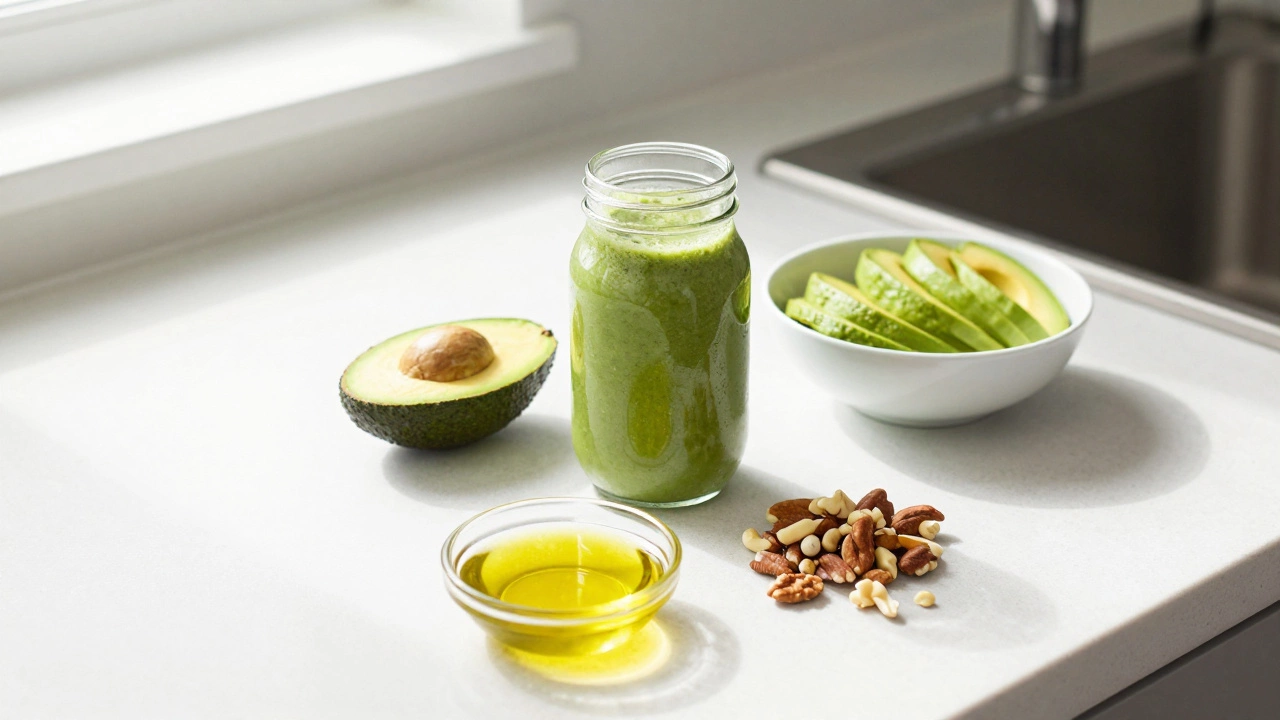
Fats are the most energy-dense macronutrient, providing 9 calories per gram compared to just 4 calories per gram for carbs and proteins. This makes them your best friend for adding calories without adding bulk. Avocados are a prime example; adding half an avocado to your toast or salad instantly adds about 160 calories and a dose of potassium. Similarly, Extra Virgin Olive Oil is an easy addition. Drizzling two tablespoons over your pasta or steamed vegetables adds nearly 240 calories and supports heart health.
Complex Carbohydrates
Carbs provide the glucose your brain and muscles need for energy. Instead of refined white bread, go for Quinoa or brown rice. These are not only calorie-rich but also provide fiber, which keeps your digestion steady. Sweet potatoes are another winner-they are dense, satisfying, and packed with beta-carotene. If you struggle to eat large portions of grains, try blending Oats into a smoothie or making overnight oats with full-fat yogurt.
High-Quality Proteins
To ensure the weight you regain is lean muscle and not just fat, you need protein. Salmon is a double-win because it provides high-quality protein and omega-3 fatty acids. If you prefer plant-based options, Greek Yogurt (the full-fat version) is an incredible snack. It's significantly higher in protein than regular yogurt and pairs perfectly with honey and nuts for a calorie boost.
| Food Item | Primary Nutrient | Approx. Calories (per 100g) | Best Use Case |
|---|---|---|---|
| Walnuts | Omega-3 / Fat | 654 | Snacking or Salads |
| Avocado | Monounsaturated Fat | 160 | Breakfast/Sandwiches |
| Quinoa | Complex Carb / Protein | 120 | Meal Base |
| Full-fat Greek Yogurt | Protein / Probiotics | 100-150 | Breakfast/Snacks |
| Dried Dates | Natural Sugars / Fiber | 280 | Quick Energy Boost |
Strategic Eating Habits to Gain Weight
What you eat is only half the battle; how you eat matters just as much. If you have a small appetite, trying to eat three massive meals will likely fail because you'll feel bloated and discouraged. Instead, try these tactical shifts:
Don't drink water right before meals. Drinking a large glass of water 15 minutes before you eat fills your stomach with zero-calorie liquid, leaving less room for the food that actually counts. Save your beverages for the end of the meal or sip them slowly throughout.
Use larger plates. It sounds like a psychological trick, and it is. When you put a decent portion of food on a huge plate, it looks smaller and less intimidating, making it easier to finish. Conversely, if you use a small plate that is overflowing, your brain may trigger a "fullness" signal before you've even started eating.
Focus on "Add-ons." Instead of changing your whole diet, just add one high-calorie item to every meal. Adding a spoonful of peanut butter to your apple slices, a sprinkle of hemp seeds on your salad, or a dollop of sour cream on your baked potato can add 100-200 calories per meal without changing the volume of food significantly.
The Role of Strength Training in Weight Gain
If you simply eat more and stay sedentary, the extra calories will be stored primarily as fat. To ensure your weight gain supports your overall health, incorporate Resistance Training. Lifting weights tells your body that the extra calories should be used to repair and build muscle tissue rather than just storing energy in fat cells.
You don't need to spend two hours at the gym. Even short sessions focusing on compound movements-like squats, lunges, and push-ups-can stimulate muscle growth. Pair this with a post-workout snack of protein and carbs (like a banana and a handful of almonds) to maximize the recovery process. This creates a positive feedback loop: the exercise increases your appetite, and the food fuels the muscle growth.
Common Pitfalls to Avoid
When people panic about losing weight, they often turn to "dirty bulking." This means eating whatever is available-don't fall for this. Heavily processed foods, sugary sodas, and deep-fried fast food may increase your calories, but they often lead to inflammation, insulin resistance, and lethargy. You might see the number on the scale go up, but you'll feel worse than you did when you were underweight.
Another common mistake is relying solely on shakes. While a protein shake is convenient, it doesn't provide the chewing action and satiety signals that whole foods do. Use shakes as a supplement, not a replacement. If you're using a store-bought weight gainer, check the label for excessive added sugars or fillers that can cause digestive distress.
How quickly can I expect to stop losing weight?
Once you consistently increase your daily intake by 300-500 calories above your maintenance level, you should see the scale stabilize within 1 to 2 weeks. Weight fluctuations are normal, so look at weekly averages rather than daily numbers.
What if I have no appetite?
If you struggle with appetite, focus on liquid calories. Blend full-fat coconut milk, peanut butter, spinach, and protein powder into a smoothie. These are easier for the body to process and don't trigger the same immediate fullness as a heavy meal.
Can I still eat vegetables if I want to gain weight?
Absolutely. You need the vitamins and minerals for your metabolism to function. The key is to avoid eating a massive salad *before* your main course. Eat your protein and complex carbs first, then finish with your vegetables.
Are dried fruits better than fresh fruits for weight gain?
For the purpose of adding calories, yes. Dried fruits like dates, raisins, and dried apricots have the water removed, which concentrates the calories and sugars. You can eat significantly more calories from dried fruit than you could from the equivalent volume of fresh fruit.
Should I take a protein supplement?
Supplements are helpful if you cannot meet your protein needs through whole foods. However, priority should always be given to eggs, fish, lean meats, and legumes. Use whey or pea protein as a tool to fill gaps in your diet, not as a primary food source.
Next Steps for Your Journey
If you've tried increasing your calories for a month and the scale is still moving down, it's time to look deeper. Unintentional weight loss can sometimes be a symptom of underlying issues like thyroid dysfunction, digestive disorders, or chronic stress. In these cases, no amount of peanut butter will fix the root cause.
Start by keeping a simple food diary for one week. Don't obsess over every single calorie, but note down your meal times and general portions. This data is incredibly valuable if you decide to visit a doctor or a registered dietitian. They can use your actual eating patterns to determine if your calorie intake is truly insufficient or if your body is not absorbing nutrients correctly. For most people, a shift toward calorie-dense, whole foods and a bit of strength training is the perfect recipe to get back to a healthy, stable weight.