Minimalist Challenge Tracker
Your 7-Day Minimalist Challenge
Track your progress and build lasting minimalist habits with this practical daily challenge.
Keep only what you use weekly. Remove everything else.
Unsubscribe from five email lists you never open.
Delete three apps you don't need.
Donate one bag of clothes you no longer use.
Write down three things you're grateful for that you already own.
Say no to one thing you don't want to do.
Sit in silence for five minutes. No phone. No music.
Most people think being a minimalist means living in a bare room with white walls and one chair. That’s not it. Minimalism isn’t about how much stuff you own-it’s about minimalism making space for what actually matters. It’s the quiet act of removing the noise so you can hear yourself think, move, and breathe again. If you’ve ever felt overwhelmed by too many things, too many choices, or too much pressure to keep up, this is for you.
Start by noticing what weighs you down
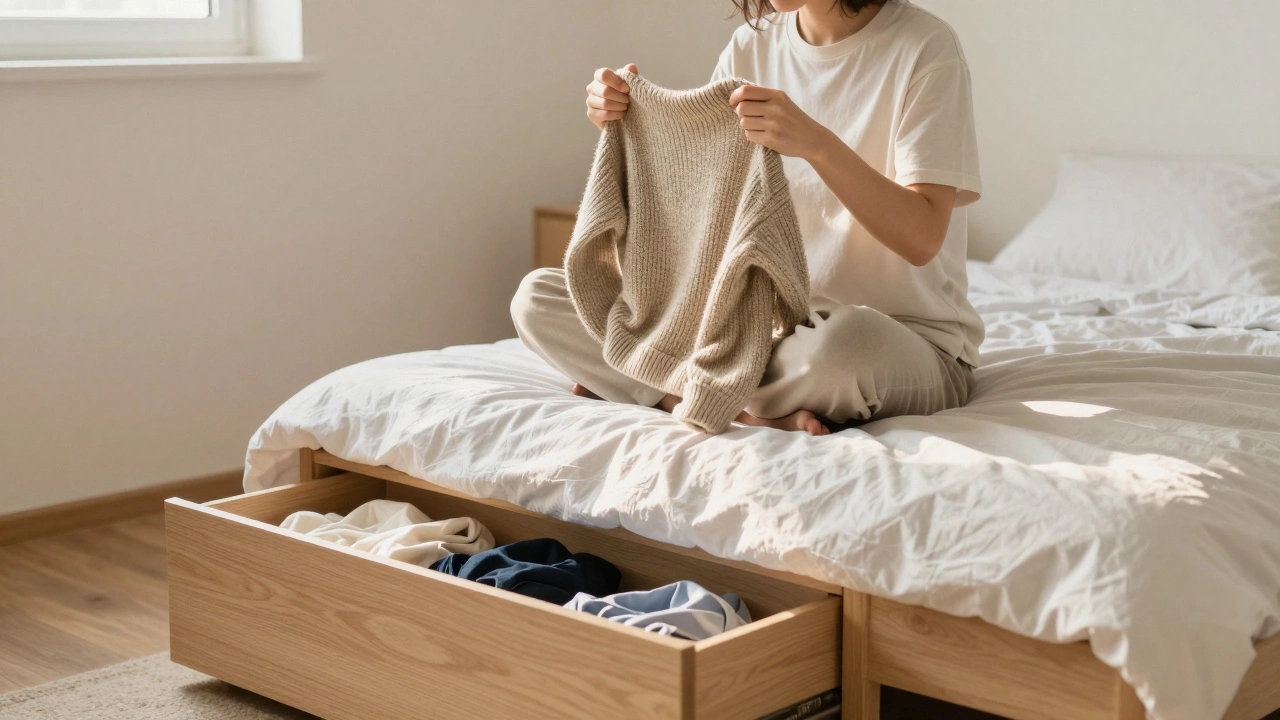
You don’t need to throw everything out on day one. The real first step is observation. Walk through your home. Look at your closet. Open your drawers. What do you touch regularly? What just sits there? Don’t judge yet-just notice. That old sweater you haven’t worn in three years? The five coffee mugs you never use? The apps on your phone you open once a month? Those aren’t just clutter. They’re mental anchors. Every object you hold onto without using it drains a little energy. It’s not about being perfect. It’s about recognizing what’s taking up space you didn’t ask for.Use the one-in, one-out rule
Once you start noticing, the next step is simple: for every new thing you bring in, something else has to go. It doesn’t matter if it’s a new shirt, a kitchen gadget, or a digital subscription. One in, one out. This rule stops accumulation before it starts. It forces you to pause and ask: Do I really need this? You’ll be surprised how often the answer is no. I tried this for six weeks last year. I didn’t buy a single new thing except groceries and toothpaste. And guess what? I didn’t miss anything. Instead, I started noticing the quiet joy of using what I already had.Declutter by category, not room
Most people try to clean one room at a time. That’s messy. You’ll end up with half-decluttered closets and a pile of "maybe" boxes. Instead, go category by category. Start with clothes. Gather every piece you own-no matter where it is-and lay it all out. Keep only what you wear, what fits, and what makes you feel like yourself. Donate, sell, or recycle the rest. Then move to books. Then electronics. Then kitchenware. You’ll see patterns. Maybe you own seven pairs of black jeans. Or ten spatulas. Or twelve notebooks. That’s not organization-it’s excess. When you see it all together, the truth becomes obvious.Let go of the "someday" myth
We hold onto things because we tell ourselves: Someday I’ll use this. Someday I’ll learn to play guitar. Someday I’ll fix this lamp. Someday I’ll read that book. But here’s the truth: someday rarely comes. If you haven’t used it in the last year, it’s not a future plan-it’s a ghost. That guitar gathering dust? It’s not a dream. It’s a reminder of who you thought you’d be. Let it go. You’re not failing. You’re just changing. And that’s okay.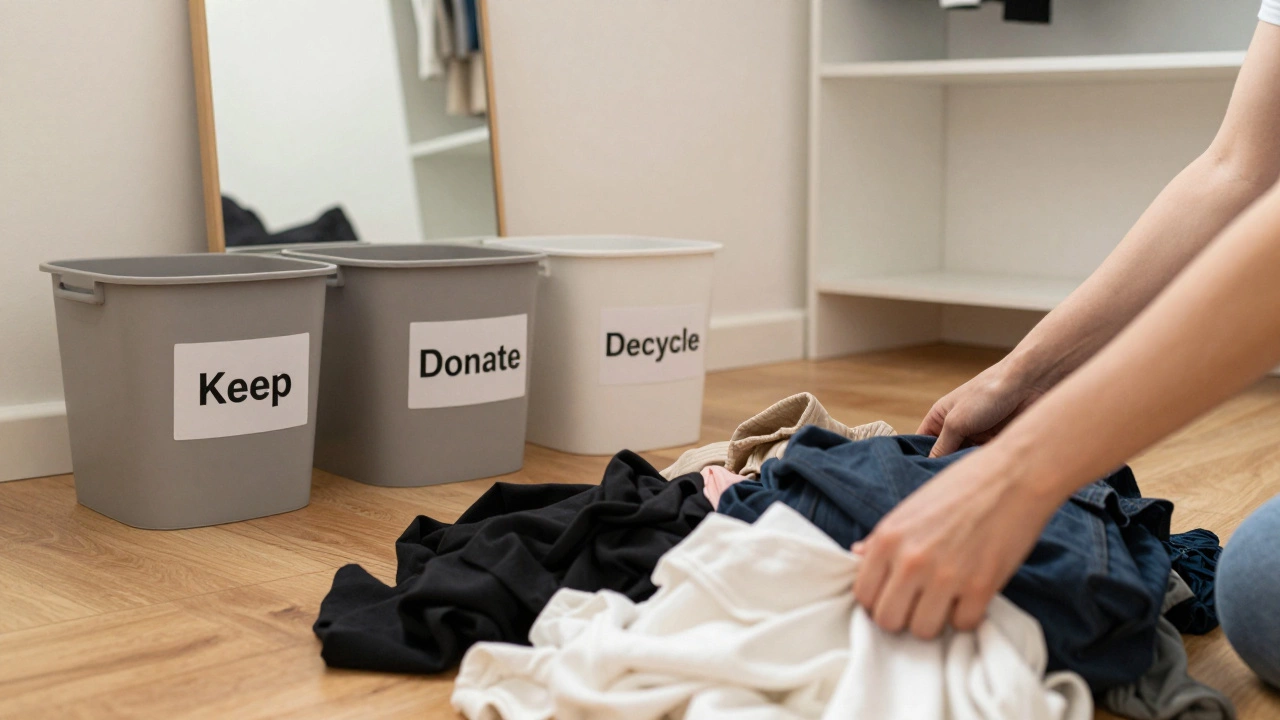
Reduce digital clutter too
Minimalism isn’t just physical. Your phone, your email inbox, your cloud storage-they’re full of invisible clutter. Unsubscribe from every newsletter you don’t read. Delete apps you open less than once a week. Organize your files into three folders: Work, Personal, Archive. Turn off non-essential notifications. Your brain doesn’t need 47 tabs open. It needs breathing room. I cleared my phone home screen last winter. Now I only have six apps: Messages, Maps, Camera, Calendar, Spotify, and Notes. That’s it. My focus improved. My stress dropped. And I stopped scrolling mindlessly before bed.Ask yourself: Does this serve me?
Every decision gets easier when you use this one question: Does this serve me? Not: Is it useful? Not: Is it cheap? But: Does this serve me? Does this thing, this habit, this relationship, this task actually help you live the life you want? If it doesn’t, it’s noise. That’s the core of minimalist thinking. You’re not trying to own less. You’re trying to live more. And the only way to do that is to remove what doesn’t add value.Build rituals, not rules
Minimalism isn’t about following a strict checklist. It’s about creating habits that support peace. Try this: every evening, spend five minutes putting one thing back where it belongs. Every Sunday, spend ten minutes clearing your desk. Every month, review one category of stuff. Small, consistent actions build lasting change. You don’t need to do it all at once. You just need to keep showing up.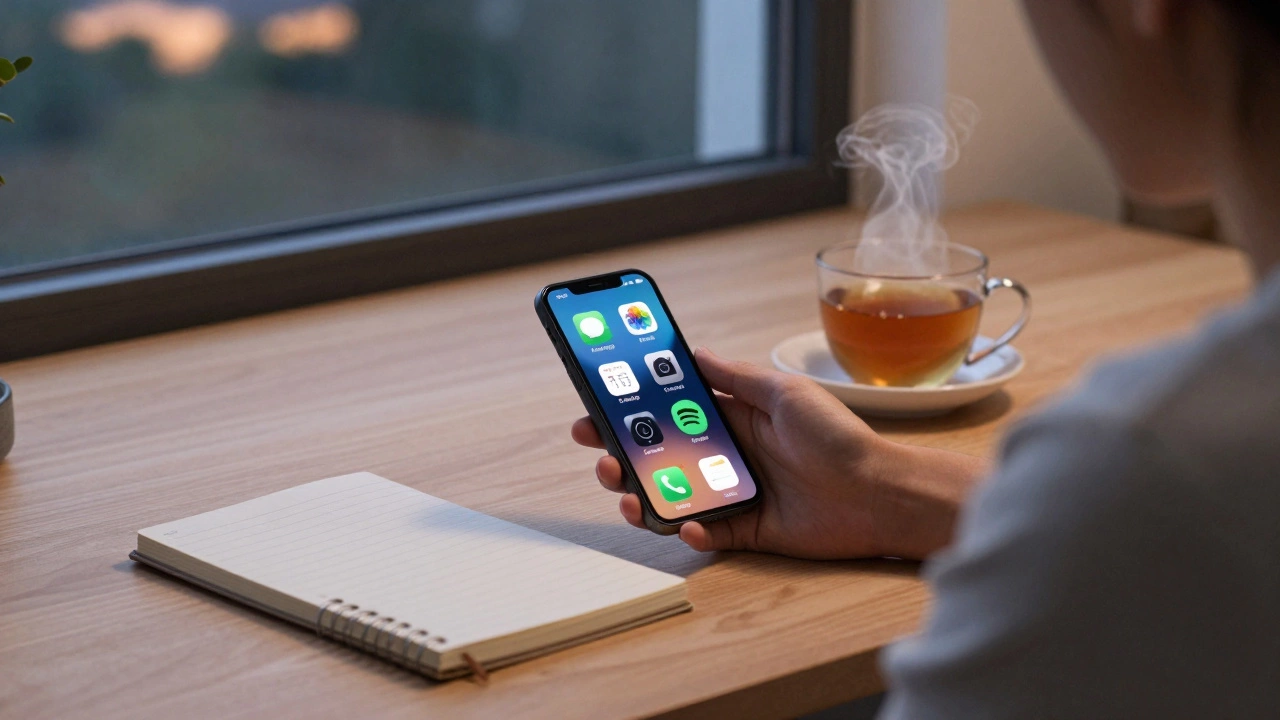
Expect resistance
When you start simplifying, people notice. Some will say you’re being extreme. Others will guilt-trip you: But that was your grandma’s vase! Or: What if you need it later? Don’t argue. Just smile and say: It’s not for me anymore. You’re not rejecting memories. You’re choosing what you carry forward. And you’re allowed to outgrow things-even the ones with sentimental value.Minimalism isn’t empty. It’s full.
The goal isn’t to have nothing. It’s to have only what you love. What you need. What moves you. That’s why minimalist homes often feel calm. Not because they’re empty, but because everything in them has meaning. Your clothes fit. Your kitchen works. Your space feels like yours. That’s the quiet power of minimalism. It doesn’t take away. It gives you back.Start small. Stay consistent.
You don’t need to overhaul your life in a weekend. Pick one drawer. One shelf. One app. Just one. Do it today. Tomorrow, do another. In three weeks, you’ll look around and realize you’ve created space-not just in your home, but in your mind. That’s the real win.Can I still be a minimalist if I have kids?
Absolutely. Minimalism with kids isn’t about having no toys-it’s about having fewer, better ones. Rotate toys instead of keeping them all out. Choose quality over quantity. Involve your kids in the process. They’ll learn to value what they have instead of always wanting more. A home with 15 well-loved toys is calmer than one with 100 cluttered ones.
Do I need to buy minimalist furniture or decor?
No. Minimalism isn’t a design style. It’s a mindset. You can live minimally in a cluttered apartment or a modern house. What matters is what you keep, not how it looks. A worn-out couch you love is more minimalist than a designer chair you never sit on. Focus on function and feeling, not aesthetics.
How long does it take to become a minimalist?
There’s no finish line. Minimalism isn’t a destination-it’s a practice. Some people make big changes in a month. Others take years. It’s not about speed. It’s about awareness. Every time you choose to let go, you’re practicing. That’s the point.
What if I feel guilty letting things go?
Guilt is normal. We’re taught that keeping things is responsible. But holding onto what you don’t use doesn’t help anyone. Donate it. Someone else might need it. Or recycle it. Letting go isn’t wasteful-it’s generous. You’re making room for someone else to benefit, and for yourself to move forward.
Can minimalism help with anxiety?
Yes. Studies show clutter increases cortisol levels-the stress hormone. A 2023 study from the University of California found that people who reduced physical clutter reported 30% lower stress levels within six weeks. Less stuff means fewer distractions, fewer decisions, and more mental space. That’s not magic. That’s neuroscience.