Clutter & Mental Clarity Estimator
Answer the following questions honestly to estimate your "Visual Noise" level. This tool helps identify whether adopting minimalist principles could benefit your mental well-being.
Environment Assessment
Psychological Impact
You know that feeling when you walk into a room and your shoulders immediately tense up? It’s not just because you’re tired. It’s the visual noise. A pile of mail on the counter, clothes draped over a chair, toys scattered across the floor-your brain registers all of it as unfinished business. This constant low-level stress is what psychologists call clutter anxiety. If you’ve ever wondered whether stripping your life down to the essentials could actually fix your headspace, you aren’t alone. People are flocking to minimalism not just for aesthetic Instagram photos, but as a genuine coping mechanism for burnout.
But does throwing away stuff really lower cortisol levels? Or is it just another productivity trend that makes us feel guilty if we don’t do it perfectly? Let’s look at what the science says about the link between your environment and your mind, without the preachy guru vibes.
The Brain on Clutter: Why Your Home Matters More Than You Think
Your brain is an information-processing machine. Every object in your field of vision sends a signal to your visual cortex. When those objects are organized and useful, the signal is quiet. When they are random, broken, or unnecessary, they compete for your attention. Researchers at the Princeton University Neuroscience Institute found that physical clutter competes for your attention, resulting in decreased performance and increased stress. Essentially, a messy house forces your brain to work harder to filter out irrelevant data, leaving less cognitive bandwidth for actual thinking or relaxing.
This isn’t just theoretical. In one study published in Personality and Social Psychology Bulletin, researchers surveyed 106 households. They found that women who described their homes as "cluttered" had higher levels of the stress hormone cortisol throughout the day. Those who described their homes as "restorative" saw their cortisol levels drop in the evening. The takeaway? Your home shouldn’t be a source of chronic stress; it should be a place where your nervous system can finally switch off.
Minimalism vs. Decluttering: What’s the Difference?
People often use these terms interchangeably, but they serve different psychological functions. Decluttering is the act of removing excess items. It’s a task. It involves sorting through possessions and deciding what to keep, donate, or discard. It provides a temporary sense of control and relief. Many people declutter once, feel great for a week, and then let things slide back into chaos because the underlying habits didn’t change.
Minimalism is a lifestyle philosophy. It focuses on intentionally keeping only items that add value to your life while removing distractions. It’s about values, not just volume. If you view minimalism as a rigid rule-"I must own fewer than 33 items"-it becomes stressful. But if you view it as a tool to reduce decision fatigue, it becomes liberating. The goal isn’t an empty white room; it’s a space that supports your mental clarity.

The Hidden Benefits for Anxiety and Depression
Living with anxiety often means living in a state of hyper-vigilance. An unorganized environment can exacerbate this by providing constant visual triggers. For someone with depression, the energy required to manage a chaotic space can feel insurmountable, leading to avoidance and further mess. Here is how intentional minimalism helps break those cycles:
- Reduced Decision Fatigue: Every item requires a micro-decision (do I use this? Do I clean this? Where does this go?). Fewer items mean fewer decisions, preserving mental energy for things that matter.
- Improved Focus: With fewer distractions, it’s easier to engage in flow states during work or hobbies, which is crucial for combating feelings of stagnation.
- A Sense of Agency: Taking control of your physical space can rebuild confidence. Small wins, like clearing a kitchen counter, create momentum that spills over into other areas of life.
However, context matters. For some, empty spaces feel sterile and lonely. If you find that removing personal items makes you feel disconnected from your memories or identity, strict minimalism might not be the right fit. Mental health is personal. The best approach is whatever reduces your specific type of stress.
Common Pitfalls: When Minimalism Becomes Toxic
Minimalism can turn toxic if it becomes another source of pressure. Here are the traps to avoid:
- The Purge Guilt: Throwing away gifts or sentimental items can trigger grief. Don’t force yourself to get rid of things that bring you joy just to meet a number.
- Consumerist Minimalism: Buying expensive, sleek storage bins to hide your mess isn’t minimalism; it’s just hiding. True minimalism reduces the need for storage solutions.
- Neglecting Maintenance: A minimalist home still requires cleaning. If you have five beautiful chairs, you still have to dust them. Ensure the maintenance burden doesn’t outweigh the aesthetic benefit.
How to Start Without Overwhelming Yourself
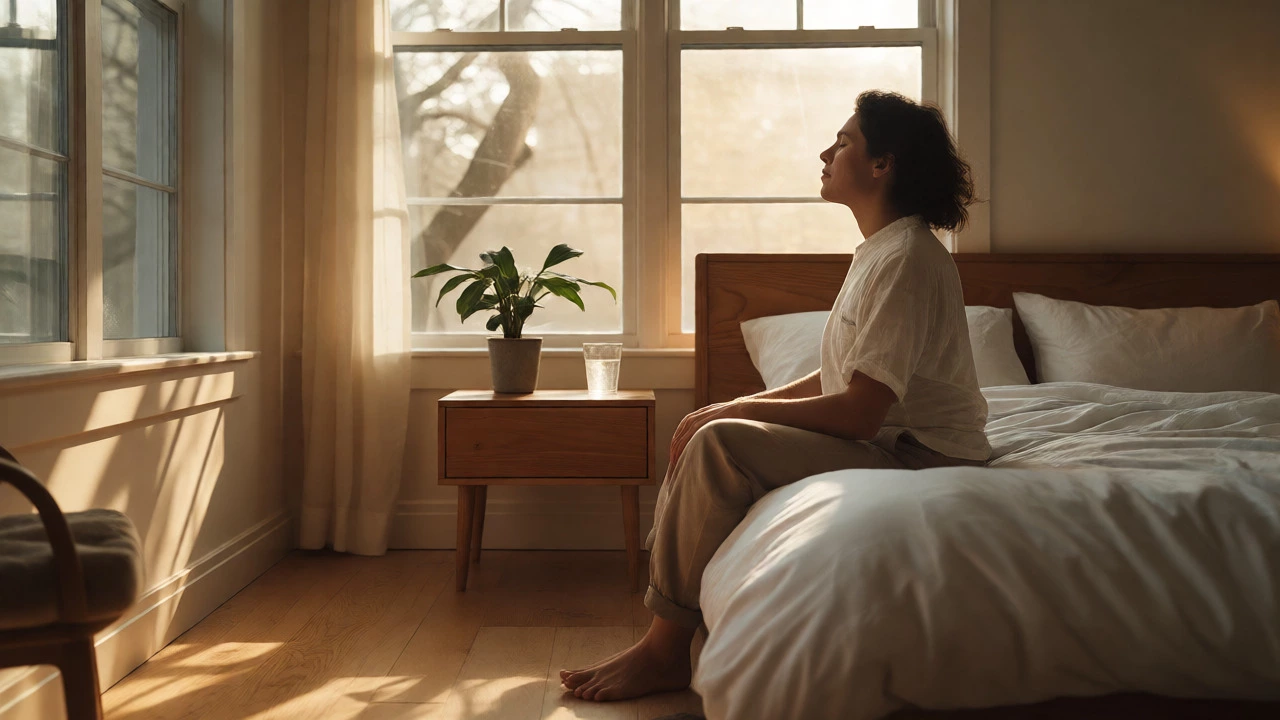
You don’t need to move into a tiny home tomorrow. Start small to protect your mental health. Try the "One Surface" rule: pick one horizontal surface, like a nightstand or a desk, and clear everything off it. Put back only what you truly need. Notice how it feels to look at that space. If it brings peace, try another surface next week. If it brings anxiety, pause. Listen to your body’s response rather than following internet rules.
| Environment Type | Cognitive Load | Emotional Response | Suitability for Anxiety |
|---|---|---|---|
| High Clutter | High | Stress, Overwhelm | Poor |
| Organized Maximalism | Moderate | Comfort, Inspiration | Variable |
| Intentional Minimalism | Low | Calm, Clarity | Good |
| Empty/Sterile Space | Low | Isolation, Coldness | Poor for some |
Frequently Asked Questions
Can minimalism help with ADHD?
Yes, many people with ADHD find minimalism helpful because it reduces visual distractions. However, complete emptiness can sometimes make it hard to remember tasks (object permanence issues). A balanced approach with visible, organized systems often works better than stark minimalism.
Does decluttering cause anxiety?
Initially, yes. Sorting through items can be emotionally taxing and time-consuming. It’s common to feel overwhelmed. To mitigate this, set timers for short sessions (e.g., 15 minutes) and focus on one category at a time to prevent decision paralysis.
Is minimalism good for everyone?
No. Some people thrive in environments filled with collections and personal items. If your surroundings inspire creativity and comfort, forcing minimalism may decrease your well-being. The key is intentionality, not necessarily having few things.
How long does it take to see mental health benefits?
Immediate relief often comes after clearing a single high-traffic area like a kitchen counter. Deeper changes in stress levels typically require consistent habits over several weeks. Be patient; changing your relationship with possessions is a gradual process.
What if I can’t afford to buy new minimalist furniture?
You don’t need new furniture. Minimalism is about subtraction, not addition. Remove items that don’t serve a purpose or bring joy. Use what you have. A clean, simple space can be created with existing belongings by organizing and editing rather than shopping.