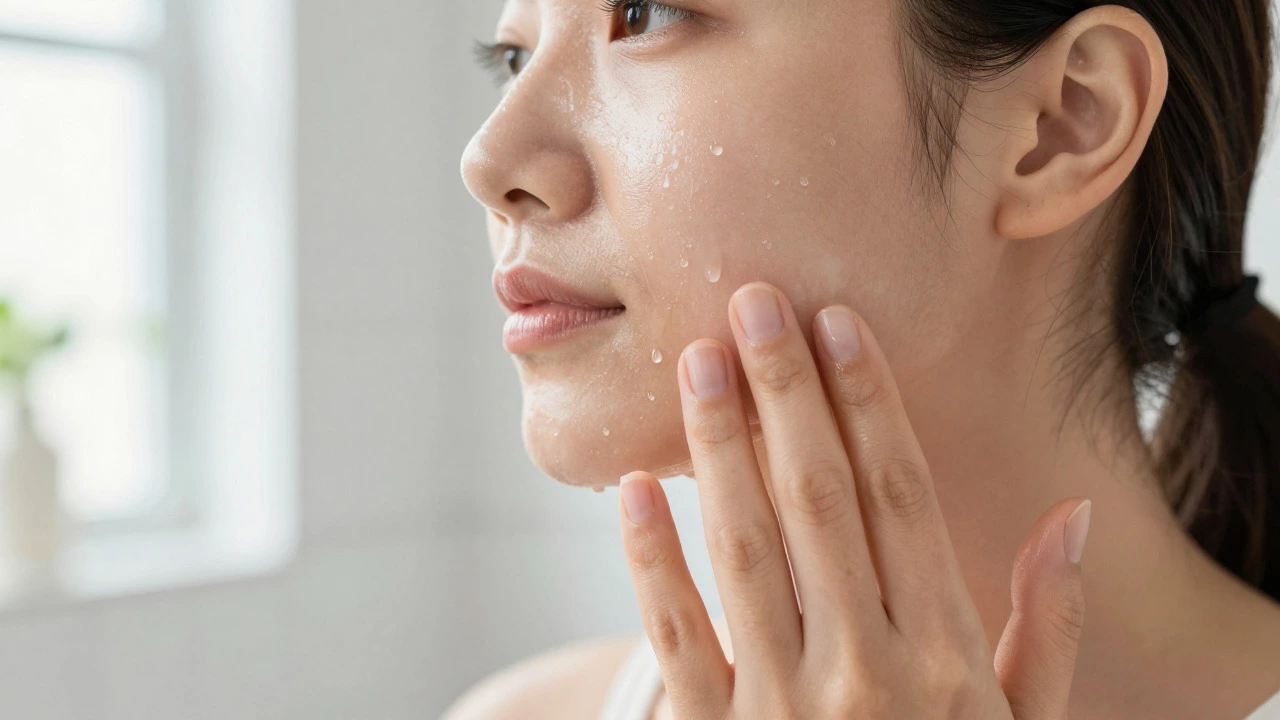
Skincare Layering Timer
Set your skin type to adjust the recommended wait time between each product layer.
Have you ever rushed through your morning routine, slapping on moisturizer and sunscreen only to realize your face feels tight an hour later? You might be skipping the 60-second rule. This simple timing technique isn't about counting seconds like a bomb defusal; it's about giving your skin the time it needs to absorb each layer of product before adding the next. Without this pause, active ingredients can dilute, irritation can spike, and that expensive serum might just sit on top of your skin instead of sinking in where it belongs.
The core idea is straightforward: after applying a water-based product (like a toner or essence), wait roughly one minute before applying the next layer. Why sixty seconds? It’s the average time it takes for thin, watery formulations to dry down and allow the stratum corneum (the outermost layer of your skin) to adjust its pH and permeability. If you rush this step, you’re essentially trapping moisture under heavier oils or creams, which can lead to clogged pores or reduced efficacy of actives like vitamin C or hyaluronic acid.
Why Timing Matters More Than Product Order
We often obsess over whether to apply retinol before or after moisturizer, but we rarely talk about the *gap* between them. The 60-second rule bridges that gap. Think of your skin like a sponge. If you pour water on a dry sponge, it soaks up quickly. But if you pour more water while the first layer is still sitting on the surface, the second pour just runs off. In skincare terms, "running off" means wasted product and potential pilling.
This rule is particularly critical when dealing with different viscosities. Water-based serums need time to penetrate before oil-based treatments are applied. If you apply an occlusive cream immediately after a hydrating serum, you create a barrier that prevents the serum from reaching deeper layers. By waiting, you ensure that the hyaluronic acid binds to water molecules in the epidermis rather than just coating the surface. This distinction is the difference between plump, hydrated skin and a mask-like feeling that wears off by lunchtime.
How to Implement the 60-Second Rule in Your Routine
You don’t need a timer app, though some people find it helpful. Instead, use natural pauses in your morning or evening routine. Here is how to weave it into your existing habits:
- Cleanser to Toner: Pat your face dry, then apply toner. While you’re gathering your next product or checking your reflection, that’s usually enough time. If you’re rushing, brush your teeth or wash your hands during this minute.
- Toner to Serum: This is the most critical pause. Apply your essence or toner, let it absorb until your skin feels slightly tacky but not wet. Then, apply your active serum (like niacinamide or vitamin C).
- Serum to Moisturizer: Wait until the serum has fully dried down. It should feel absorbed, not sticky. Only then should you press in your moisturizer. Pressing helps seal the previous layer without rubbing it away.
- Moisturizer to Sunscreen: In the AM, wait a minute after moisturizer before applying SPF. This ensures the moisturizer has formed a base film, allowing the sunscreen to adhere evenly without streaking.
If you have a short routine with only two steps, the rule still applies. Even between cleanser and moisturizer, a brief pause allows the skin’s natural lipid barrier to reset after the stripping effect of cleansing agents. This reduces the risk of transepidermal water loss (TEWL) that can make your skin look dull and tired.
Common Mistakes That Undermine Absorption
Even if you know the rule, execution errors can ruin the benefits. One frequent mistake is applying products to damp skin when they require dry application, or vice versa. For example, some exfoliating acids work best on dry skin, while hydrating essences benefit from slightly damp skin to enhance penetration. Misjudging this state can lead to irritation or poor absorption.
Another pitfall is using too much product. If you layer thick amounts of each item, the 60-second window won’t be enough for everything to dry. This leads to pilling, where small balls of product form on your face. To fix this, reduce the quantity per step. A pea-sized amount of serum is usually sufficient for the entire face. Less product means faster drying times and better compatibility with the next layer.
Finally, ignoring skin type matters. Oily skin tends to dry down faster, so you might not need the full 60 seconds. Dry or mature skin may take longer to absorb water-based products, potentially requiring 90 seconds or even two minutes. Listen to your skin’s feedback. If it feels tight or shiny, adjust your timing accordingly.
Scientific Backdrop: What Happens in Those 60 Seconds
Dermatological studies suggest that the stratum corneum undergoes subtle changes in hydration levels within minutes of product application. When you apply a humectant like glycerin or hyaluronic acid, it draws water from the environment or deeper skin layers into the upper epidermis. This process isn't instantaneous. It requires time for the molecules to diffuse and bind.
Research on transdermal drug delivery indicates that vehicle viscosity and skin hydration significantly impact penetration rates. A well-hydrated stratum corneum is more permeable. By waiting, you allow the initial layer to increase local hydration, making the skin more receptive to the next ingredient. Conversely, applying multiple layers too quickly can disrupt the skin’s natural pH balance, leading to transient stinging or redness, especially with acidic ingredients like AHAs or BHAs.

When You Can Skip the Wait
Is the 60-second rule mandatory for every single person? Not necessarily. If you are using a multi-step routine with very lightweight, fast-absorbing formulas, you might notice that your skin dries down in 30 seconds. In such cases, forcing a full minute might leave your skin feeling dry before the next step. The goal is to match the timing to the product’s drying rate and your skin’s absorption speed.
However, if you are introducing new active ingredients, stick strictly to the 60-second rule. New actives can be unpredictable, and proper spacing minimizes the risk of cumulative irritation. Once your skin adjusts to the routine, you can experiment with shorter intervals if your skin tolerates it well.
| Strategy | Time Between Steps | Best For | Risk Factor |
|---|---|---|---|
| Immediate Layering | 0-15 seconds | Oily skin, fast-drying serums | Pilling, reduced absorption |
| 60-Second Rule | ~60 seconds | Normal to combination skin, standard routines | Low risk, balanced absorption |
| Extended Pause | 2-5 minutes | Dry, sensitive, or mature skin | Time-consuming, potential dryness |
FAQ
Do I really need to wait 60 seconds for every product?
Not always. The 60-second rule is a guideline. If your skin dries down faster, you can move on sooner. If it stays wet or tacky, wait longer. The key indicator is when the previous layer feels absorbed and no longer slippery.
What happens if I skip the waiting time?
Skipping the wait can lead to pilling, where products ball up on the skin. It may also reduce the effectiveness of active ingredients because they don't have time to penetrate properly. In some cases, it can cause irritation due to mixing incompatible pH levels too quickly.
Does the 60-second rule apply to sunscreen?
Yes, especially in the morning. Waiting a minute after moisturizer allows the base layer to set, ensuring the sunscreen spreads evenly and adheres better. This improves protection and reduces the chance of white cast or streaks.
Is there a scientific basis for exactly 60 seconds?
While 60 seconds is a practical benchmark based on average drying times for common water-based cosmetics, individual variation exists. The science supports allowing time for hydration and pH stabilization, but the exact duration depends on product formulation and skin type.
Can I use this rule with makeup?
Absolutely. Waiting after your final skincare step (usually sunscreen or moisturizer) ensures your skin is ready for primer and foundation. Applying makeup over wet skincare can cause sliding, creasing, and uneven coverage.