Nutrient Comparison Calculator
Compare nutrient density of leafy greens and other healthy foods to see how many servings you'd need to eat to match key nutrients.
Comparison Results
To get the same amount of vitamin K as , you'd need to eat servings of .
To get the same amount of fiber as , you'd need to eat servings of .
To get the same amount of calcium as , you'd need to eat servings of .
To get the same amount of antioxidants as , you'd need to eat servings of .
To get the same amount of calories as , you'd need to eat servings of .
Key Takeaways
Leafy greens like are significantly more nutrient-dense than other healthy foods. For example, you'd need to eat times more to get the same nutrient benefits as .
There’s no single food that fixes everything. But if you had to pick one that does more for your body than almost any other, the answer isn’t a trendy supplement, a miracle fruit, or a fancy superfood powder. It’s leafy greens.
Why Leafy Greens Are the Real MVP
Think about what your body actually needs to stay healthy: vitamins, minerals, fiber, antioxidants, and compounds that fight inflammation. Leafy greens like kale, spinach, Swiss chard, and collards give you all of these in one low-calorie package. A single cup of cooked kale has more calcium than a cup of milk, more vitamin K than your body needs in a day, and enough vitamin C to boost your immune system without the sugar crash you get from fruit juice.
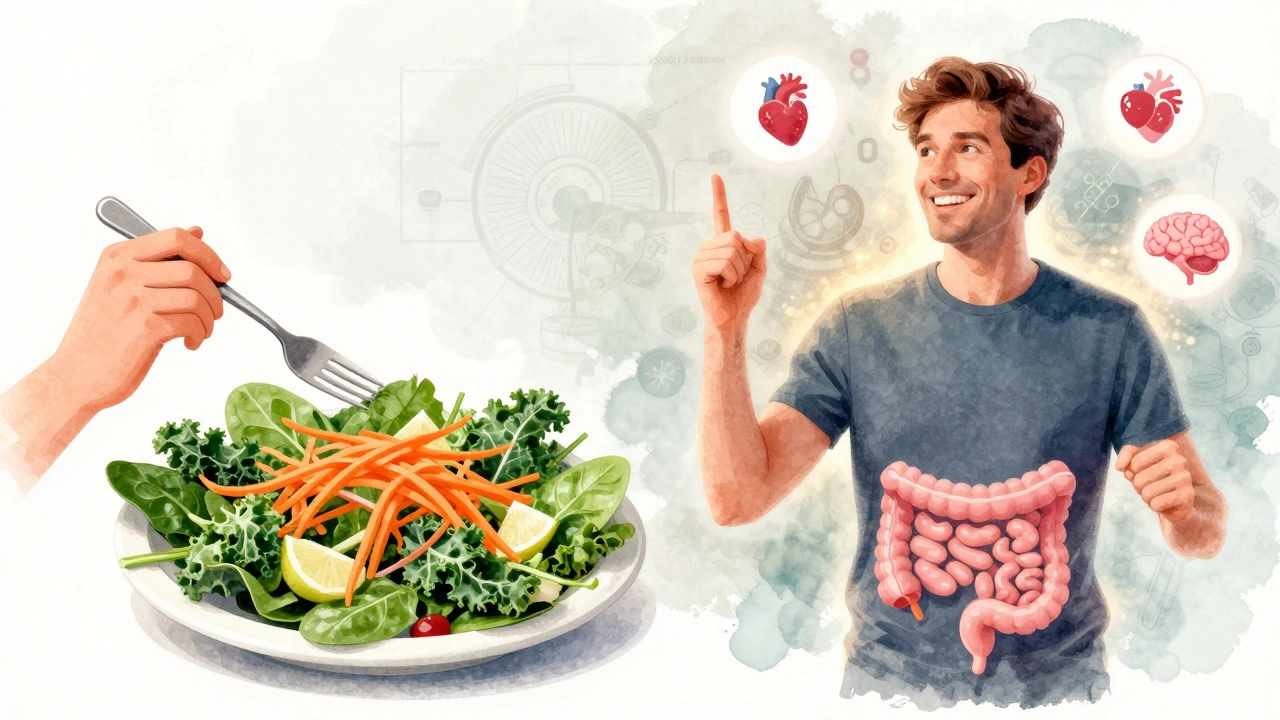
Unlike trendy foods that come and go-hello, acai bowls and activated charcoal lattes-leafy greens have been studied for decades. Research from the Harvard T.H. Chan School of Public Health shows that people who eat at least one serving of leafy greens daily have a 15% lower risk of heart disease and slower cognitive decline as they age. That’s not hype. That’s data from over 100,000 people tracked for 20 years.
What Makes Them Different From Other ‘Healthy’ Foods?
People love to debate whether blueberries, salmon, or quinoa is the healthiest. But here’s the thing: those foods are great, but they don’t match leafy greens on nutrient density per calorie.
Take blueberries. They’re packed with antioxidants. But you’d need to eat over 2 cups to get the same amount of vitamin K as one cup of cooked spinach. And you’d also get 100 extra calories. Salmon has omega-3s, which are vital for brain health. But it doesn’t give you fiber, and it’s not cheap or accessible for everyone. Quinoa is a complete protein, sure-but it’s also high in carbs and doesn’t have the same anti-cancer compounds found in cruciferous greens like broccoli and bok choy.
Leafy greens work differently. They’re low in calories but high in micronutrients. They contain sulforaphane, a compound that activates your body’s natural detox pathways. They’re rich in lutein and zeaxanthin, which protect your eyes from blue light damage. And their fiber feeds the good bacteria in your gut-something no supplement can fully replicate.
Real-Life Impact: What Happens When You Eat Them Daily
One woman in Melbourne, 52, started adding a big bowl of sautéed spinach and kale to her dinner every night after reading a study on inflammation. Within six weeks, her joint pain dropped. Her doctor noticed her blood pressure had improved. She stopped needing her statin for a while. She didn’t change anything else-just added greens.
This isn’t rare. In clinical trials, people who swapped out processed snacks for raw or lightly cooked greens saw improvements in cholesterol, blood sugar, and even skin clarity within 30 days. Their energy levels didn’t spike and crash-they stabilized. Why? Because leafy greens don’t trigger insulin spikes. They slow digestion, keep you full, and help your body use glucose efficiently.
How to Actually Eat Them (Without Getting Bored)
Most people give up on greens because they think they have to eat them like rabbits. You don’t. Here’s how to make them part of your routine without effort:
- Blend a handful of spinach into your morning smoothie. You won’t taste it, but your body will thank you.
- Throw chopped kale into soups, stews, or pasta sauces in the last 5 minutes of cooking.
- Make a simple salad with massaged kale, olive oil, lemon, and a sprinkle of nuts. Massage the kale with your hands for a minute-it softens it and removes bitterness.
- Swap out bread for large collard leaves as wraps. Fill them with hummus, grilled chicken, and shredded carrots.
- Roast Brussels sprouts or broccoli with garlic and olive oil until crispy. They taste like chips.
You don’t need to eat five different kinds every day. Just get one serving in. One cup cooked, or two cups raw. That’s it.
The Dark Side of ‘Superfood’ Hype
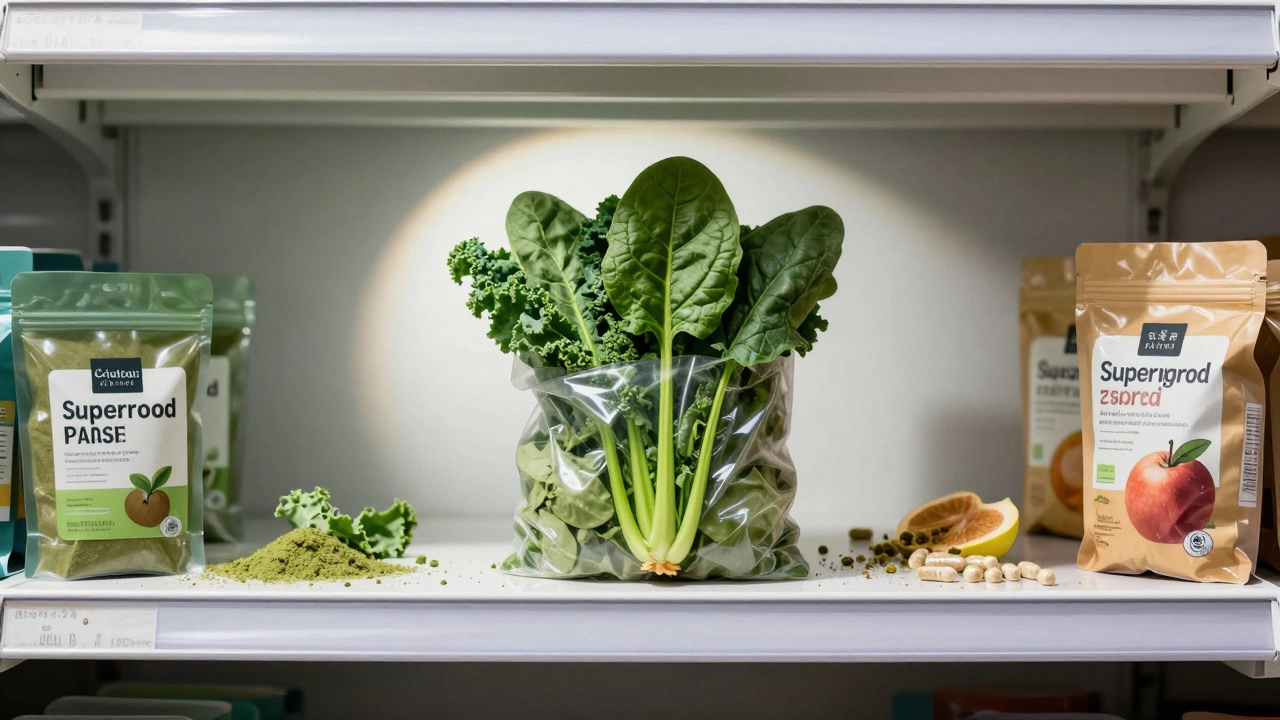
The supplement industry wants you to believe you need expensive powders or exotic fruits to be healthy. But the truth? You can get everything you need from the produce section. A bag of spinach costs less than $3. A bunch of kale is under $2. You don’t need a $50 bottle of green powder when you can buy a bunch of real food.
And here’s the kicker: those powders often contain heavy metals, fillers, or inconsistent nutrient levels. The FDA doesn’t regulate them tightly. But a spinach leaf? You know exactly what’s in it. No labels to decode. No marketing claims to second-guess.
What About Other ‘Top’ Healthy Foods?
Let’s be clear: other foods have their place. Eggs are great for choline. Lentils are perfect for plant-based protein. Avocados give you healthy fats. But none of them come close to the broad-spectrum benefits of leafy greens.
Here’s a quick comparison:
| Food | Vitamin K | Fiber | Calcium | Antioxidants | Calories |
|---|---|---|---|---|---|
| Kale | 817 mcg | 3.6g | 254mg | High (lutein, beta-carotene) | 49 kcal |
| Spinach | 779 mcg | 2.2g | 99mg | High (lutein, zeaxanthin) | 23 kcal |
| Salmon | 0 mcg | 0g | 12mg | Moderate (astaxanthin) | 206 kcal |
| Blueberries | 19 mcg | 2.4g | 6mg | High (anthocyanins) | 57 kcal |
| Quinoa | 0 mcg | 2.8g | 31mg | Moderate | 120 kcal |
Notice how leafy greens dominate in vitamin K and antioxidants while staying under 50 calories? That’s the magic. You’re getting maximum benefit with minimal cost-calorically and financially.
How to Start Today
You don’t need a meal plan. You don’t need to go vegan. Just do this:
- Buy one bag of spinach or kale this week.
- Add it to one meal a day-breakfast, lunch, or dinner.
- Keep doing it for 14 days.
- Notice how you feel. More energy? Fewer cravings? Better digestion?
That’s it. No supplements. No detoxes. Just real food.
Why This Matters More Than Ever in 2026
With rising rates of type 2 diabetes, heart disease, and gut disorders, we need simple, scalable solutions. Leafy greens are one of the few things that help everyone-kids, seniors, athletes, office workers. They’re cheap. They’re shelf-stable when frozen. And they’re available everywhere, from big supermarkets to corner grocers.
They’re not glamorous. But they’re the most powerful tool we have for long-term health. Not because they’re trendy. But because they’re real.
Is spinach the healthiest leafy green?
Spinach is one of the most nutrient-dense, but it’s not the only one. Kale has more vitamin C and calcium. Swiss chard has more magnesium. Collards are higher in fiber. The best approach is to rotate them. Different greens offer slightly different nutrients, so variety matters more than picking a single winner.
Can I just take a greens supplement instead?
Supplements can’t replace whole foods. They often lack fiber, which is essential for gut health. Many also contain added sugars, fillers, or contaminants. A 2024 study in the Journal of Nutrition found that people who ate whole leafy greens had better gut microbiome diversity than those who took green powders-even when the powders claimed to have the same nutrients.
Are raw greens better than cooked?
It depends. Raw greens have more vitamin C and enzymes. Cooked greens release more calcium and iron because heat breaks down oxalic acid, which blocks absorption. For maximum benefit, eat them both ways. Steam or sauté some, and snack on raw spinach in salads.
Do I need to buy organic?
Not necessarily. Leafy greens like kale and spinach are on the Environmental Working Group’s ‘Dirty Dozen’ list for pesticide residue. But washing them under running water for 20 seconds removes most of it. If you’re on a budget, frozen organic greens are often cheaper and just as nutritious.
What if I don’t like the taste?
Taste is learned. Start small-add a few leaves to a smoothie or stir chopped greens into tomato sauce. Over time, your palate adjusts. Many people who hated greens as kids love them as adults because they notice how much better they feel after eating them.
Next Steps
Don’t overthink it. Buy a bag of spinach this week. Add it to your next meal. See how you feel in 10 days. That’s all it takes to start reaping the benefits of the #1 healthiest food on the planet.