Dead Bug Form Checker
Check if you're performing dead bugs correctly based on the article's guidance. This tool uses key indicators from the recommended exercise technique to provide feedback.
Results will appear here after checking your form.
There’s a reason so many people swear by their morning workout-it’s not just about burning calories. Doing the right exercise first thing sets the tone for your whole day. Your body isn’t just waking up; it’s resetting. And if you’re doing it right, you’ll feel more focused, less sluggish, and even less stressed by mid-morning.
Why the First Exercise Matters
When you wake up, your muscles are stiff, your core is inactive, and your nervous system is still in sleep mode. Jumping straight into a high-intensity run or heavy lifting can strain your back or shoulders. What you need isn’t intensity-it’s activation.
Studies from the University of Brighton show that people who do light movement within 30 minutes of waking report 27% higher energy levels throughout the day. That’s not magic. It’s biology. Your body needs to reconnect with itself after hours of stillness.
The best morning exercise doesn’t make you sweat buckets. It wakes up your nervous system, gets blood flowing to your spine, and primes your joints for the day. It’s not about burning 500 calories before breakfast. It’s about building a foundation.
The Top Choice: Dead Bugs
If you only do one exercise in the morning, make it the dead bug.
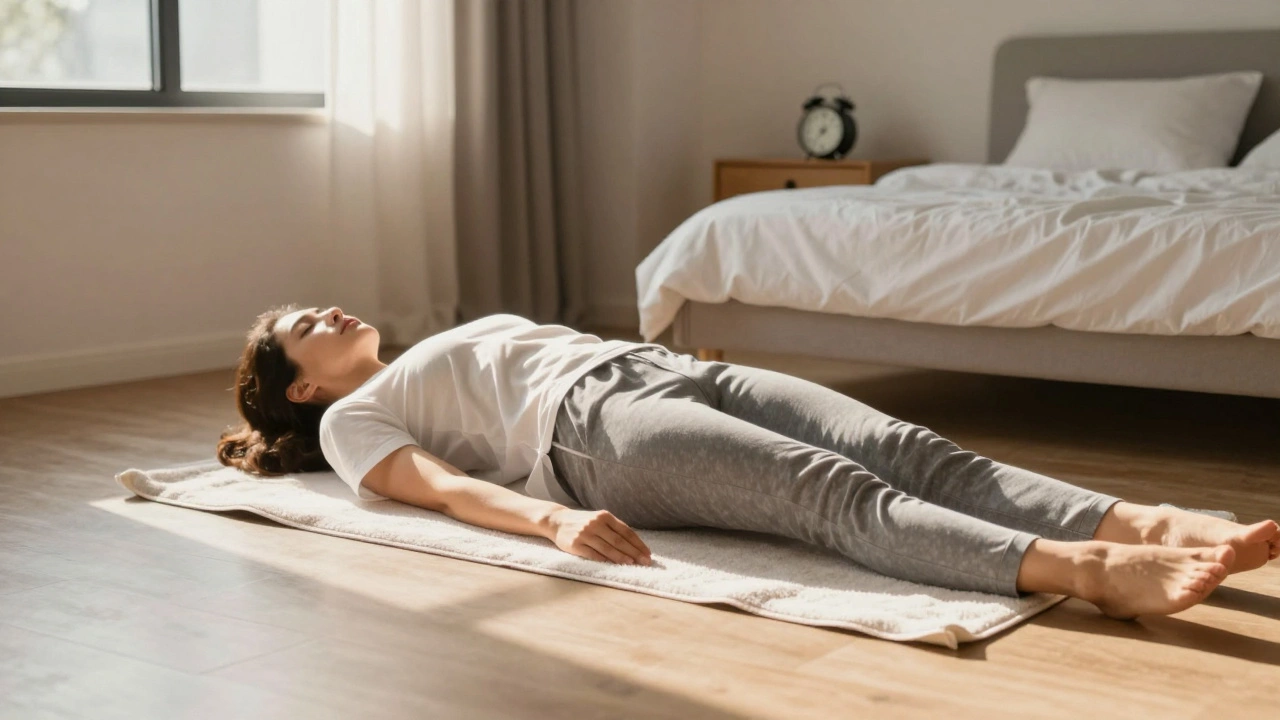
It’s simple. Lie on your back, knees bent at 90 degrees, arms straight up toward the ceiling. Slowly lower one arm and the opposite leg toward the floor, keeping your lower back pressed flat. Return to start, then switch sides. Do 10 reps per side.
Why this over planks, squats, or jumping jacks?
- It engages your deep core muscles-the transverse abdominis-that most people never activate.
- It prevents lower back rounding, which happens when you sit at a desk or slouch on the couch.
- It improves coordination between your upper and lower body, which reduces injury risk later in the day.
- You can do it on a yoga mat, a towel, or even your bedroom floor-no equipment needed.
It’s not flashy. But if you’ve ever woken up with a stiff lower back, or felt like your posture collapsed by 11 a.m., this fixes it. People who do dead bugs daily for two weeks report less back pain, better sitting posture, and even improved breathing.
What About Planks?
Planks are great. But they’re not the best first thing in the morning.
Planks demand static strength. Your body has to fight gravity without movement. That’s fine later in the day. But when you’re still groggy, your core isn’t firing properly. Holding a plank with weak activation can put pressure on your lower back instead of strengthening it.
Dead bugs, on the other hand, teach your core to move with control. They’re dynamic. They mimic how your body should work during walking, reaching, or lifting groceries.
If you want to do a plank, wait until after you’ve done 5-10 dead bugs. Your core will be awake-and the plank will actually help you.
What About Stretching or Yoga?
Static stretching before movement isn’t ideal. Research from the Journal of Athletic Training shows that holding stretches cold muscles doesn’t improve flexibility long-term-and can reduce power output.
Dynamic movement is better. That’s why yoga flows like sun salutations work better than holding a forward fold for 30 seconds. But even sun salutations can be too much if your spine is locked up.
Dead bugs are the bridge. They’re gentle enough for stiff bodies but active enough to wake up your system. After dead bugs, you can add a few cat-cow stretches or arm circles. But start with the movement that rebuilds your core connection first.

How Long Should You Spend?
Three to five minutes.
You don’t need 20 minutes. You need consistency. Five minutes of dead bugs every morning is better than 30 minutes once a week.
Set a timer. Do 10 reps per side. That’s 20 total movements. Take slow breaths. Focus on keeping your lower back glued to the floor. If you feel your back arching, stop, reset, and try again.
After a week, you’ll notice you sit taller at your desk. After two weeks, you’ll catch yourself standing up straighter without thinking. That’s the real win.
What If You Have Back Pain?
Dead bugs are one of the safest exercises for lower back issues. They’re used in physical therapy for people recovering from disc problems and chronic pain.
Modify it: keep your feet on the floor and just move one arm at a time. Or do it with your knees bent and feet flat, lifting only your hands toward the ceiling. The goal isn’t range-it’s control.
If you feel sharp pain, stop. But if it’s just stiffness or mild discomfort, keep going. Movement is medicine.
What Equipment Do You Need?
Nothing.
That’s the beauty of it. No dumbbells. No resistance bands. No yoga mat, though it helps. You can do it in your pajamas, right after brushing your teeth.
If you want to add resistance later, hold a light water bottle in each hand. But don’t start there. Master the movement first.
Why Not Jumping Jacks or Burpees?
They’re fun. They get your heart rate up. But they’re not foundational.
Jumping jacks rely on momentum. They don’t teach your body how to stabilize. If your core isn’t firing, your spine takes the shock. That’s how people hurt their backs doing home workouts.
Burpees? Too much. Too fast. Too taxing. Save them for later in the day, after you’ve warmed up properly.
Morning exercise isn’t about pushing limits. It’s about rebuilding your body’s natural rhythm.
Putting It All Together
Here’s your simple morning routine:
- Drink a glass of water.
- Do 10 dead bugs per side (20 total).
- Follow with 5 slow cat-cow stretches.
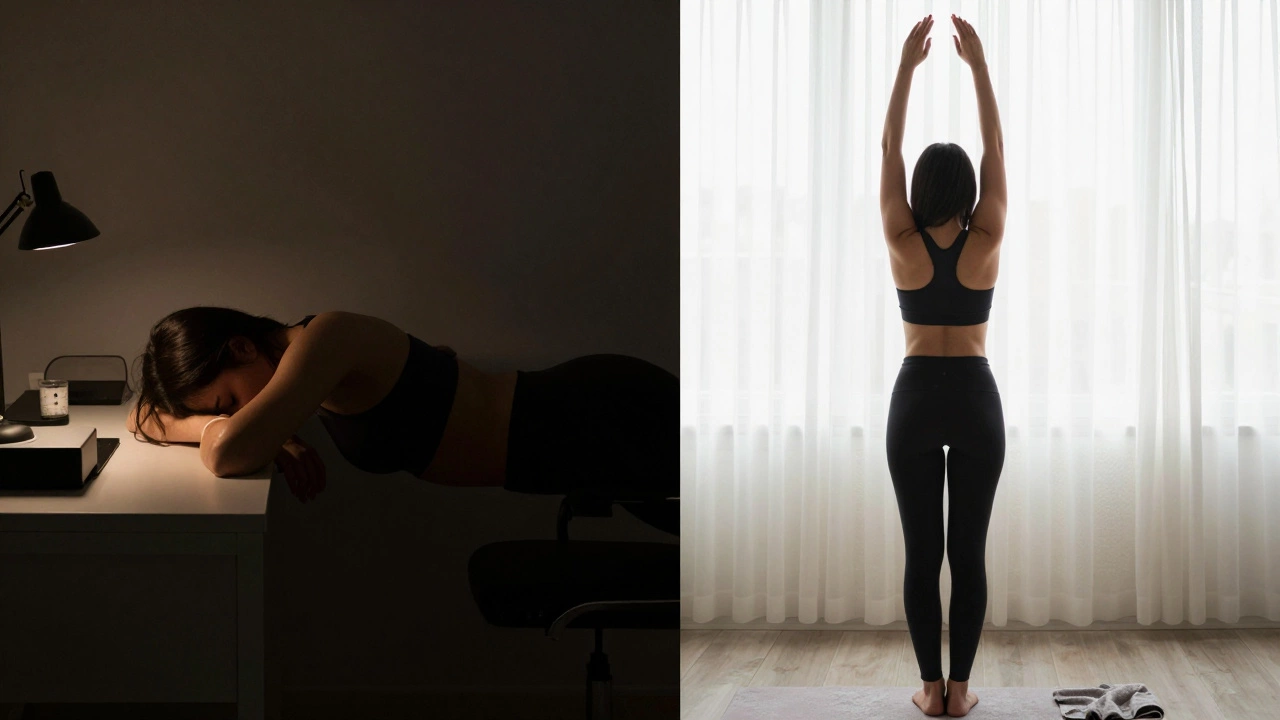
- Stand up, reach your arms overhead, take three deep breaths.
That’s it. Under five minutes. No equipment. No shower required.
Do this for 14 days. Then check in: How’s your posture? How’s your energy? Do you feel more alert before coffee? That’s your proof.
What Comes Next?
Once dead bugs feel easy, you can add bird-dogs (on all fours, extend one arm and opposite leg), or glute bridges to wake up your posterior chain. But don’t rush. Master the foundation first.
The best morning exercise isn’t the hardest. It’s the one that makes your body feel like it belongs to you again.
Is it better to exercise before or after breakfast?
It doesn’t matter much for a short, low-intensity routine like dead bugs. Do it when you’re most likely to stick with it. If you’re hungry, have a small piece of fruit or a sip of black coffee first. But don’t skip it because you haven’t eaten.
Can I do this if I’m over 50 or have joint issues?
Yes. Dead bugs are low-impact and joint-friendly. Modify by keeping your feet on the floor and moving only your arms. Many people in their 60s and 70s use this to reduce stiffness and improve balance. It’s one of the safest core exercises you can do.
How soon will I see results?
Most people notice improved posture and less morning stiffness within 5-7 days. After two weeks, you’ll likely feel more energized and less achy throughout the day. The changes are subtle at first, but they add up fast.
Do I need a yoga mat?
Not at all. A towel, carpet, or even your bed works fine. The key is having a surface that’s not slippery and lets you feel the floor so you know your back is staying flat.
What if I forget to do it one day?
Skip it. No guilt. Just get back to it the next morning. Consistency beats perfection. Missing one day won’t undo progress. But making it a habit-even on weekends-will change how your body feels long-term.