Protein & Fiber Calculator for Weight Loss
Your Morning Meal Calculator
The article recommends 15-20g protein and 5g+ fiber in your first meal. Enter your choices below to see if you're on track for weight loss.
Your Results
Need ImprovementProtein: 0g | Fiber: 0g
To support weight loss, aim for 15-20g protein and 5g+ fiber in your first meal. Try adding a protein source like eggs or Greek yogurt with fiber-rich vegetables.
Want to lose weight? The first thing you eat in the morning isn’t just a snack-it’s a signal to your body. What you choose sets off a chain reaction that can either help you burn fat or keep you stuck in cravings and sluggishness. It’s not about skipping breakfast. It’s about what you put on that plate.
Start with protein, not sugar
Most people reach for toast, cereal, or a bagel because it’s quick. But those are carbs with little fiber or protein. They spike your blood sugar, then crash it by 10 a.m. That crash makes you hungry, irritable, and more likely to grab a candy bar or soda. It’s not willpower-it’s biology.
Instead, start with protein. Eggs are the simplest, cheapest, and most studied option. One large egg has 6 grams of protein and almost no carbs. A 2023 study in the Journal of Nutrition found that people who ate eggs for breakfast consumed 300 fewer calories over the rest of the day compared to those who ate a bagel-based breakfast. Why? Protein keeps you full longer. It slows digestion. It stabilizes insulin.
Other great protein starters: Greek yogurt (unsweetened), cottage cheese, or even leftover grilled chicken. You don’t need to cook a full meal. Just 15-20 grams of protein in the first 30 minutes after waking up makes a measurable difference.
Why fiber comes next
Protein alone isn’t enough. You need fiber to slow down how fast your body absorbs sugar. That’s why pairing protein with high-fiber foods works better than either alone.
Think spinach, broccoli, mushrooms, or berries. A cup of cooked spinach has 4 grams of fiber and only 7 calories. Add it to scrambled eggs. Toss berries into your yogurt. Even a small apple with the skin on gives you 4.5 grams of fiber.
Fiber doesn’t just fill you up. It feeds your gut bacteria. A healthy gut microbiome is linked to lower body fat, better insulin sensitivity, and even reduced cravings. A 2024 analysis in Nutrients showed that people who ate at least 25 grams of fiber daily lost 2-3 more pounds over 12 weeks than those who didn’t-even when calories were the same.
What to avoid before breakfast
Don’t drink coffee right after waking up. Your body naturally releases cortisol, a stress hormone, in the early morning to help you wake up. Coffee boosts cortisol even higher. Too much cortisol can increase belly fat and make you hungrier later.
Wait at least 30-45 minutes after waking to drink coffee. Have your protein and fiber first. Then enjoy your cup. You’ll get the energy without the crash.
Also skip fruit juice. Even 100% orange juice is just concentrated sugar. One glass has as much sugar as three oranges-but none of the fiber. That sugar hits your liver fast, gets turned into fat, and leaves you hungry again within an hour.

Real examples that work
Here’s what actual people eat for their first bite:
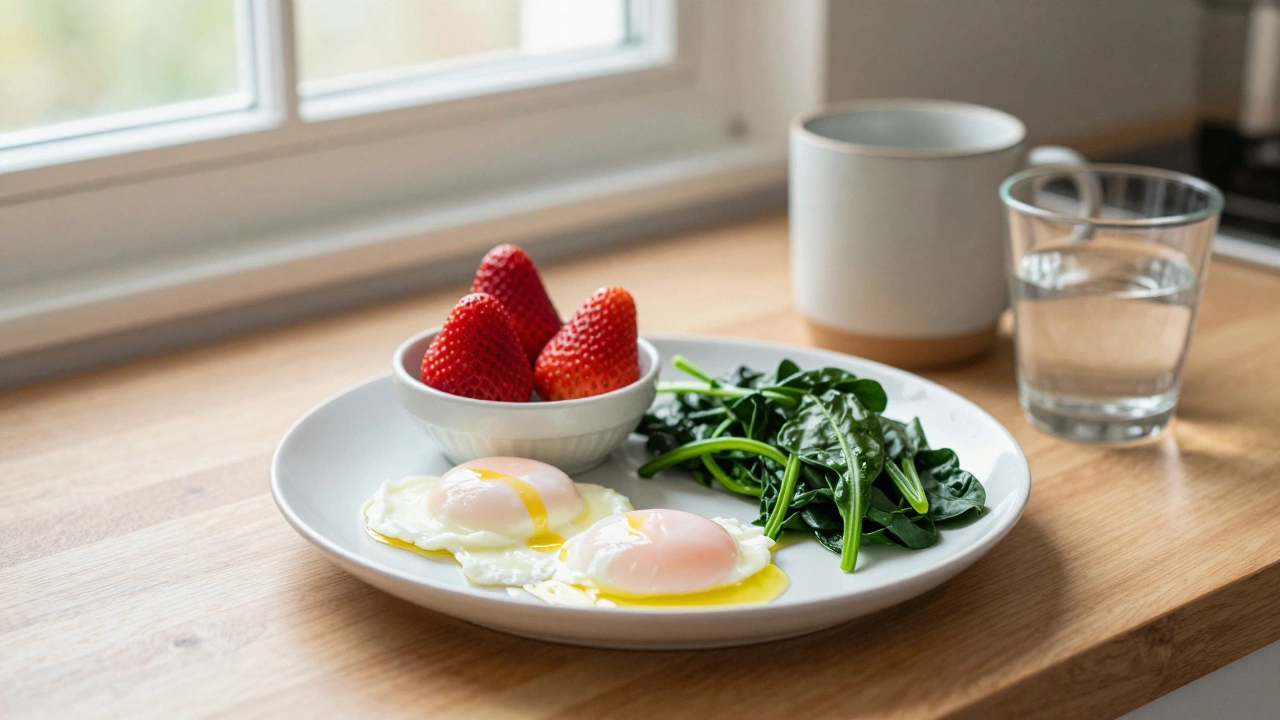
- Two hard-boiled eggs and half a cup of sliced strawberries
- Half a cup of plain Greek yogurt with a tablespoon of chia seeds and a sprinkle of cinnamon
- Leftover grilled salmon with a side of sautéed kale
- Cottage cheese with sliced cucumber and a few almonds
- Scrambled eggs with spinach, mushrooms, and one slice of whole-grain toast (only if you’re active)
Notice what’s missing? No pancakes. No granola. No flavored oatmeal. No fruit smoothies with added sugar. These foods sound healthy but are sugar bombs in disguise.
Timing matters more than you think
It’s not just what you eat-it’s when. Eat within 30-60 minutes of waking up. Waiting too long tells your body to hold onto fat. You’re already in a fasted state after sleep. Your metabolism is primed to burn energy. Delaying food forces your body to slow down to conserve energy.
But don’t wait until you’re starving. That’s when you’ll grab anything convenient. Prep your morning meal the night before. Hard-boil eggs. Wash and chop berries. Portion out yogurt. Keep it simple. You don’t need a fancy routine-just consistency.

What about intermittent fasting?
Some people skip breakfast to extend their fast. But if your goal is weight loss, skipping the first meal doesn’t automatically mean fat loss. Studies show that people who skip breakfast often overeat later. One 2022 trial in Obesity found that intermittent fasters who skipped breakfast ate 12% more calories at lunch and dinner than those who ate a protein-rich morning meal.
That doesn’t mean you can’t fast. But if you do, make sure your first meal is still high in protein and fiber. Don’t break your fast with a croissant. Break it with eggs and greens.
Why this works long-term
Weight loss isn’t about extreme diets. It’s about habits that stick. Starting your day with protein and fiber trains your brain to crave real food. You stop reaching for snacks because you’re not hungry. You stop feeling sluggish because your blood sugar stays steady.
People who do this for 30 days report better focus, fewer cravings, and easier weight loss-even without counting calories. It’s not magic. It’s biochemistry.
Try it for one week. Skip the toast. Eat eggs or yogurt first. Add a handful of spinach or berries. Drink water. Wait for coffee. See how you feel by day three. Most people notice a difference in energy and hunger before the end of the week.