Bloating Food Calculator
Select foods you've eaten recently to calculate your bloating risk and get personalized recommendations.
Your Bloating Risk Assessment
Foods to Avoid Today
Want a flatter stomach in just three days? You’re not alone. Millions search for quick fixes, but most of them rely on fads, detox teas, or starvation. The truth? You can’t burn belly fat in 72 hours-but you can reduce bloating, ease water retention, and feel lighter in just a few days with the right foods. This isn’t about losing pounds. It’s about looking and feeling less puffy, more confident, and more energized.
What’s really causing your bloated stomach?
Before you change what you eat, understand what’s making your stomach look bigger. It’s rarely actual fat. More often, it’s:
- Gas from fermenting carbs and beans
- Water retention from too much salt or sugar
- Constipation or slow digestion
- Food intolerances (like lactose or gluten)
- Swallowing air (chewing gum, drinking through straws, eating too fast)
Fixing these issues doesn’t require fasting. It just needs smarter food choices.
Day 1: Reset with anti-bloating foods
Start clean. Skip processed snacks, bread, dairy, and soda. Your goal is to flush out excess fluid and calm your gut.
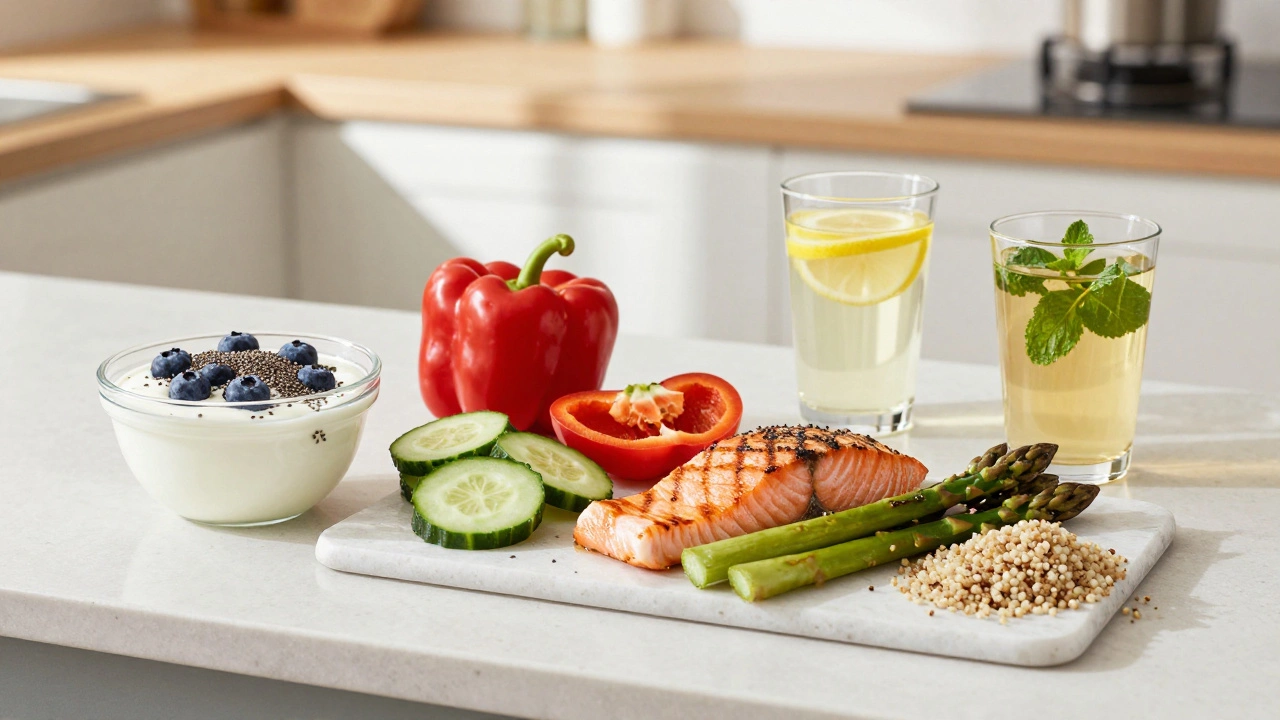
- Breakfast: 1 cup plain Greek yogurt (unsweetened) + 1/2 cup blueberries + 1 tbsp chia seeds. The probiotics in yogurt help balance gut bacteria, while chia absorbs water and keeps things moving.
- Lunch: Grilled chicken salad with spinach, cucumber, bell peppers, olive oil, and lemon dressing. Cucumber and celery are natural diuretics-they help your body release water without dehydrating you.
- Dinner: Baked salmon with steamed asparagus and quinoa. Salmon is rich in omega-3s, which reduce inflammation. Asparagus contains asparagine, a natural diuretic.
- Drinks: Water with lemon, peppermint tea, or ginger tea. No coffee, no soda, no alcohol. Drink at least 2.5 liters.
Why this works: You’re cutting out sodium-heavy processed foods and replacing them with potassium-rich, fiber-filled, anti-inflammatory options. Your body starts shedding excess water within hours.
Day 2: Focus on digestion and fiber
Now you’re not just reducing bloating-you’re helping your gut move things along. Constipation is a major cause of belly bulge. Fiber helps, but only if you drink enough water.
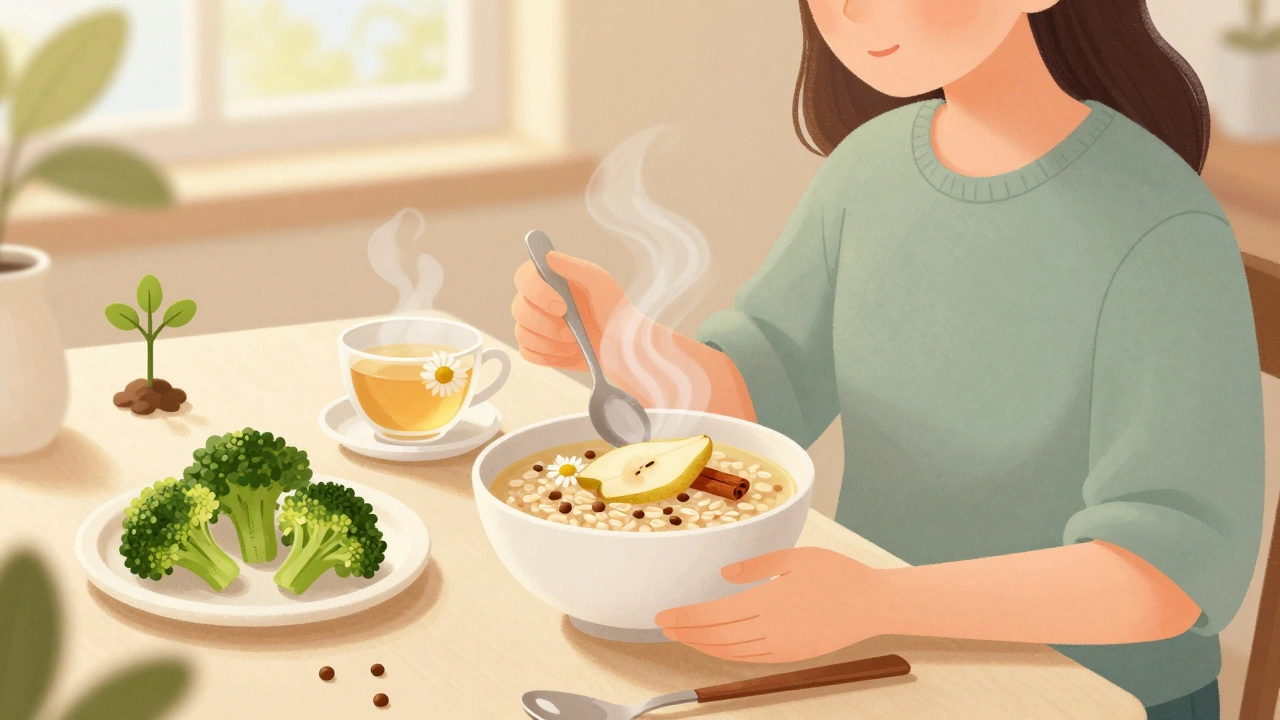
- Breakfast: Oatmeal made with water (not milk), topped with sliced pear and a sprinkle of cinnamon. Pears have sorbitol, a natural laxative, and oats are soluble fiber that soothes the gut lining.
- Lunch: Lentil soup (homemade, low-sodium) with a side of steamed broccoli. Lentils are high in fiber and protein, but cook them well to reduce gas-causing oligosaccharides.
- Dinner: Stir-fried tofu with bok choy, zucchini, and garlic in sesame oil. Bok choy is gentle on the stomach and rich in vitamin C, which helps reduce swelling.
- Snacks: 1 small apple with 10 almonds. Or a cup of pineapple chunks. Pineapple contains bromelain, an enzyme that helps break down proteins and ease bloating.
- Drinks: Continue with water, ginger tea, and chamomile tea. Chamomile calms intestinal spasms.
Pro tip: Chew each bite 20-30 times. Slowing down reduces swallowed air and gives your stomach time to signal fullness.
Day 3: Lighten up and stay clear
By now, your gut should feel calmer. Keep it that way with simple, easy-to-digest meals. Avoid anything fried, sweet, or heavy.
- Breakfast: Scrambled eggs with spinach and tomatoes. Eggs are protein-dense and low in carbs-perfect for keeping insulin levels stable. Insulin spikes can cause water retention.
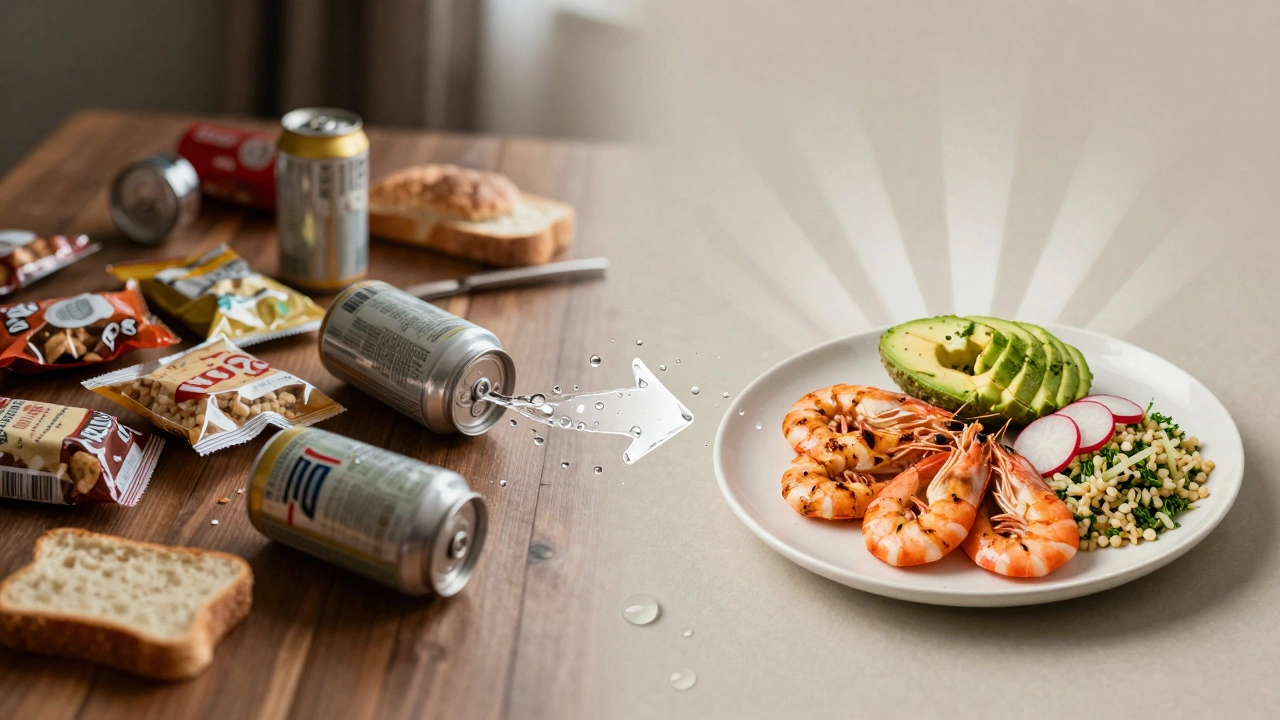
- Lunch: Grilled shrimp salad with mixed greens, radishes, and avocado. Radishes act as natural digestive aids. Avocado gives healthy fats without triggering bloating.
- Dinner: Steamed white fish (like cod or tilapia) with roasted fennel and a side of wild rice. Fennel seeds have been used for centuries to relieve gas and bloating. Even a teaspoon of fennel tea after meals helps.
- Snacks: Cucumber slices with a pinch of sea salt and lime. Or a small bowl of strawberries. Berries are low in sugar and high in antioxidants.
- Drinks: Water with mint, or dandelion root tea. Dandelion is a natural diuretic that doesn’t strip electrolytes like caffeine does.
What to absolutely avoid in these 3 days
These foods are bloating villains. Skip them completely:
- Carbonated drinks (even sparkling water can trigger bloating in sensitive people)
- Artificial sweeteners (sorbitol, xylitol, aspartame-they ferment in your gut)
- Processed snacks (chips, crackers, cookies-loaded with sodium and preservatives)
- High-sugar fruits (mangoes, grapes, dried fruit-sugar pulls water into the intestines)
- Dairy (milk, cheese, ice cream-unless you’re sure you tolerate it)
- Wheat and gluten-containing breads/pasta-even if you’re not celiac, gluten can cause inflammation
One study from the Journal of Gastroenterology and Hepatology found that 78% of people with unexplained bloating saw improvement after removing these foods for just 72 hours.
Why this works better than juice cleanses or detoxes
Detox teas and juice fasts promise quick results but leave you weak, hungry, and back to square one. This plan doesn’t deprive you. It nourishes you.
You’re getting:
- Enough protein to keep muscle intact
- Healthy fats to support hormone balance
- Fiber to regulate digestion
- Electrolytes from whole foods (potassium from bananas, magnesium from spinach)
No crash. No rebound. Just a calmer, lighter feeling by day three.
What to expect after 3 days
You won’t lose 5 pounds. But you’ll likely notice:
- Your clothes feel looser around the waist
- Your stomach feels softer, not tight or hard
- You have more energy, less brain fog
- You’re not constantly burping or gassy
That’s real progress. And it’s sustainable. If you keep eating this way-even 80% of the time-you’ll keep feeling this good.
What to do after day 3
Don’t go back to pizza and soda. Instead, slowly reintroduce one food at a time. Add back dairy on day four. Watch for bloating. Try gluten on day five. Notice how your body reacts.
This is how you find your personal triggers. Most people discover they’re sensitive to one or two things-not everything. Once you know, you can enjoy your favorite foods without the belly bloat.
Quick checklist for success
- Drink at least 2.5 liters of water daily
- Don’t chew gum or drink through straws
- Eat slowly, chew thoroughly
- Get 7+ hours of sleep-poor sleep increases cortisol, which stores belly fat
- Take a 20-minute walk after meals-it helps digestion
- Don’t weigh yourself during these 3 days-focus on how your clothes fit
This isn’t a magic trick. It’s a reset. And it works every time-if you stick to the rules.
Can I drink coffee during this 3-day plan?
It’s best to skip coffee for these three days. Caffeine can irritate your gut lining and increase cortisol, which may lead to more water retention. If you absolutely need it, have one small black cup in the morning-no sugar, no cream. But water, herbal teas, and lemon water are better choices.
Will I lose weight or just reduce bloating?
You’ll mostly lose water weight and gas, not fat. That’s why your clothes feel looser. Real fat loss takes weeks of consistent eating and movement. This plan gives you a quick visual and physical boost, which can motivate you to keep going with healthier habits long-term.
Are there any supplements that help?
You don’t need them, but some people find relief with magnesium citrate (helps with constipation) or activated charcoal (binds gas). Peppermint oil capsules can also ease bloating. Always check with a doctor first, especially if you’re on medication.
What if I’m vegetarian or vegan?
Easy. Swap chicken and fish for tofu, tempeh, or edamame. Use lentils and chickpeas (well-cooked) for protein. Stick to low-FODMAP veggies like zucchini, spinach, carrots, and bell peppers. Avoid beans if they bloat you-swap them for quinoa or rice. Chia and flax seeds are great for fiber without triggering gas.
Can I do this if I have IBS or other digestive issues?
Yes, but tailor it. This plan avoids common IBS triggers like onions, garlic, wheat, dairy, and artificial sweeteners. Stick to low-FODMAP foods: bananas, oats, rice, eggs, salmon, spinach, cucumbers. If you’re unsure, work with a dietitian to personalize it. This plan is actually a gentle intro to the low-FODMAP diet.
Final thought: It’s not about perfection
You don’t need to be flawless. Miss a meal? Eat something greasy? Don’t stress. One bad meal won’t undo three days of clean eating. What matters is consistency over time. This 3-day plan is a reset button-not a life sentence. Use it to feel better now, and build from there.