Great Britain vs. UK Location Checker
Is Your Location in Great Britain or the UK?
Check if a place is part of Great Britain (the island containing England, Scotland, and Wales) or the United Kingdom (which includes Great Britain + Northern Ireland).
Result:
People still say "Great Britain" all the time-on TV, in movies, even in travel brochures. But if you look at a British passport, a government website, or a map from the UK’s official tourism board, you won’t see "Great Britain" listed as the country’s name. You’ll see "United Kingdom." So what happened? Why did the name change? And why does it still confuse so many people?
Great Britain is a geographic term, not a country
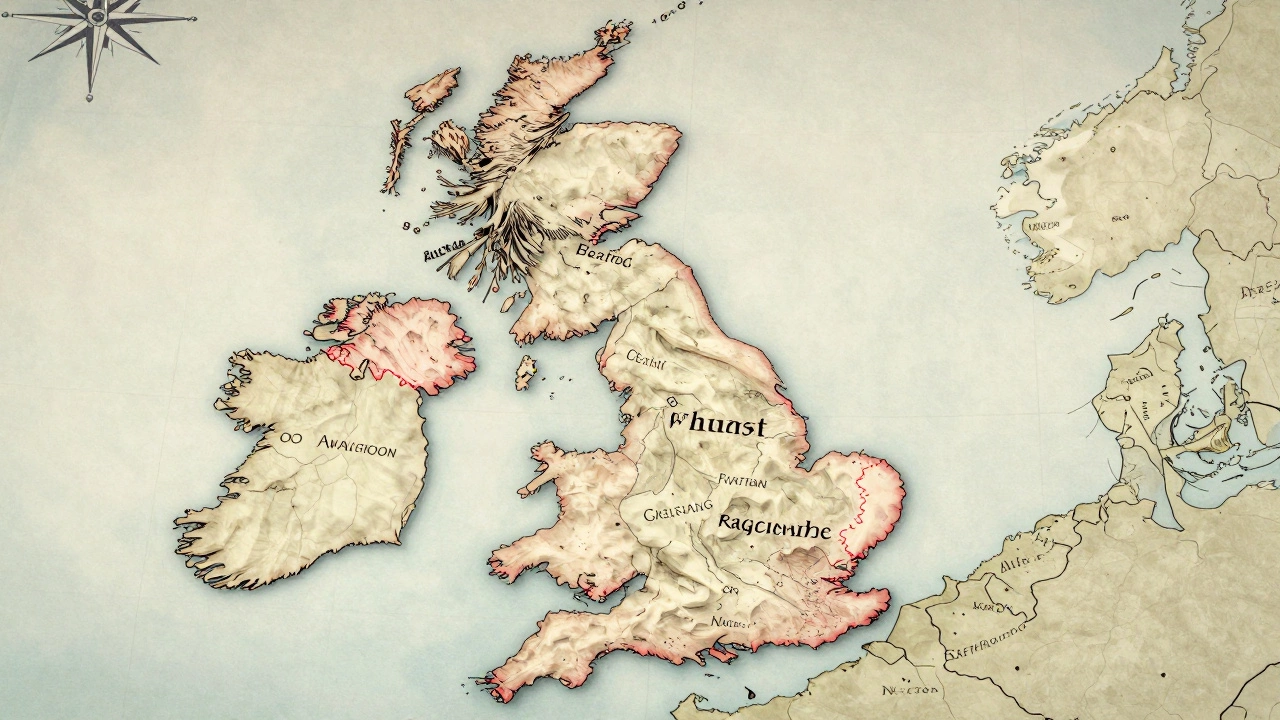
Great Britain is the name of the largest island in the British Isles. It includes three countries: England, Scotland, and Wales. That’s it. No Northern Ireland. No Isle of Man. No Channel Islands. Just those three nations sharing one landmass. If you fly into London, Edinburgh, or Cardiff, you’re on Great Britain. But if you fly into Belfast, you’re not. You’re in Northern Ireland, which sits on a different island.
So calling the whole country "Great Britain" is like calling the United States "North America." It’s technically true in a geographic sense, but it leaves out a huge part of the picture. Northern Ireland has been part of the political union since 1801. Ignoring it in the name doesn’t make sense anymore.
The United Kingdom was formed to unite the crowns
The name "United Kingdom" didn’t come out of nowhere. It was created through political union. In 1707, England (which already included Wales) and Scotland signed the Acts of Union. They merged their parliaments and became the Kingdom of Great Britain. That was the first official use of "Great Britain" as a political entity.
Then in 1801, Ireland joined the union. The new country became the United Kingdom of Great Britain and Ireland. That name lasted until 1922, when most of Ireland broke away to form the Irish Free State (now the Republic of Ireland). Northern Ireland stayed. So in 1927, the official name changed to the United Kingdom of Great Britain and Northern Ireland. That’s still the full name today-though no one says it all the time.
The short version? "United Kingdom" or "UK." That’s the country. "Great Britain" is just the island.
Why do people keep saying "Great Britain"?
It’s habit. It’s laziness. And honestly, it’s partly because the term sounds more dramatic. "Great Britain" has weight. It sounds historic. It’s what you hear in old documentaries and British colonial-era films. Tourists hear it from travel agents, read it on souvenirs, and repeat it without thinking.
Even some British people use it interchangeably. You’ll hear someone say, "I’m from Great Britain," when they mean they’re from England, Scotland, or Wales. But if you’re from Northern Ireland, that phrase doesn’t include you. And that’s the problem. It erases a part of the country.
There’s also the issue of media. International outlets often default to "Great Britain" because it’s shorter and easier to say. But the UK government, the BBC, and the Office for National Statistics have been clear for decades: use "United Kingdom" when referring to the sovereign state.
What about England? Is that the same thing?
No. And this is where things get messier. England is just one of the four countries that make up the UK. It’s the largest, the most populous, and the one most often used as a stand-in for the whole country-especially by foreigners.
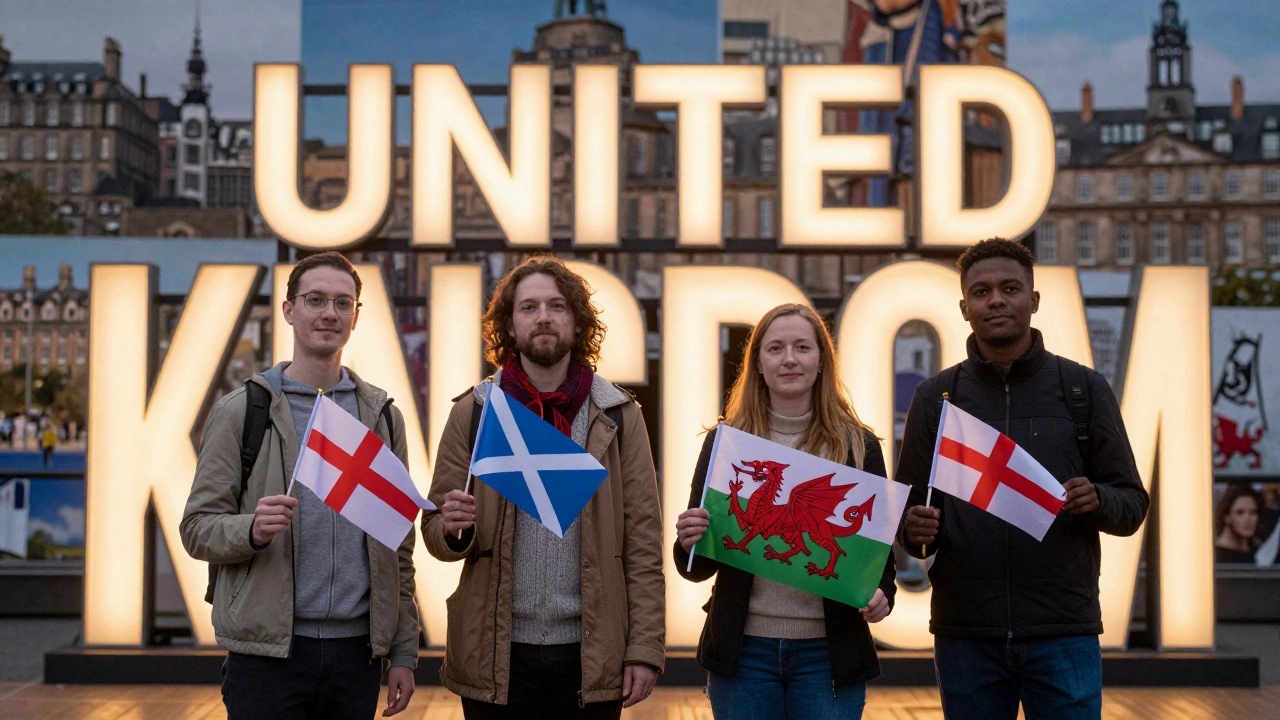
But if you tell a Scottish person you’re visiting "England," they’ll know you’re not going to Glasgow. If you tell a Welsh person you’re going to "England," they’ll assume you’re skipping Cardiff. And if you tell someone from Northern Ireland you’re going to "England," they’ll think you’re ignoring their entire identity.
Using "England" to mean the whole UK isn’t just inaccurate-it’s offensive to many. It’s like calling Canada "Ontario" or Australia "New South Wales." It reduces a complex union to one part.
When should you use "Great Britain" vs. "United Kingdom"?
Here’s the simple rule:
- Use "United Kingdom" or "UK" when you mean the country: its government, laws, currency, passport, or international representation.
- Use "Great Britain" only when you’re talking about the island: geography, hiking trails, train routes between London and Inverness, or weather patterns across England, Scotland, and Wales.
For example:
- "The UK has four national football teams." (Correct - includes Northern Ireland.)
- "Great Britain has three national football teams." (Correct - excludes Northern Ireland.)
- "I’m traveling to the UK next month." (Good - covers all four nations.)
- "I’m traveling to Great Britain next month." (Technically fine, but you’re leaving out Northern Ireland.)
If you’re planning a trip and want to visit Belfast, you’re going to the UK. Not Great Britain. And if you’re booking a flight from New York to London, you’re flying into the UK. The airline doesn’t care if you say "Great Britain"-but the government does.
Why does this matter for travelers?
Because it affects what you see, how you’re treated, and even what you pay.
For example, Northern Ireland uses the same currency as the rest of the UK-the pound sterling. But if you’re driving from Dublin to Belfast, you’re crossing an international border. You need your passport. You might need travel insurance that covers the UK, not just Great Britain.
Some travel deals say "Explore Great Britain" but exclude Northern Ireland. That means you’re missing out on the Giant’s Causeway, the Titanic Belfast museum, or the vibrant music scene in Derry. Those are part of the UK. They’re not part of the island of Great Britain.
And if you’re applying for a visa? The UK visa covers the whole country. A "Great Britain visa" doesn’t exist. The Home Office doesn’t issue one.
The real reason the name changed
It wasn’t about politics or pride. It was about accuracy. After 1922, the country’s official name had to reflect reality. The union still existed, but the land it covered had changed. The name had to match the territory.
It’s not a trend. It’s not a fad. It’s a legal fact. The United Kingdom of Great Britain and Northern Ireland is the only official name recognized by the United Nations, the European Union (when it was a member), and every international body.
Even the Royal Family uses "UK" in official communications. Queen Elizabeth II’s official website listed her as "Queen of the United Kingdom." Not "Queen of Great Britain."
What should you call it?
When you’re talking about the country as a whole-the government, the economy, the passport, the Olympic team, the healthcare system-say "United Kingdom" or "UK."
When you’re talking about the physical landmass where England, Scotland, and Wales sit, say "Great Britain."
And if you’re visiting Belfast, don’t pretend it’s in England. It’s not. It’s in the UK. And it’s worth seeing.
Names matter. Especially when you’re traveling. Getting it right shows respect. And it helps you understand the place better.
Is Great Britain the same as the UK?
No. Great Britain is the island that includes England, Scotland, and Wales. The UK is the country that includes Great Britain plus Northern Ireland. They’re not interchangeable.
Can I visit Northern Ireland with a UK visa?
Yes. A UK visa covers the entire United Kingdom, including Northern Ireland. You don’t need a separate visa. But if you’re coming from the Republic of Ireland, you may need to show your passport at the border.
Why do some maps say "Great Britain" instead of "UK"?
Many maps label the island of Great Britain for geographic clarity. But if the map shows Northern Ireland and calls it "Great Britain," that’s incorrect. Always check if the map includes Northern Ireland-if it does, it should be labeled "UK."
Is Scotland part of Great Britain or the UK?
Scotland is part of both. It’s on the island of Great Britain and also part of the United Kingdom. The same goes for England and Wales. Northern Ireland is only part of the UK, not Great Britain.
Do I need a passport to travel from England to Scotland?
No. England and Scotland are both part of the UK, so there are no border controls between them. You only need a passport if you’re entering or leaving the UK entirely.