Fabric Sustainability Calculator
How your choices impact people and planet
Select a fabric type to see its water usage, carbon footprint, and ethical impact compared to fast fashion alternatives.
Results
Why this matters: Polyester takes 200 years to decompose. Cotton requires 2,700L of water per T-shirt. Fast fashion workers earn as little as $0.10 per shirt.
Sustainable fashion isn’t just a buzzword-it’s a necessity. Yet, over 100 billion garments are made every year, and nearly 60% of them end up in landfills or incinerators within 12 months. Why? Because the system was never built to last. It was built to move fast, sell cheap, and replace constantly. The clothes you buy today aren’t designed to be worn for years. They’re designed to be worn once, then discarded.
The Speed of Fast Fashion
Brands like Zara, H&M, and Shein release new collections every week-sometimes every few days. This isn’t innovation. It’s overproduction disguised as variety. In 2024, Shein launched over 10,000 new items daily. That’s more new styles in a single day than most independent designers create in a year. To keep up, factories cut corners: lower wages, longer hours, and cheaper materials. Polyester, a plastic-based fiber, now makes up over 60% of all clothing. It’s cheap to produce, but it doesn’t biodegrade. A single polyester shirt can take 200 years to break down.
Water, Chemicals, and Pollution
Turning cotton into a T-shirt takes about 2,700 liters of water. That’s enough for one person to drink for 2.5 years. And that’s just the cotton. The dyeing and finishing process adds even more damage. Textile dyeing is the second-largest polluter of clean water worldwide-after agriculture. In countries like Bangladesh and India, rivers near garment factories run bright blue, pink, or orange from untreated chemical runoff. Fish die. Farmers can’t irrigate. Children can’t swim. These aren’t distant problems. They’re direct results of the clothes you buy on sale.
Worker Exploitation Is Built In
For a $5 T-shirt to exist, someone had to make it for less than $0.10. That’s not a coincidence-it’s the business model. In 2023, the average garment worker in Bangladesh earned $96 a month. The minimum wage needed to live with dignity? Around $300. Most workers still don’t make that. And when factories collapse, like Rana Plaza in 2013, the industry moves on. No accountability. No compensation. Just another headline. The same supply chains that deliver your $10 jeans also silence the voices of the people who made them.

Marketing Tricks Keep the Cycle Going
"Eco-friendly" labels on fast fashion items are often meaningless. A dress labeled "conscious" might be 5% organic cotton and 95% polyester. A recycled plastic bottle might be turned into a hoodie, but the dye still poisons water. Brands use greenwashing to make you feel good about buying more. They sell you the idea of sustainability while pushing you to consume faster. Social media influencers post "10 outfits from one dress" challenges, encouraging people to buy the same item repeatedly. The message isn’t "wear less." It’s "wear differently."
Waste Is the Default Outcome
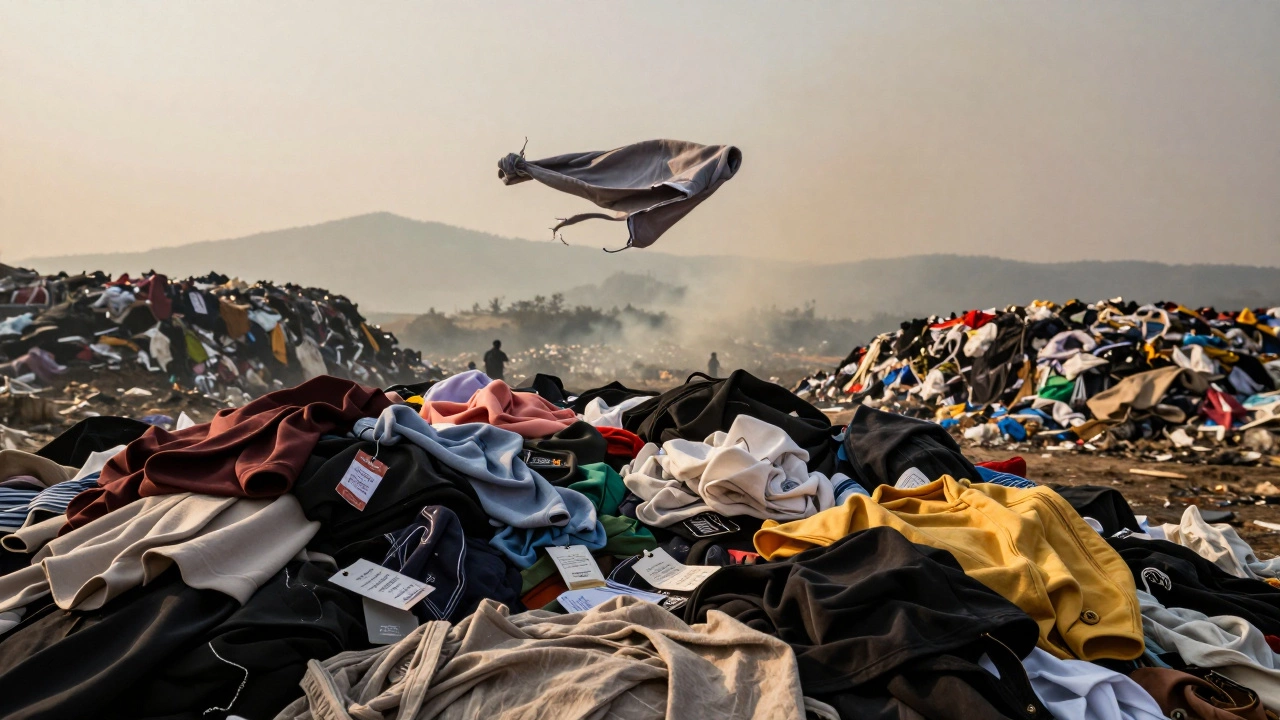
Only 1% of clothing is recycled into new garments. The rest? Burned, buried, or shipped to developing countries where it floods local markets and kills small tailors. In Ghana, used clothing imports from the West have turned into mountains of trash called "Abossey Okai." Locals call it "the graveyard of fashion." It’s not charity-it’s dumping. And it’s happening because brands know you won’t wear it all. They count on it.

Why Repair and Resale Don’t Fix It
You might think buying secondhand or repairing clothes solves the problem. And yes, it helps. But it doesn’t change the system. If you buy 10 used items a year, you’re still feeding demand. If brands know people will resell or repair, they have less reason to make durable goods. Repair services are expensive. Finding matching thread for a $12 sweater? Nearly impossible. The truth is, we can’t recycle or resell our way out of this. The only real fix is to make less.
What Actually Works
Real change starts with fewer purchases. Not "buy less," but "buy nothing new for a year." Or "only buy from brands that pay living wages and use natural fibers." Look for certifications like GOTS (Global Organic Textile Standard) or Fair Trade. Support small makers who produce in small batches. Ask: "Who made this?" If the brand can’t answer, don’t buy it. Choose linen, hemp, TENCEL, or organic cotton. Avoid anything with "polyester," "nylon," or "spandex" unless it’s clearly recycled and traceable.
Wear what you own longer. Mend it. Style it differently. Swap with friends. Rent for special occasions. These aren’t hobbies-they’re acts of resistance against a broken system.
The Bigger Picture
Sustainable fashion isn’t about buying a $200 "eco" jacket. It’s about rethinking how we relate to clothes. For decades, we’ve been taught that fashion means change. New looks. New seasons. New versions of the same thing. But true style doesn’t need to be replaced. It needs to be respected. When you stop seeing clothes as disposable, you start seeing people behind them. And that’s where real change begins.
Is sustainable fashion more expensive?
It can be, but not always. A $50 shirt made from organic cotton and fair labor might cost more upfront than a $10 polyester shirt. But the $10 shirt wears out in six months. The $50 one lasts five years. That’s $10 per year versus $2 per year-but you’re also paying for ethics, durability, and less pollution. In the long run, sustainable fashion saves money and reduces harm.
Can I still shop at fast fashion brands if I recycle my clothes?
No. Recycling doesn’t cancel out overproduction. Fast fashion brands design clothes to be thrown away. Even if you send your old clothes to a bin, most of them still end up in landfills. The recycling systems are broken. The only way to reduce waste is to stop buying so much in the first place.
What’s the most sustainable fabric?
Linen and hemp are the most sustainable. They grow without pesticides, use little water, and biodegrade completely. Organic cotton is better than conventional, but still uses a lot of water. TENCEL (made from wood pulp) is low-impact and recyclable. Avoid synthetic fibers like polyester, acrylic, and nylon unless they’re certified recycled and traceable.
Why don’t more brands make sustainable clothes?
Because it’s not profitable-at least not in the short term. Sustainable materials cost more. Fair wages raise production costs. Slower production means less volume. Fast fashion thrives on volume and speed. Brands that prioritize sustainability often struggle to compete with giants like Shein or H&M. Change only happens when consumers stop rewarding the fast, cheap model.
How can I tell if a brand is truly sustainable?
Look for transparency. Do they name their factories? Publish wage data? Show third-party certifications like GOTS, Fair Trade, or B Corp? If they only say "eco-friendly" without details, it’s likely greenwashing. Check their About page. Do they talk about reducing waste, not just selling more? If their story is all about style and not about impact, walk away.