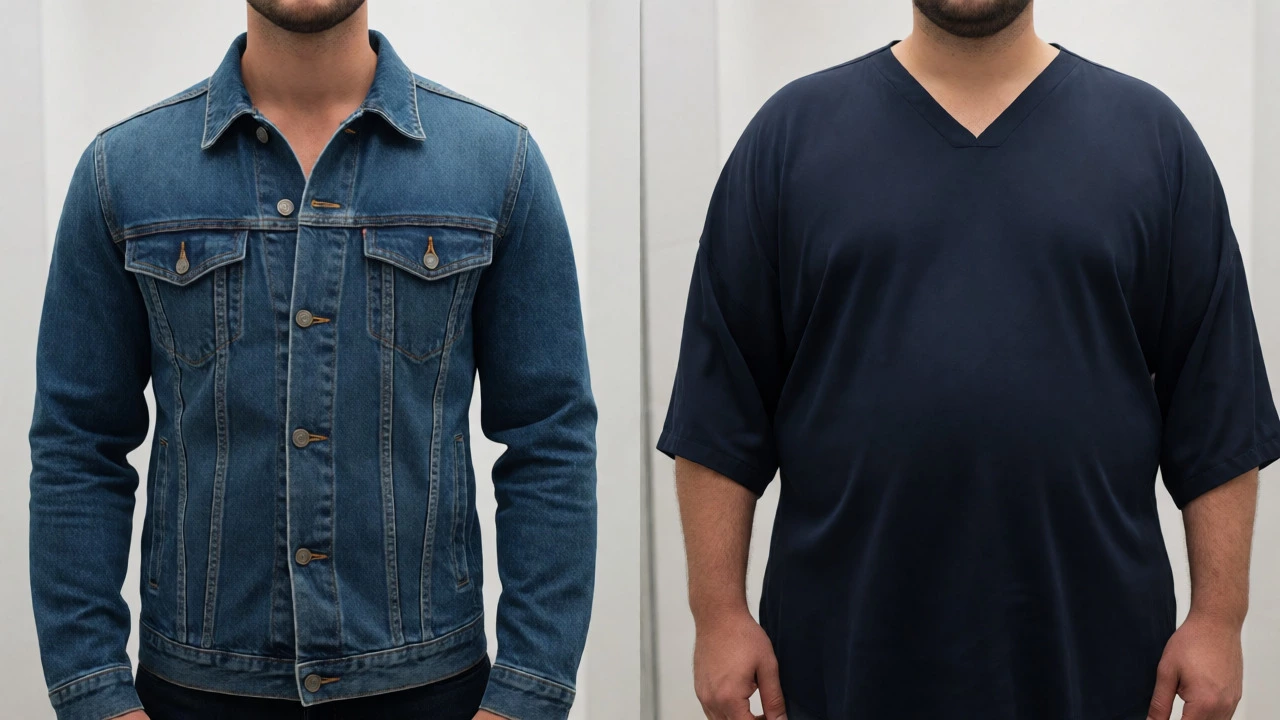
Body Type Style Analyzer
Answer the questions below to identify your dominant body traits and get personalized styling tips.
You walk into a store, grab two identical shirts, and try them on. One fits like it was tailored just for you; the other bunches at the shoulders or pulls tight across your chest. You might blame the brand, the cut, or even bad lighting. But often, the culprit is your somatotype, specifically whether you lean toward being an endomorph or a mesomorph.
Most people think these terms are only for gym rats obsessing over macros. They’re wrong. Understanding your body shape changes how you shop. It stops you from buying clothes that look great on a hanger but fail on your frame. Let’s figure out which one you are, without needing a lab coat.
The Quick Self-Test: Bones and Curves
Forget complex measurements for a second. Look in the mirror. Do you have broad shoulders that taper down to narrow hips? Or do your hips match your shoulder width, creating a softer, rounder silhouette? This visual check is the fastest way to spot the difference between an endomorph and a mesomorph.
Mesomorphs are naturally athletic. They build muscle easily and lose fat quickly. Their bodies are rectangular or V-shaped. Think of a swimmer or a sprinter. If you can drop ten pounds by skipping dessert for a week and gain visible abs with three workouts a week, you’re likely a mesomorph.
Endomorphs tend to store more fat, particularly around the midsection and hips. They have a slower metabolism and wider bone structures. If you feel like you’re fighting your body every time you try to slim down, and your clothes always seem too tight in the waist but loose in the arms, you’re probably dealing with endomorphic traits.
Why Bone Structure Matters More Than Weight
People confuse weight with body type all the time. A heavy person isn’t automatically an endomorph, and a thin person isn’t automatically an ectomorph (the third type). The key differentiator is skeletal structure. Mesomorphs have medium-to-large bones and joints. Endomorphs also have larger frames, but their fat distribution patterns differ significantly.
Here’s a simple wrist test. Wrap your thumb and middle finger around your opposite wrist. If they overlap easily, you likely have a smaller frame (ectomorph). If they just touch, you’re average (mesomorph). If they don’t meet, you have a larger frame (endomorph). While this test leans heavily into identifying ectomorphs versus the others, distinguishing between endo and meso requires looking at where you hold mass.
Mesomorphs hold mass in muscles. Endomorphs hold mass in both muscle and fat, often leading to a thicker waistline relative to height. This distinction dictates your clothing choices. A mesomorph needs structure to highlight lines. An endomorph needs flow to skim curves without adding bulk.
Dressing the Mesomorph: Highlighting Lines
If you identify as a mesomorph, your goal is usually to maintain the balance of your natural proportions. You don’t need to hide much because your body is already symmetrical. However, ill-fitting clothes can make you look boxy.
- Tops: Choose fitted shirts that follow the contours of your torso. Avoid oversized tees that swallow your frame. Structured jackets work wonders here because they complement your broad shoulders.
- Bottoms: Straight-leg or tapered trousers keep your legs looking proportional. Avoid overly baggy cargo pants, which add unnecessary volume to limbs that are already muscular.
- Fabrics: Stiff fabrics like denim, canvas, and structured cotton hold their shape well against your muscular build.
Mesomorphs can pull off bold patterns and colors because their body provides a clean canvas. You’re the lucky ones who can wear almost anything, provided it fits correctly. Don’t waste money on "slimming" cuts if you don’t need them.
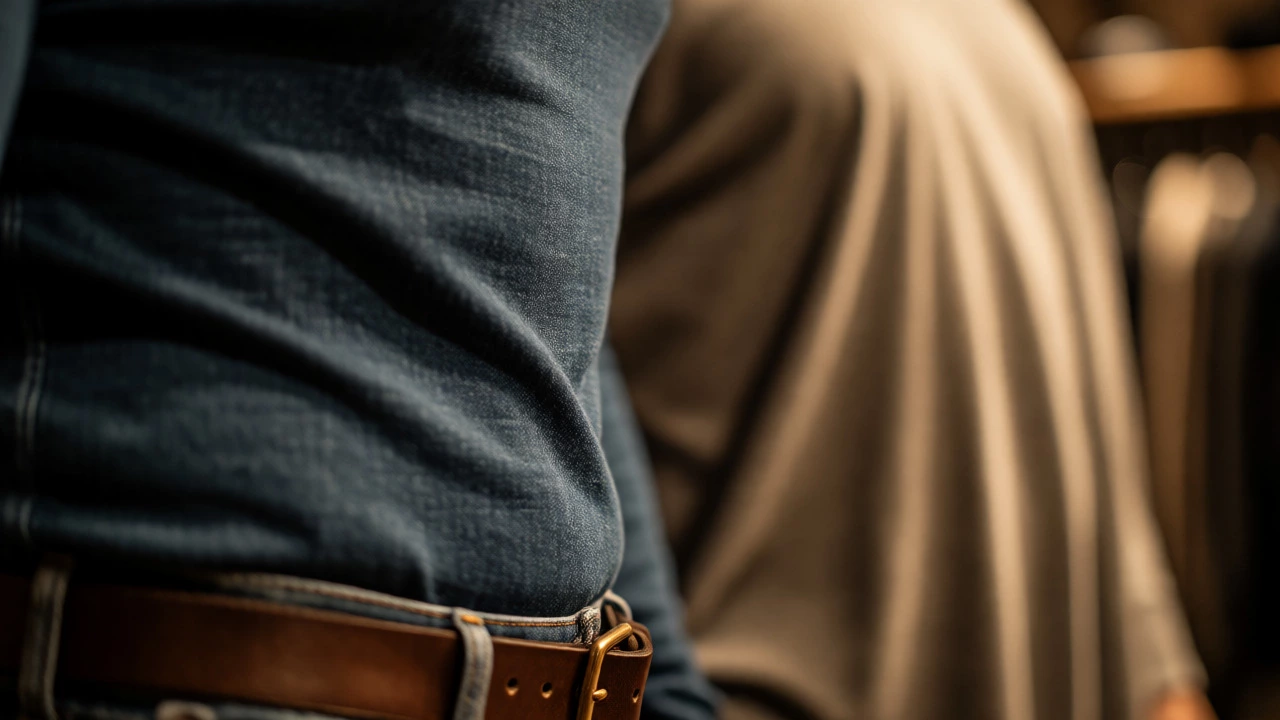
Dressing the Endomorph: Creating Vertical Flow
For endomorphs, the objective shifts. You want to create the illusion of length and avoid adding horizontal volume. Because endomorphs carry weight centrally, tight waistbands or horizontal stripes can emphasize the midsection rather than flatter it.
- Tops: Opt for V-necks or scoop necks to elongate the neck and draw the eye downward. Layering works, but keep layers light. Heavy knits can add bulk. Look for tops that hit below the hip bone rather than right at the widest part of your waist.
- Bottoms: High-waisted styles can be tricky; sometimes mid-rise feels more comfortable and less restrictive. Darker solid colors on the bottom help streamline the lower half. Avoid pockets on the front of jeans if they sit low on the hips, as they can widen the appearance.
- Fabrics: Drapey fabrics like rayon, silk blends, and soft jersey move with your body instead of sticking to it. These materials skim over curves rather than clinging to them.
A common mistake endomorphs make is wearing clothes that are too big, thinking it hides size. In reality, shapeless bags make you look larger. Tailoring is your best friend. Taking in a shirt slightly at the sides creates a flattering line without squeezing you.
Comparing Fit Strategies
Let’s break down how the same garment behaves differently on these two body types. This table illustrates why copying a friend’s outfit rarely works perfectly.
| Garment Feature | Mesomorph Strategy | Endomorph Strategy |
|---|---|---|
| Shoulders | Natural width; use structured seams to enhance definition. | Softer shoulders; avoid padded blazers that add width. |
| Waist | Cinched belts or fitted cuts highlight the V-taper. | Empire waists or A-line cuts skim over the midsection. |
| Legs | Slim or straight cuts show off muscle tone. | Straight or wide-leg cuts prevent fabric from pulling at thighs. |
| Patterns | Horizontal stripes can broaden shoulders intentionally. | Vertical stripes or small prints elongate the torso. |

Hybrid Bodies: What If I’m Both?
Very few people are pure textbook examples. Most of us fall somewhere in the middle. You might have the broad shoulders of a mesomorph but the stubborn midsection of an endomorph. This is actually good news. It means you can mix strategies.
If you have mesomorphic upper body strength but endomorphic lower body storage, dress your top half to highlight your assets (fitted sleeves, open collars) and dress your bottom half to create flow (darker colors, non-clinging fabrics). Don’t force yourself into a single category. Use the guidelines that solve your specific fit problems.
Ask yourself: Where do I feel most uncomfortable in my current clothes? Is it the armholes digging in? That’s a mesomorphic trait needing room for muscle. Is it the button straining at the belly? That’s an endomorphic trait needing drape. Solve for those pain points first.
Shopping Checklist for Your Next Trip
Before you head to the mall, print this mental checklist. It saves time and prevents buyer’s remorse.
- Identify your widest point. Is it your shoulders (meso) or your hips/waist (endo)?
- Check the fabric content. Does it stretch? Does it drape? Rigid fabrics suit mesos; fluid fabrics suit endos.
- Look for vertical lines. Seams running up and down the body help everyone, but especially endomorphs seeking elongation.
- Try the 'sit test'. Sit down in the fitting room. If the waistband digs in painfully, it’s not the right cut for an endomorph, regardless of how it looks standing up.
- Ignore the tag size. Focus on the fit. A size 10 that skims your curves beats a size 8 that clings uncomfortably.
Troubleshooting Common Fit Issues
Still struggling? Here are quick fixes for frequent complaints.
"My shirts twist at the hem." This usually happens when the torso is shorter than the pattern assumes. Try sizing down in length or opting for brands with "short" or "petite" cuts, even if you aren’t short. Mesomorphs with developed lats often experience this too; look for "athletic fit" labels.
"Pants gap at the back." Common for endomorphs with wider hips. Look for brands offering "curvy" fits, which provide more room in the seat and thigh while keeping the waist snug. Alternatively, tailor the waistband.
"Sleeves are too tight." Classic mesomorph problem. Buy shirts based on shoulder and sleeve width, then take in the waist. Don’t buy a larger size just for arm comfort, or you’ll look like you’re swimming in fabric.
Can my body type change over time?
Your underlying bone structure (somatotype) remains constant throughout adulthood. However, your body composition-how much muscle and fat you carry-can change drastically with diet and exercise. A mesomorph who stops exercising may gain fat and start dressing more like an endomorph. Adjust your wardrobe to your current shape, not your historical shape.
Is one body type considered better than the other?
No. Each has advantages. Mesomorphs excel in athletics and finding off-the-rack fits. Endomorphs often have strong, sturdy frames and can carry weight gracefully in certain fabrics. Fashion is about working with what you have, not wishing for someone else's skeleton.
Do dark colors really help endomorphs?
Dark colors absorb light, reducing shadows that highlight volume. For endomorphs, monochromatic outfits or dark bottoms paired with lighter tops can create a streamlined effect. However, fit matters more than color. A well-fitted bright red dress will look better than a poorly fitted black one.
What if I am an ectomorph?
Ectomorphs are naturally slender with difficulty gaining weight. Unlike endomorphs and mesomorphs, they benefit from layering to add volume and texture. Horizontal stripes and ruffles can help create the illusion of broader shoulders or fuller hips.
How does age affect body type identification?
Metabolism slows with age, which can cause anyone to gain weight. This doesn't change your somatotype, but it changes your proportions. An older mesomorph might develop a slight midsection bulge. Dress for your current reality, using draping techniques to accommodate changes while highlighting your enduring strengths.