Fashion Spending & Cost-Per-Wear Calculator
Adjust the sliders or click "Analyze" to see your financial impact and generational comparison.
Who is really driving the global fashion industry right now? Is it the trend-chasing teenagers on TikTok, or the busy professionals restocking their work wardrobes? If you look at the sheer volume of items purchased, the answer might surprise you. While younger generations talk about fashion the loudest, older demographics often spend the most money per item. Understanding which age group buys the most clothes isn't just a trivia question; it’s the key to understanding where your money goes and how the industry shifts its focus.
The Volume vs. Value Divide
To get the real picture, we have to separate two different metrics: quantity (how many items) and value (how much money). This distinction changes everything. When researchers from Euromonitor and other market analysts look at data, they see a clear split. Younger shoppers buy more individual pieces because those pieces are cheap. Older shoppers buy fewer pieces, but each piece costs significantly more.
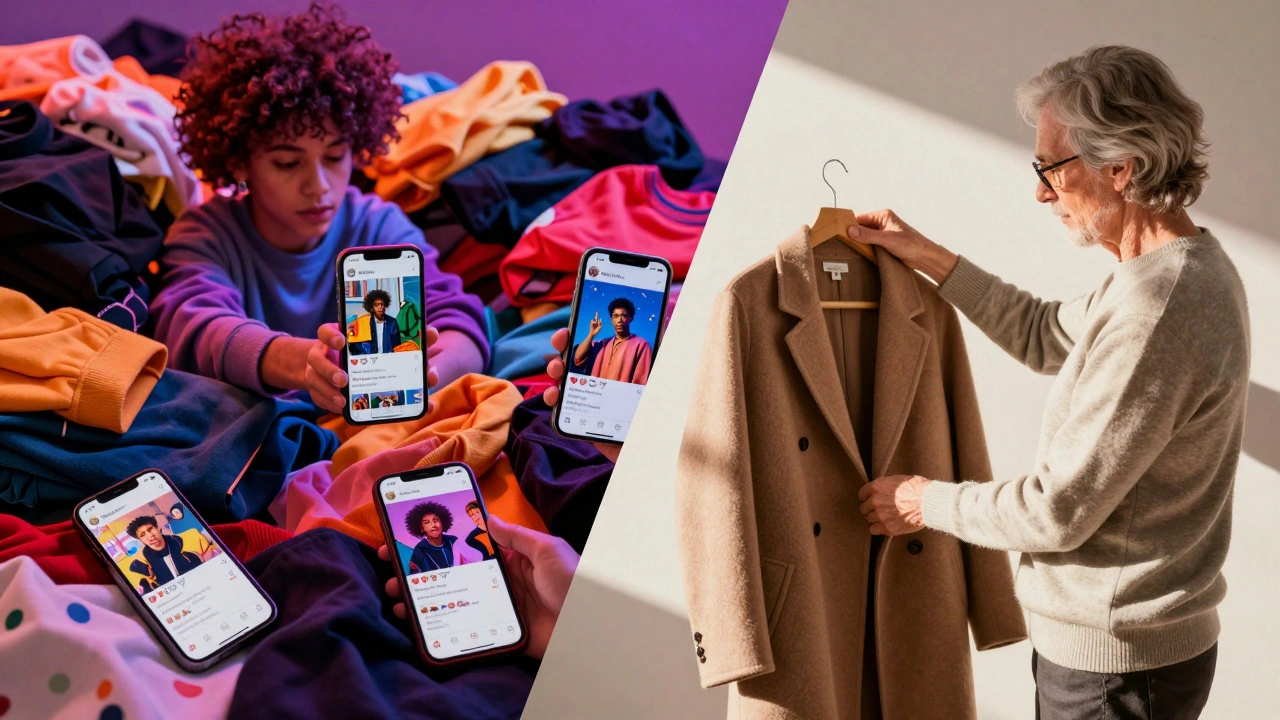
If you define "buying the most" by the number of garments entering homes, the crown goes to Gen Z (individuals born between 1997 and 2012) and older Millennials (individuals born between 1981 and 1996). These groups treat clothing as a fast-moving consumer good. They cycle through trends rapidly. A pair of jeans might be worn three times before being replaced by a new style seen online. This high-turnover model drives massive volume in sales figures for brands like Shein, H&M, and Zara.
However, if you measure by total expenditure, the narrative shifts. Baby Boomers and older Millennials often have higher disposable income. They may only buy five outfits a year, but if each outfit averages $300, their annual spend rivals that of a teenager buying fifty $15 t-shirts. For retailers, this means chasing two very different beasts: one wants speed and low prices, the other wants quality and fit.
Why Gen Z Leads in Quantity
Generation Z has fundamentally changed how we interact with clothing. For this group, fashion is digital first. Before an item is ever touched, it is photographed, filtered, and shared. This creates a pressure to constantly update one's look to stay relevant on social media platforms like Instagram and TikTok. The lifespan of a micro-trend can be as short as two weeks. To keep up, you need new clothes every week.
This behavior is fueled by ultra-fast fashion. Algorithms on shopping apps show users exactly what is trending globally in real-time. The barrier to entry is incredibly low. You can order a full outfit for under $50 with free shipping. This accessibility encourages impulse buying. Many Gen Z shoppers admit to buying items they know they will barely wear, simply for the content creation aspect. The psychological reward comes from the unboxing and the post, not necessarily from wearing the garment itself.
Additionally, body image awareness plays a role. As bodies change during late teens and early twenties, styles that fit at 18 might not fit at 22. Combined with a desire to experiment with identity, this leads to frequent wardrobe overhauls. The result is a high volume of purchases, but also a high rate of returns and eventual disposal, contributing significantly to textile waste.
The Millennial Shift: Quality Over Quantity?
Millennials are currently in a transitional phase. Born in the era of rising incomes but aging into economic uncertainty, their shopping habits reflect a mix of past excess and current caution. In their 20s, many millennials were the kings and queens of fast fashion. But as they entered their 30s and 40s, priorities shifted. Career stability, family responsibilities, and environmental concerns began to influence purchasing decisions.
Today, the average millennial shopper is looking for versatility. They want pieces that can transition from the office to a casual dinner without looking out of place. This "capsule wardrobe" approach reduces the total number of items needed. Instead of buying ten trendy tops, they might invest in three high-quality blouses that last for years. This shift benefits mid-tier brands that offer better fabrics and construction than ultra-fast fashion giants.
Interestingly, millennials are also the biggest drivers of the resale market. Platforms like Depop and Poshmark thrive on millennial participation. They buy second-hand to save money and reduce waste, but they also sell their own unused items. This circular economy keeps clothing in circulation longer, technically reducing the demand for *new* manufacturing, even if the act of buying/selling remains frequent.

Boomers and Gen X: The Quiet Spenders
Don’t underestimate the spending power of Generation X (born 1965-1980) and Baby Boomers (born 1946-1964). These groups are often invisible in fashion marketing campaigns dominated by young influencers, but they hold significant wallet share. Their shopping behavior is characterized by intentionality. They rarely impulse buy. Instead, they shop when there is a specific need: a job interview, a wedding, or replacing a worn-out staple.
Fabric and fit are paramount for these demographics. They are less likely to compromise on comfort for the sake of a trend. This makes them loyal customers for brands that specialize in premium materials like wool, silk, and high-grade cotton. A single coat purchase from a Boomer might cost $500, whereas a Gen Z shopper might buy three synthetic coats for $100 total. The older demographic values longevity. They expect an item to last five or ten years, which paradoxically means they buy less frequently but spend more per transaction.
Furthermore, these groups are less influenced by social media hype. They rely on brand reputation, word-of-mouth, and in-store experiences. Retailers that ignore this demographic risk losing a stable, high-margin customer base. The rise of "ageless" marketing strategies is a direct response to recognizing this untapped potential.
How Social Media Distorts Perception
Social media creates a loud echo chamber that makes it seem like everyone is obsessed with buying new clothes daily. When you scroll through feeds, you see constant hauls, try-ons, and trend alerts. This visibility bias leads many to believe that younger people are the sole drivers of the industry. However, silence does not mean non-participation. Older adults buy clothes too; they just don’t post about it.
Algorithms prioritize engagement, and young people engage more. This feedback loop pushes brands to target younger audiences with lower-priced, higher-volume goods. It creates a self-fulfilling prophecy where brands stock more trendy items, encouraging younger shoppers to buy more, while older shoppers struggle to find sizes and styles that suit them, leading to frustration and sometimes reduced spending due to lack of options.
Understanding this distortion is crucial for consumers. Recognizing that your personal habits may differ from the online narrative helps you make more mindful choices. Are you buying because you need it, or because you saw it on your feed? This pause can significantly reduce unnecessary clutter and expense.
| Generation | Primary Motivation | Avg. Spend Per Item | Key Platform | Purchase Frequency |
|---|---|---|---|---|
| Gen Z | Trend alignment & social content | Low ($15-$40) | TikTok / Instagram | Very High (Weekly) |
| Millennials | Versatility & sustainability | Medium ($40-$100) | Instagram / Pinterest | High (Monthly) |
| Gen X | Quality & professional needs | High ($100-$250) | Email / Web Search | Medium (Quarterly) |
| Boomers | Comfort & longevity | Very High ($200+) | In-Store / Brand Loyalty | Low (Seasonal) |
The Impact on Sustainability
The age group that buys the most clothes by volume-Gen Z-is also the one most vocal about climate change. This contradiction is at the heart of the modern fashion crisis. The desire for constant novelty clashes with the reality of resource depletion. Textile production consumes vast amounts of water and energy. When cheap clothes are discarded after a few wears, the environmental cost multiplies.
Brands are beginning to respond to this tension. Some are introducing rental services or repair programs to appeal to eco-conscious younger shoppers. Others are using recycled materials to justify higher price points. However, true sustainability requires a reduction in overall consumption. Until the culture of "disposable fashion" shifts, the environmental impact will remain severe regardless of who is doing the buying.
For individuals, the solution lies in breaking the link between self-expression and consumption. You can express your style through styling existing pieces, thrifting, or investing in timeless items. The goal is to move from a high-volume, low-value mindset to a low-volume, high-value approach, regardless of your age.
What This Means for Your Wallet
Knowing which age group buys the most clothes helps you audit your own habits. If you find yourself buying frequently like the average Gen Z shopper, ask yourself if the cost per wear is justified. A $10 shirt worn once costs $10 per wear. A $100 shirt worn 50 times costs $2 per wear. The latter is actually cheaper in the long run.
Conversely, if you lean towards the Boomer model of infrequent, expensive purchases, ensure you are truly getting quality. Not all expensive items are durable. Look for natural fibers, strong stitching, and reputable brands. Avoid paying for logos alone. The best investment is in clothes that fit well, feel comfortable, and survive multiple wash cycles.
Ultimately, there is no "right" way to shop, but there is a smarter way. By understanding the forces driving fashion consumption, you can take control of your wardrobe. Stop letting algorithms dictate your closet. Start buying with intention. Whether you are 18 or 68, the goal should be a wardrobe that serves you, not one that burdens you.
Does Gen Z spend more money on clothes than older generations?
Not necessarily. While Gen Z buys a higher volume of items, the individual cost of those items is usually very low. Older generations like Baby Boomers and Gen X often spend more per transaction due to higher quality preferences and greater disposable income. Total annual spend varies by individual financial situation, but younger shoppers typically have tighter budgets despite frequent purchases.
Why do younger people buy so many clothes?
Social media pressure is a major driver. Platforms like TikTok promote rapid trend cycles, making old styles feel outdated quickly. Additionally, the low price point of ultra-fast fashion encourages impulse buying. For many young people, clothing is a form of digital identity expression, leading to frequent updates to match online aesthetics.
Is it better to buy fewer expensive clothes or many cheap ones?
From a cost-per-wear perspective, buying fewer high-quality items is often more economical. A durable garment that lasts five years costs less annually than replacing cheap items every season. It is also more sustainable, reducing textile waste. However, this depends on lifestyle needs; active jobs or growing children may require higher volumes of replacement clothing.
How has the pandemic affected clothing purchases by age?
The pandemic accelerated the shift towards comfort-focused wear across all ages. Work-from-home trends reduced the need for formal business attire, benefiting casual brands. Older shoppers became more comfortable with online shopping, increasing their digital footprint. Meanwhile, younger shoppers faced economic pressures, leading to increased interest in thrift stores and resale markets.
Which generation is most likely to buy second-hand clothes?
Millennials and Gen Z are the primary drivers of the second-hand market. They view thrifting as both a sustainable choice and a way to find unique vintage styles. Apps like Depop and Vinted cater specifically to these demographics. Older generations are increasingly participating but often prefer physical thrift stores or consignment shops for higher-end items.