Ever bought something that looked perfect on the hanger, only to realize it looks nothing like you when you wear it? You’re not alone. Most people struggle with this-even those who think they have a good sense of style. The truth is, finding clothes that suit you isn’t about following trends or spending more money. It’s about understanding your body, your life, and what actually makes you feel confident.
Start with your body shape, not your size
Stop thinking in terms of sizes. A size 8 in one brand can be a size 12 in another. What matters is your shape. Most people fall into one of five basic body types: apple, pear, hourglass, rectangle, or inverted triangle. You don’t need to memorize fancy terms. Just look in the mirror and ask: Where do you carry weight? Where do you want to balance things out?- If your shoulders and hips are about the same width and your waist is defined, you’re likely an hourglass.
- If your hips are wider than your shoulders and you carry weight below the waist, you’re probably a pear.
- If your bust and shoulders are broader than your hips, you’re an inverted triangle.
- If your waist isn’t clearly defined and you carry weight around your middle, you’re an apple.
- If your shoulders, waist, and hips are all roughly the same width, you’re a rectangle.
Now, here’s the trick: clothes that work for you aren’t about hiding parts of your body. They’re about creating balance. A pear shape looks great in A-line skirts and structured blazers because they draw attention upward. An apple shape benefits from V-necks and flowy tops that drape softly over the midsection. You’re not fixing your body-you’re dressing it smartly.
Color and pattern aren’t just about preference-they’re tools
You’ve heard the rule: “Wear what suits your skin tone.” But what does that actually mean? It’s not about whether you’re “warm” or “cool.” It’s about contrast. Look at your veins on your wrist under natural light. If they look greenish, you likely have warm undertones. If they look bluish, you have cool undertones. If you can’t tell, you’re probably neutral.Warm tones look best in earthy colors-olive, rust, mustard, cream. Cool tones pop in jewel tones-emerald, sapphire, plum, icy blue. Neutral tones can wear almost anything. But here’s the real secret: if you’re pale, deep colors make you look more vibrant. If you have darker skin, bright whites and pastels can wash you out. Try wearing a black shirt next to a cream one. One will make your face look brighter. That’s the one to choose.
Patterns matter too. Big prints on a small frame can overwhelm. Tiny prints on a larger frame can get lost. If you’re petite, go for small florals or thin stripes. If you’re taller or broader, bold geometrics and large florals work. And if you’re unsure, stick to solids. They’re the easiest way to look put together without overthinking it.
Your lifestyle dictates your wardrobe more than your taste
You can love oversized sweaters and flowy dresses, but if you’re chasing kids around all day or hauling equipment for work, those clothes won’t last. Your wardrobe should serve your life-not the other way around.Ask yourself: What do you actually do on a normal day? Are you sitting at a desk? Walking the dog? Standing on your feet all day? Do you need to look polished for meetings, or do you need to move freely? Your clothes should make those tasks easier, not harder.
Take a week and write down what you wore each day and why. You’ll probably notice patterns. Maybe you keep reaching for the same pair of dark jeans because they don’t wrinkle. Or you always grab the same blazer because it hides coffee stains. Those aren’t accidents-they’re clues. Build your wardrobe around what actually works, not what you think you should wear.

Fit is everything. Tailoring isn’t luxury-it’s necessity
A $200 coat that fits poorly will look cheaper than a $50 one that fits like it was made for you. Tailoring isn’t just for formalwear. Hemming pants, taking in a waist, shortening sleeves-these small changes make a massive difference.Most off-the-rack clothes are designed for a generic body. Your body isn’t generic. That’s why sleeves are too long, shirts gape at the back, or pants pool at the ankles. A good tailor can fix that. You don’t need to spend a fortune. A simple hem costs less than a coffee. A waist take-in is usually under $30.
Try this: next time you try on something you like, pinch the fabric at the waist or shoulder. If you can grab more than an inch or two, it’s too loose. If it pulls when you move, it’s too tight. Clothes should feel comfortable when you’re standing, sitting, and reaching. If it doesn’t, it’s not the right fit.
Build a capsule, not a closet
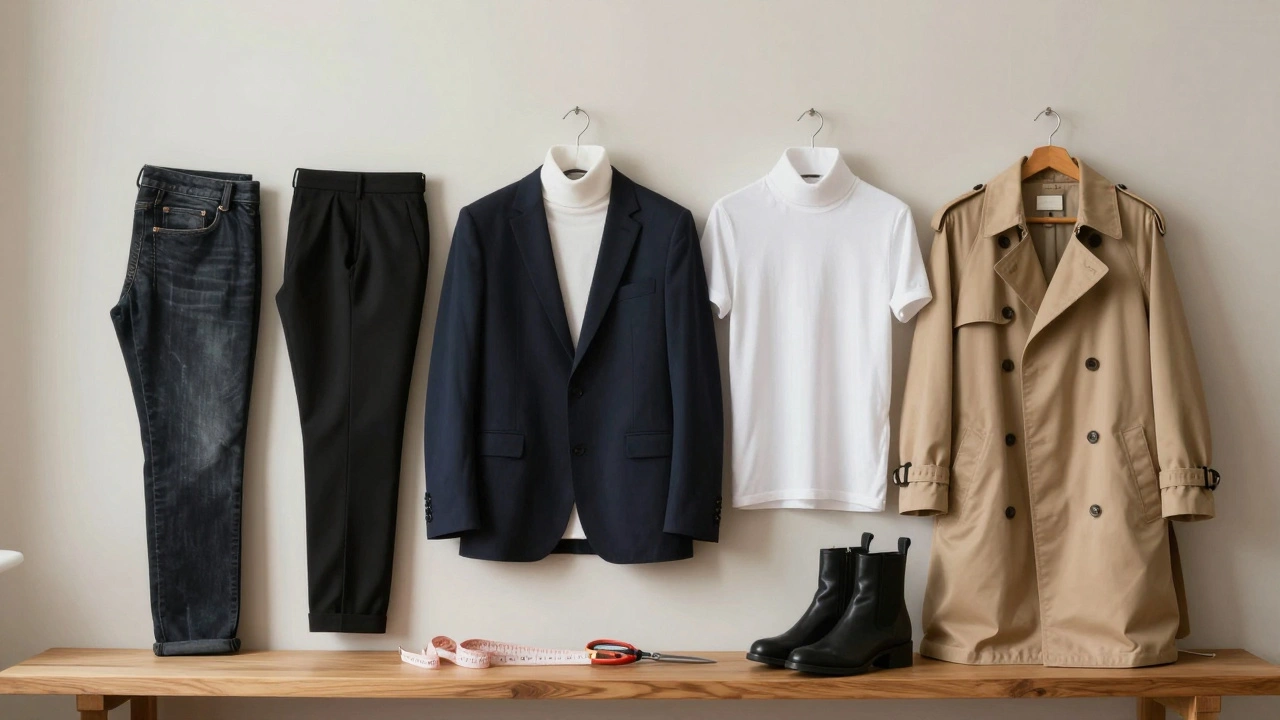
You don’t need 50 tops. You need 5 that you love and that work together. A capsule wardrobe isn’t about minimalism for the sake of it. It’s about reducing decision fatigue. When you have fewer options that all match, getting dressed becomes easier-and more enjoyable.Start with these 10 core pieces:
- Dark jeans (straight or slim, not skinny)
- Black tailored trousers
- One neutral blazer (navy or camel)
- Two versatile tops (white tee, black turtleneck)
- One button-down shirt (light blue or white)
- One dress (shirt dress or wrap dress)
- One pair of comfortable flats
- One pair of ankle boots
- One pair of sneakers (clean, simple)
- One coat (trench or wool blend)
These pieces mix and match. You can dress them up or down. They work for work, weekend, and everything in between. Add one or two trend pieces a season if you want, but make sure they fit your shape and color palette. If they don’t, they’re just clutter.
Try the mirror test before you buy
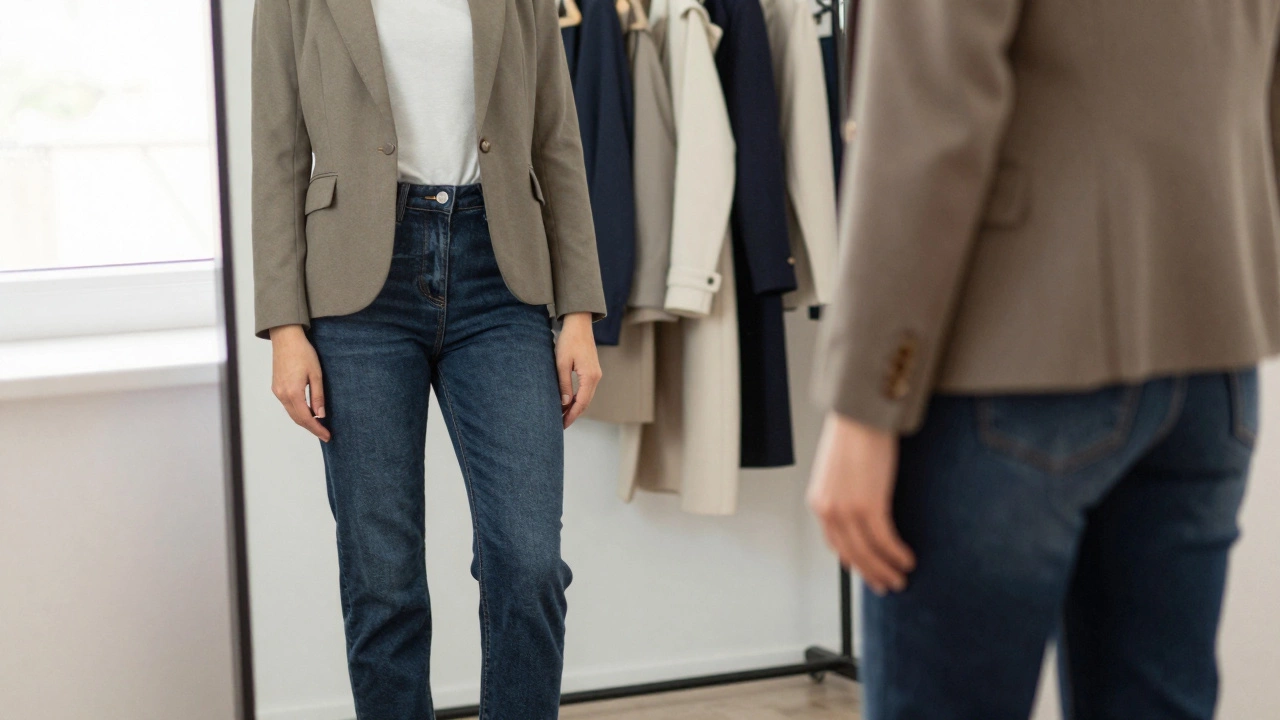
Before you leave the store-or before you click “buy” online-do this: stand in front of a full-length mirror. Turn side to side. Sit down. Raise your arms. Walk a few steps. Does the outfit still look good? Do you feel confident? Or do you feel like you’re trying to be someone else?If you catch yourself thinking, “I’ll lose weight and then wear this,” or “This is trendy, so I should get it,” stop. That’s not style. That’s self-sabotage.
Style is about owning who you are right now. Not who you want to be tomorrow. Clothes that suit you don’t change your body. They celebrate it.
What to avoid
There are a few common mistakes that ruin even the best intentions:- Buying clothes just because they’re on sale. If you don’t love them in the store, you won’t love them at home.
- Following influencers who look nothing like you. Their proportions, skin tone, and body shape aren’t yours. What works for them might look awkward on you.
- Wearing something just because it’s “supposed” to be flattering. That’s not a rule-it’s a suggestion.
- Ignoring fabric. If it wrinkles instantly, itches, or stretches out after one wash, it’s not worth it.
Style isn’t about perfection. It’s about consistency. The more you wear things that fit well, suit your coloring, and match your life, the more natural it becomes. You stop second-guessing. You stop feeling like you’re dressing for someone else.
It takes time. You’ll buy a few things that don’t work. That’s okay. Every mistake teaches you something. Keep notes. Keep trying. Your perfect style isn’t out there in a magazine. It’s already inside you. You just need to dress it right.
How do I know if a color looks good on me?
Hold a piece of gold jewelry and a piece of silver jewelry next to your face in natural light. Whichever makes your skin look brighter and more even is your undertone. Gold usually means warm, silver means cool. If both look good, you’re neutral. Then test colors: if a deep red makes your face glow, it’s a winner. If it makes you look tired, skip it.
Can I wear jeans if I have a pear shape?
Yes-just avoid skinny jeans. Opt for straight-leg, bootcut, or wide-leg styles. Dark washes help minimize bulk, and a higher waistline balances your hips. Look for jeans with a bit of stretch and a clean hem. Pair them with a fitted top or a structured jacket to draw attention upward.
Do I need to buy new clothes every season?
No. Good-quality basics last years. Trends come and go, but your body and style stay the same. Focus on timeless pieces that fit well and suit your coloring. Add one or two trend items a year if you like, but don’t feel pressured to replace your whole wardrobe. Quality over quantity always wins.
What if I’m between body types?
Most people are a mix. You might have an hourglass torso but wider hips. That’s normal. Focus on what you want to balance. If your shoulders are narrow, add volume there with a structured blazer. If your waist is undefined, use belts or peplum tops to create shape. It’s not about fitting a box-it’s about creating harmony.
How do I find clothes that fit without trying them on?
Check the size chart and compare it to a garment you already own and love. Measure the bust, waist, and hip on the item you have, then match those numbers to the brand’s chart. Look for reviews that mention fit-people often say things like “runs large” or “fits true to size.” When in doubt, order two sizes and return the one that doesn’t work. Most stores make returns easy.