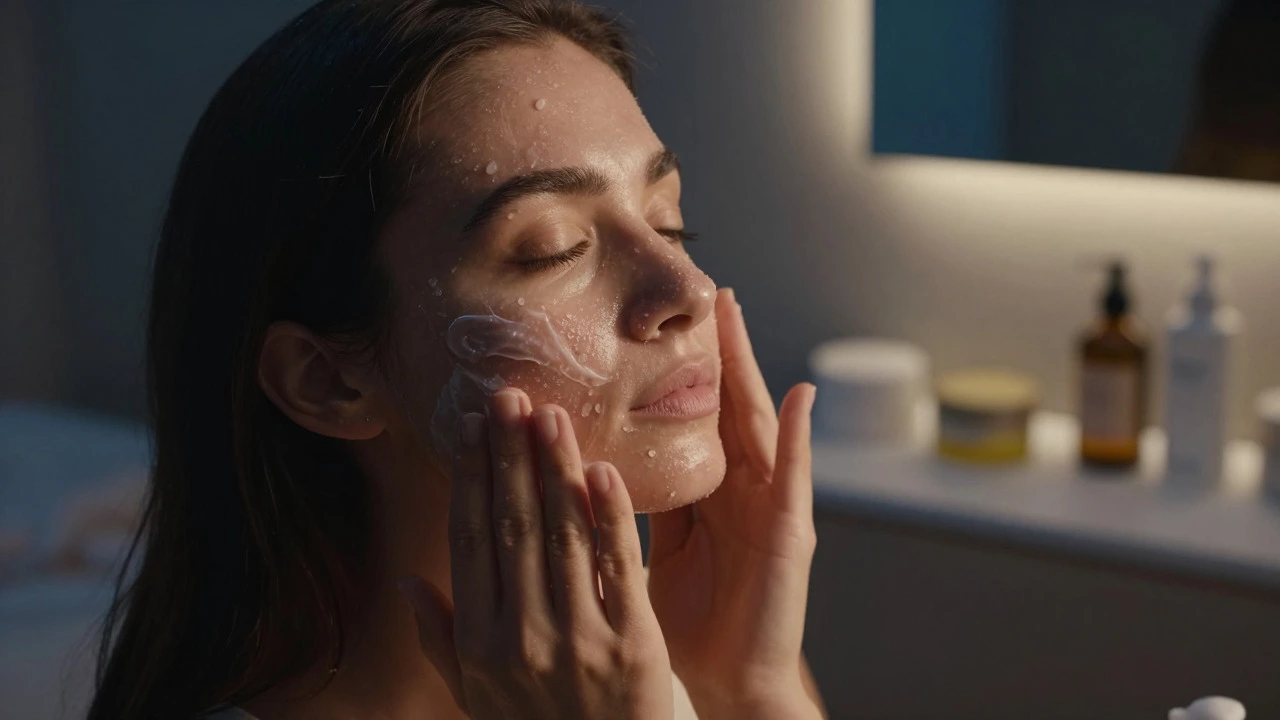
Build Your Nighttime Skincare Routine
Step 1: Define Your Profile
Your Recommended Routine
Select your skin type and click "Generate Routine" to see your personalized plan.
Think about the last time you went to bed. Did you wash your face? Or did you just toss and turn until sleep took over? That split-second decision changes everything for your skin. While you sleep, your body shifts into repair mode. Your blood flow increases, collagen production ramps up, and cell turnover speeds up. This is the golden window for skincare. If you ignore it, all that expensive serum from your morning routine might as well have been water.
But here is the trap most people fall into: they think "more" means "better." Slapping on five different creams at once doesn't help; it clogs pores and causes breakouts. Knowing exactly what to apply on face before sleeping requires a strategy, not a guess. It’s about matching products to your specific skin needs so that while you dream, your complexion does the heavy lifting.
The Non-Negotiable First Step: Double Cleansing
Before you can apply anything beneficial, you have to clear the path. You cannot put high-quality ingredients onto a dirty canvas. By evening, your face is covered in sunscreen residue, makeup, pollution particles, and excess sebum produced throughout the day. A standard facial cleanser often misses oil-based debris like waterproof mascara or silicone-heavy foundations.
This is where double cleansing, a method popularized by Korean skincare routines, becomes essential. It involves two distinct steps:
- Step 1: Oil-Based Cleanser. Use an oil balm or cleansing oil. Oil dissolves oil. This step breaks down sunscreen and makeup without stripping your skin barrier. Massage it into dry skin for at least 60 seconds.
- Step 2: Water-Based Cleanser. Follow with a gentle foaming or gel cleanser. This removes sweat, dirt, and any remaining residue from the first step.
If you skip the oil step, those pores stay clogged. If you skip the second step, you leave behind a film that blocks absorption of your treatments. Both are required for the layers that follow to actually penetrate.
Treatments: The Heavy Lifters
Once your skin is clean and slightly damp (which helps absorption), it’s time for active ingredients. These are the components that address specific concerns like aging, acne, or hyperpigmentation. However, you don’t need every single one. In fact, using too many actives at night can compromise your skin barrier, leading to redness and sensitivity.
| Ingredient | Primary Benefit | Best For | Caution |
|---|---|---|---|
| Retinol | Boosts cell turnover, reduces fine lines | Aging, texture issues | Irritation if used nightly; start 2x/week |
| Salicylic Acid | Unclogs pores, fights bacteria | Acne-prone, oily skin | Drying; avoid with strong retinols initially |
| Niacinamide | Regulates oil, brightens tone | All skin types, sensitive skin | Generally safe, but watch for flushing at high concentrations |
| Alpha Hydroxy Acids (AHAs) | Exfoliates surface dead cells | Dullness, uneven texture | Sensitivity to sunlight next day; use sparingly |
Retinol is arguably the gold standard for nighttime application. Why? Because it degrades in sunlight. Using it during the day renders it less effective and makes your skin more vulnerable to UV damage. At night, it works synergistically with your body’s natural repair processes. Start with a low concentration (0.1% to 0.3%) and buffer it with moisturizer if you experience peeling.
If you struggle with breakouts, salicylic acid penetrates deep into pores to dissolve sebum. It’s a beta-hydroxy acid (BHA) that exfoliates inside the pore lining. Don’t combine this with retinol on the same night unless your skin is highly tolerant. Rotate them instead: retinol on Monday/Wednesday/Friday, salicylic acid on Tuesday/Thursday/Saturday.
Moisturizing: Sealing the Deal
After treatments come hydration. Even if you have oily skin, you need a moisturizer at night. Think of your treatment serums as the fuel and your moisturizer as the engine cover. Without the cover, the fuel evaporates. This process is called Transepidermal Water Loss (TEWL), and it spikes at night when humidity drops in many homes.
Your choice of moisturizer depends entirely on your skin type:
- Oily Skin: Look for gel-creams or lightweight lotions containing hyaluronic acid or squalane. These provide hydration without adding heavy oils that could trigger shine.
- Dry Skin: Opt for richer creams with ceramides, fatty acids, and cholesterol. These lipids rebuild the skin barrier and lock in moisture for hours.
- Sensitive Skin: Stick to fragrance-free formulas with minimal ingredient lists. Centella asiatica (cica) and oat extract are excellent soothing agents.
Apply your moisturizer while your skin is still slightly tacky from the serum. This traps the active ingredients against the skin rather than letting them sit on top. Pat, don’t rub. Rubbing creates friction and inflammation, which counteracts the calming effect of your routine.
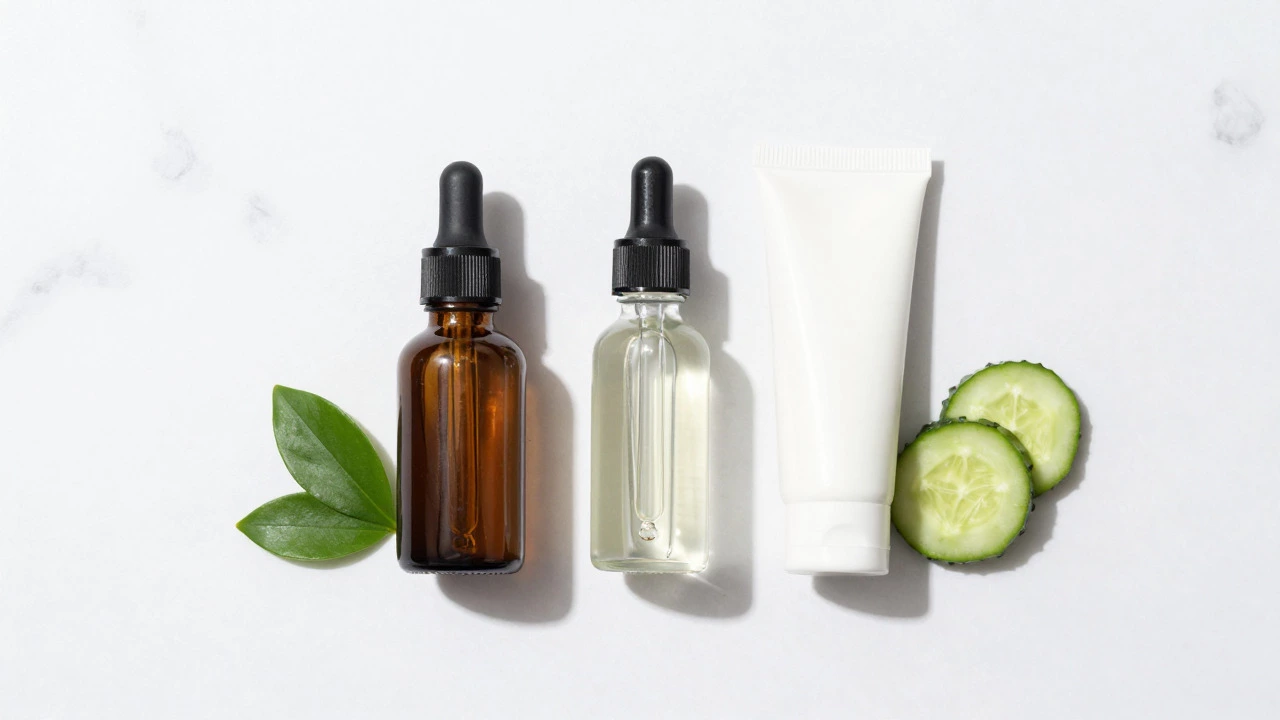
Eye Creams: Necessary or Nonsense?
The skin around your eyes is thinner and has fewer oil glands than the rest of your face. It’s also the area where we move our muscles most frequently-blinking, squinting, smiling. This constant motion leads to dynamic wrinkles, commonly known as crow’s feet.
You don’t strictly *need* a separate eye cream if your facial moisturizer is gentle enough. However, dedicated eye products often contain higher concentrations of peptides or caffeine specifically formulated for that delicate zone. Caffeine constricts blood vessels, reducing puffiness caused by fluid accumulation overnight. Peptides signal collagen production, helping to firm the area.
Application technique matters more than the product itself. Use your ring finger (the weakest finger) to dab a pea-sized amount along the orbital bone. Never pull or stretch the skin. Work outward from the inner corner to the outer corner.
Sleeping Masks: The Weekend Boost
On nights when your skin feels particularly dull or dehydrated, consider adding a sleeping mask. These are essentially intensive moisturizers designed to stay on overnight. They create an occlusive layer that prevents TEWL and forces hydration deeper into the epidermis.
Unlike daily moisturizers, sleeping masks often contain humectants like glycerin and honey, alongside soothing botanicals. They are not meant for every night. Overuse can lead to milia (small white bumps) under the eyes due to excessive richness. Reserve these for weekends or days after intense sun exposure or travel.
Common Mistakes to Avoid
Even with the right products, bad habits can ruin results. Here are the most frequent errors I see people make in their nighttime routines:
- Over-Exfoliating. Using physical scrubs or strong acids every night strips the skin barrier. Healthy skin needs its protective lipid layer intact. Limit chemical exfoliation to 2-3 times a week.
- Ignoring Neck and Chest. Aging doesn’t stop at the jawline. Extend your moisturizer and sunscreen (during the day) down to your décolletage. The skin there is just as thin and prone to damage.
- Using Heavy Oils on Acne-Prone Skin. Coconut oil is comedogenic for many people. If you break out easily, stick to non-comedogenic oils like jojoba or rosehip seed oil.
- Sleeping with Makeup On. This is the cardinal sin. It traps bacteria and dead skin cells, leading to clogged pores and premature aging. Always cleanse, no matter how tired you are.

Tailoring Your Routine by Skin Type
There is no universal formula. What works for your best friend might cause you to break out. Here is how to adjust your nighttime application based on your unique physiology:
For Combination Skin: Zone your approach. Apply lighter hydrating serums to your T-zone (forehead, nose, chin) where oil production is higher. Use richer creams on your cheeks where dryness tends to occur. This balance prevents both greasiness and flakiness.
For Mature Skin: Focus on barrier repair and collagen stimulation. Combine retinol with peptide-rich moisturizers. Consider adding a facial oil like marula or argan oil as the final step to seal everything in. These oils mimic the skin’s natural sebum, providing deep nourishment without irritation.
For Rosacea-Prone Skin: Simplicity is key. Avoid alcohol, fragrance, and strong acids. Stick to gentle cleansers and moisturizers containing niacinamide or azelaic acid. Azelaic acid reduces redness and inflammation while being gentle enough for nightly use.
The Role of Environment
Your bedroom environment impacts your skin as much as your products. Dry air from heating or air conditioning sucks moisture from your face. Running a humidifier adds water vapor back into the air, allowing your skin to retain hydration naturally. Aim for a humidity level between 40% and 60%.
Pillowcases also play a role. Cotton absorbs the oils and serums you apply, meaning less stays on your face. Switching to silk or satin pillowcases reduces friction and keeps your skincare products on your skin rather than soaking into fabric. Change your pillowcase at least twice a week to prevent bacterial buildup.
Final Thoughts on Consistency
Skincare is a marathon, not a sprint. You won’t see dramatic changes overnight. Retinol takes 12 weeks to show significant anti-aging effects. Hydration improvements appear within days, but lasting barrier health takes months of consistent care. The key is patience and persistence.
Listen to your skin. If it stings, redness persists, or breakouts increase, scale back. Strip your routine to just cleanser and moisturizer for a few days to let it recover. Then reintroduce actives slowly. Your skin will tell you what it needs if you pay attention.
Can I use vitamin C at night?
Yes, you can use vitamin C at night, although it is traditionally recommended for morning use to protect against daytime environmental damage. At night, it continues to boost collagen production and brighten skin tone. However, if you are using retinol, it is generally better to alternate them-vitamin C in the AM, retinol in the PM-to minimize potential irritation and maximize efficacy of both ingredients.
How long should I wait between applying products?
You do not need to wait 20 minutes between every layer. For water-based serums, waiting 30 to 60 seconds allows them to absorb slightly before applying the next product. For heavier creams or oils, wait until the previous layer feels tacky rather than wet. This ensures proper penetration without pilling or sliding off the skin.
Is it okay to skip moisturizer if I have oily skin?
Skipping moisturizer can actually make oily skin worse. When skin is dehydrated, it produces more oil to compensate. Choose a lightweight, oil-free, or gel-based moisturizer. Ingredients like hyaluronic acid provide hydration without heaviness, keeping your skin balanced and preventing excess sebum production.
What order should I apply my nighttime products?
The general rule is thinnest to thickest consistency. Start with cleanser, then toner (if used), followed by water-based serums (like vitamin C or hyaluronic acid), then oil-based serums or treatments (like retinol), and finally moisturizer. Eye cream goes before or after moisturizer depending on texture, but always before heavy oils.
Do I need sunscreen at night?
No, you do not need sunscreen at night since there is no UV exposure while you sleep. Sunscreen is strictly a daytime product. Using it at night can clog pores and interfere with the absorption of your nighttime treatments. Focus on repair and hydration ingredients during your evening routine.