
You don’t need to sit cross-legged on a mountain for hours to be mindful. Mindfulness isn’t about emptying your mind-it’s about showing up for your life, one breath at a time. If you’ve ever felt overwhelmed by your to-do list, stuck in replay mode over a conversation from yesterday, or scrolling mindlessly on your phone while your kid talks to you-then you already know what it feels like to be disconnected. Mindfulness is the simple, science-backed way to come back.
Start with your breath
Your breath is always with you. It doesn’t ask for permission. It doesn’t need an app or a special cushion. Just pause for a moment-right now-and notice how air moves in and out of your nose. That’s it. That’s mindfulness.Most people think they need to meditate for 20 minutes to count as practicing. But mindfulness doesn’t require time. It requires attention. Try this: before you drink your morning coffee, hold the cup in both hands. Feel the warmth. Smell the aroma. Take one slow breath in, one slow breath out. Then sip. Do this every morning for a week. You’ll start noticing how often you swallow your coffee while checking emails. That moment-when you actually taste it-is mindfulness in action.
Turn routine actions into anchors
Your day is full of automatic habits. Brushing your teeth. Washing your hands. Walking to the car. Waiting in line. These aren’t just chores-they’re opportunities.When you brush your teeth, don’t think about your meeting. Don’t plan your grocery list. Feel the bristles on your gums. Hear the sound of the toothpaste foaming. Notice the cool water on your tongue. When you wash your hands, pay attention to the temperature of the water, the texture of the soap, the way your fingers rub together. These aren’t distractions from mindfulness-they are the practice.
Studies from the University of California show that people who anchor mindfulness to daily routines report lower stress levels and improved focus within just two weeks. You don’t need to add anything new. You just need to do what you already do, but with awareness.
Use the STOP technique when things get loud
Life throws curveballs. Your kid screams. Your boss emails at 8 p.m. Your coffee spills. In those moments, your body goes into fight-or-flight. Your thoughts race. Your shoulders tense. That’s when you need the STOP method:- Stop-pause everything. Don’t react yet.
- Take a breath-inhale for four counts, hold for two, exhale for six.
- Observe-what’s happening in your body? Is your jaw clenched? Is your chest tight? What thoughts are running through your head?
- Proceed-choose your next move. Not out of panic. Out of awareness.
This isn’t magic. It’s physics. Slowing your breath tells your nervous system you’re safe. It takes less than 15 seconds. But those 15 seconds can change the whole tone of your day.

Notice your thoughts without getting tangled
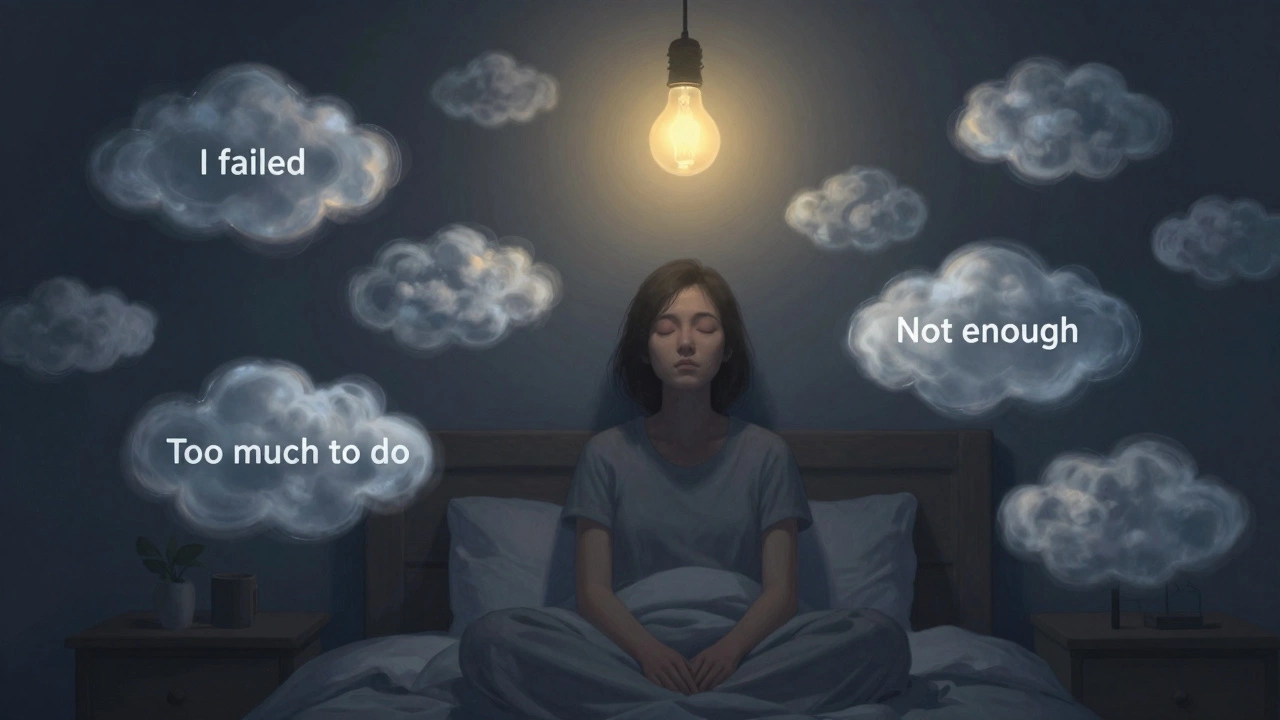
You’re not your thoughts. That’s the hardest part to believe. When you think, “I’m such a failure,” or “I’ll never get this done,” you don’t have to believe it. You don’t have to follow it down the rabbit hole.Imagine your thoughts as clouds passing across the sky. Some are big and dark. Others are small and fluffy. You don’t need to chase them. You don’t need to push them away. Just watch them drift. Say to yourself: “Ah, there’s the ‘I’m not good enough’ cloud again.” Naming it takes away its power.
A 2023 study from Harvard Medical School found that people who practiced this kind of non-judgmental observation reduced anxiety by 34% over eight weeks. You’re not trying to stop thinking. You’re learning to stop identifying with every thought that pops up.
Listen like you mean it
Most of us listen to respond, not to understand. Your partner says, “I had a rough day,” and you immediately think of advice, a solution, or your own story. But what if you just listened?Try this next time someone speaks to you: put your phone down. Make eye contact. Don’t interrupt. Let the silence sit for two seconds after they finish. Then say, “That sounds tough.” Or, “I hear you.” No fixes. No opinions. Just presence.
People feel seen when you’re truly there. And you’ll feel more connected-because you’re not half-listening while planning your next sentence. This isn’t just good for relationships. It’s a deep form of mindfulness.
End your day with a three-minute check-in
Before you turn off the lights, sit for three minutes. No phone. No TV. Just you.Ask yourself: What did I feel today? Not what I did. What did I feel? Was I impatient? Grateful? Anxious? Proud? Did I laugh? Did I hold back tears? Don’t judge. Just notice.
This simple ritual rewires your brain over time. It trains you to recognize emotional patterns. You start seeing that you feel anxious every time you check work emails after 7 p.m. Or that you feel calm when you walk barefoot on the grass. Awareness is the first step to change.
What mindfulness isn’t
Mindfulness isn’t about being peaceful all the time. You’ll still get angry. You’ll still feel overwhelmed. That’s human. Mindfulness doesn’t erase emotion-it changes your relationship to it.It’s not a quick fix. You won’t wake up one day and feel “enlightened.” It’s a practice, like brushing your teeth. Some days you’ll forget. Some days you’ll do it perfectly. Both are okay.
And it’s not spiritual. You don’t need to believe in chakras, crystals, or reincarnation. Mindfulness is a mental skill. It’s been studied in hospitals, schools, and corporations. It works because it changes how your brain processes stress-not because of any mystical energy.
What to do when you keep forgetting
If you’re reading this and thinking, “I tried this. I forgot after two days,” you’re not broken. You’re normal.Try setting one tiny trigger: every time you open the fridge, take one breath. Every time you sit down at your desk, notice your feet on the floor. Every time you hear your phone buzz, pause for two seconds before picking it up.
Use reminders. Put a sticky note on your mirror: “Breathe.” Set a silent alarm on your phone at 3 p.m.: “Check in.” Don’t rely on willpower. Build habits around cues you already have.
And forgive yourself when you miss a day. The practice isn’t about perfection. It’s about returning. Again and again.
Why this matters now
We live in a world designed to pull us out of the present. Algorithms chase our attention. Notifications demand instant replies. We’re taught to multitask like it’s a superpower. But science says the opposite: constant switching drains your focus, increases cortisol, and shrinks your attention span.Mindfulness isn’t a luxury. It’s a reset button. It’s how you reclaim your attention, your calm, your sense of self. You don’t need more time. You need to be fully in the time you already have.
Start small. Stay consistent. Be kind to yourself. The rest will follow.
Can mindfulness help with anxiety?
Yes. Multiple studies, including those from Johns Hopkins and the Mayo Clinic, show that regular mindfulness practice reduces symptoms of anxiety as effectively as medication for some people. It doesn’t eliminate anxious thoughts, but it helps you stop reacting to them with panic. You learn to see anxiety as a passing sensation, not a threat.
How long until I notice a difference?
Most people notice small shifts-like feeling less reactive or sleeping a little better-within two to three weeks. Deeper changes, like reduced chronic stress or improved emotional regulation, usually show up after eight weeks of consistent practice. It’s not about how long you meditate. It’s about how often you return to the present.
Do I need an app for mindfulness?
No. Apps like Headspace or Calm can help guide you, especially at first. But mindfulness doesn’t require technology. The most powerful moments happen when you’re not looking at a screen-when you notice the sound of rain on your window, or the weight of your cat on your lap. Use apps if they help, but don’t let them become another thing you feel guilty about skipping.
Can kids practice mindfulness?
Absolutely. Kids are naturally more present than adults-they notice bugs, clouds, and puddles with wonder. Simple practices like “balloon breathing” (inhale to puff cheeks, exhale to deflate) or “listening to a bell” until the sound fades work well. Schools in Australia and the U.S. have integrated mindfulness into daily routines with measurable improvements in focus and behavior.
What if I don’t have time?
You don’t need more time-you need to use the time you already have differently. Mindfulness fits into the gaps: while waiting for the kettle to boil, walking to the mailbox, or sitting in traffic. Even one conscious breath counts. Ten seconds of awareness, done five times a day, adds up to more than 30 minutes of meditation you never scheduled.